

Subscribe To Our Newsletter!
Subscribe to the newsletter to stay up to date with the latest news and most useful
Newsletter
↑
Back to Top



Product Overview |
|---|
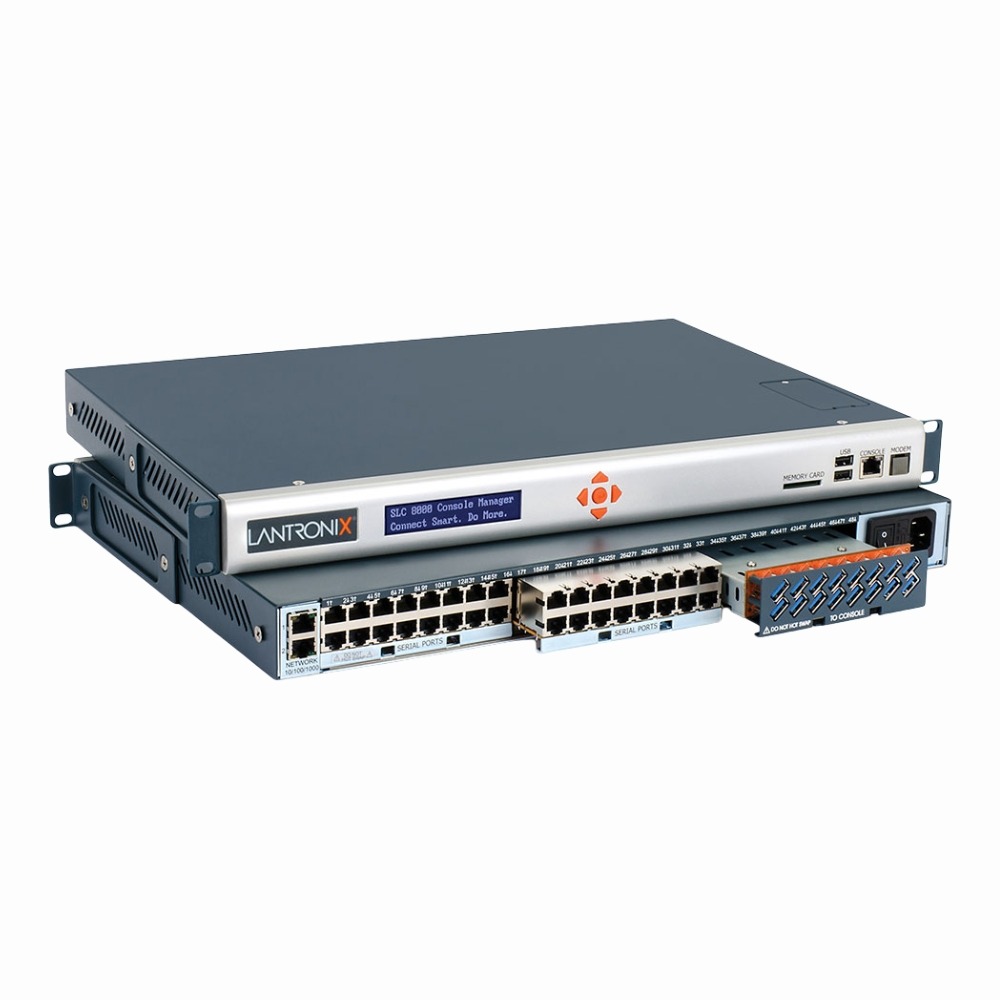
The Lantronix 16 Device Port RJ-45 RS-232 I/O Module adds sixteen serial communication ports to the SLC8000 server, expanding its capacity to connect with various RS-232-compatible devices. It fits smoothly into industrial setups where multiple serial I/O connections are required, providing a reliable and straightforward extension to the server’s networking capabilities. |
General Information |
|
|---|---|
| Brand | Lantronix |
| Part Number | FRRJ451601 |
| Condition | Refurbished |
Technical Information |
|
|---|---|
| Switch Ports | 16 |
| Number of Ports | 16-Ports |
| NIM Slot | 1 |
| Connector Type | RJ-45 (RS-232) |
Management and Configuration |
|
|---|---|
| Management Type | Console/Serial I/O Module |
Physical Characteristics |
|
|---|---|
| Weight | 4.00 |
Product Description |
|---|
The Lantronix 16 Device Port RJ-45 RS-232 I/O Module expands the number of serial connections available on an SLC8000 server. It is commonly used in industrial and manufacturing environments where multiple devices need to be networked via serial communication. Built for system integrators and engineers managing complex setups, this module simplifies device integration and control. Key Features
This module is often found in factory automation, process control, and similar settings where many serial devices must operate together. It helps maintain organized connectivity while supporting robust data transfer between the server and peripherals. |
Use Cases |
|---|
The FRRJ451601 Lantronix 16-Port RJ-45 RS-232 I/O Module is typically deployed in industrial and enterprise environments requiring extensive serial device connectivity. It is especially beneficial for IT infrastructure teams managing legacy serial equipment alongside modern server systems, enabling seamless integration within complex communication networks. How It's Used:
This expansion module supports operational efficiency by centralizing numerous serial connections into a single server unit, reducing cabling complexity and improving device management. It enhances scalability for growing serial device networks, ensuring consistent communication performance in demanding industrial and enterprise applications. |
 Shipping Options
 International Delivery
Requires a UPS, FedEx, or DHL account. Customers may arrange pickup from our US warehouse.
International Delivery
Requires a UPS, FedEx, or DHL account. Customers may arrange pickup from our US warehouse.
 Payment Methods
We accept Visa, Mastercard, AMEX, Discover, and Wire Transfer.
Payment Methods
We accept Visa, Mastercard, AMEX, Discover, and Wire Transfer.
 Purchase Orders
We process purchase orders for government agencies, enterprises, data centers, and SMBs.
Purchase Orders
We process purchase orders for government agencies, enterprises, data centers, and SMBs.