

Subscribe To Our Newsletter!
Subscribe to the newsletter to stay up to date with the latest news and most useful
Newsletter
↑
Back to Top



Product Overview |
|---|
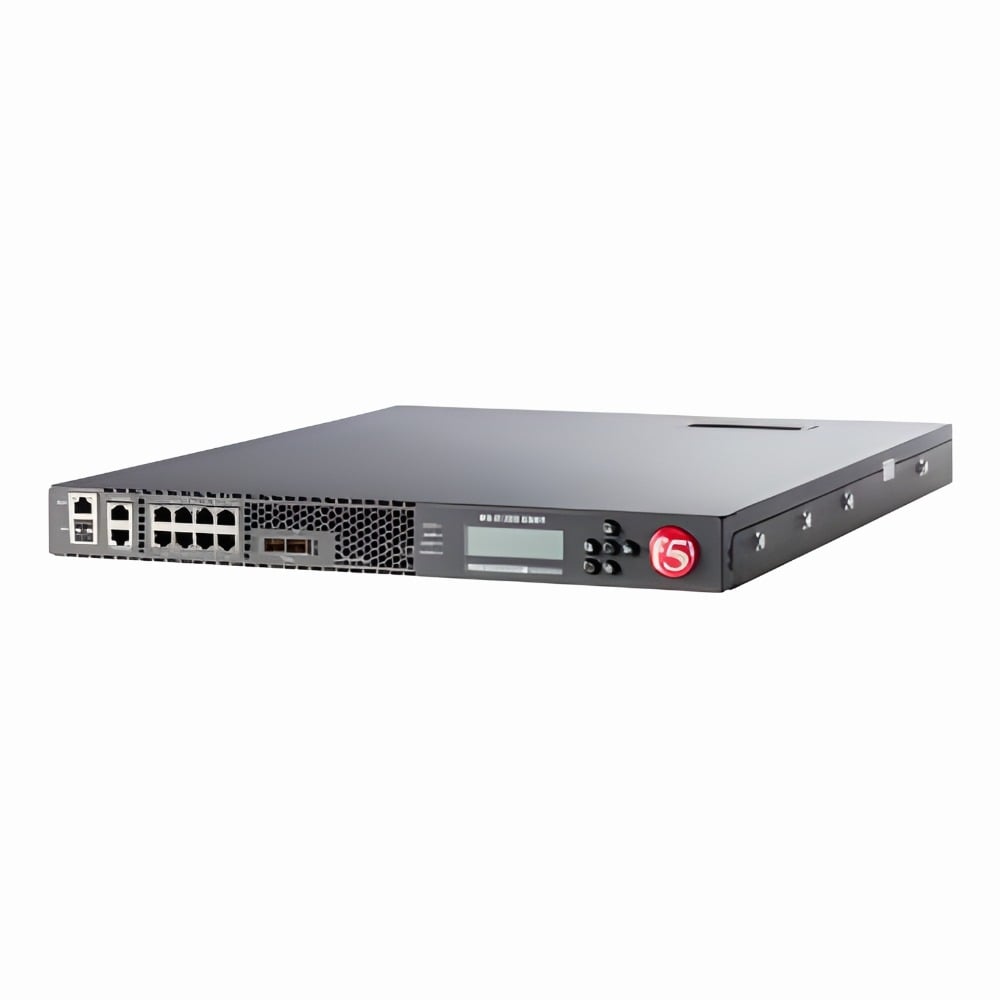
The F5 Networks BIG-IP 4000 Series switch provides essential load balancing and high-speed network connectivity through its eight 10 Gigabit Ethernet ports. It fits well in environments like data centers or large enterprise networks where managing traffic efficiently is key to maintaining application performance and availability. |
General Information |
|
|---|---|
| Brand | F5 Networks |
| Part Number | F5-4000 |
| Condition | Refurbished |
Technical Information |
|
|---|---|
| Number of Ports | 8-Ports |
| Max VLANs Supported | 1-4094 |
Performance |
|
|---|---|
| Jumbo Frame Support | Up To 9216 Bytes |
Management and Configuration |
|
|---|---|
| Management Type | Web GUI (Configuration Utility), SSH CLI, iControl REST (API), SNMP |
| Security | SSL offload, Load balancing (L4-L7), Application acceleration; application firewall (ASM) available as licensed module |
| Remote Management Protocol | SSH, HTTPS, REST (iControl), SNMP |
Physical Characteristics |
|
|---|---|
| Weight | 4.00 |
Miscellaneous |
|
|---|---|
| Eco Friendly | Yes |
| Assembly Required | Yes |
| Compliance Standards | WEEE, RoHS, cURus, CE, FCC, CCC, UL, TUV, cULus, CSA, cUL |
Product Description |
|---|
The F5 Networks BIG-IP 4000 Series is designed to manage and distribute network traffic with precision, making it ideal for environments that require dependable load balancing and high throughput. It is often found in data centers and enterprise network setups where consistent performance and uptime are critical. Engineered for IT professionals and network administrators, this switch handles complex traffic patterns to optimize resource use and improve application delivery. Its high-speed ports help maintain smooth communication between servers and clients. Key Features
This switch is commonly deployed in enterprise networks or data centers where balancing traffic loads ensures efficient system performance. By distributing workloads intelligently, it helps reduce bottlenecks and keeps network applications running smoothly. Users benefit from its robustness and ability to maintain steady speeds across multiple connections, which is essential for businesses relying on consistent access and uptime. |
 Shipping Options
 International Delivery
Requires a UPS, FedEx, or DHL account. Customers may arrange pickup from our US warehouse.
International Delivery
Requires a UPS, FedEx, or DHL account. Customers may arrange pickup from our US warehouse.
 Payment Methods
We accept Visa, Mastercard, AMEX, Discover, and Wire Transfer.
Payment Methods
We accept Visa, Mastercard, AMEX, Discover, and Wire Transfer.
 Purchase Orders
We process purchase orders for government agencies, enterprises, data centers, and SMBs.
Purchase Orders
We process purchase orders for government agencies, enterprises, data centers, and SMBs.