

Subscribe To Our Newsletter!
Subscribe to the newsletter to stay up to date with the latest news and most useful
Newsletter
↑
Back to Top



Product Overview |
|---|
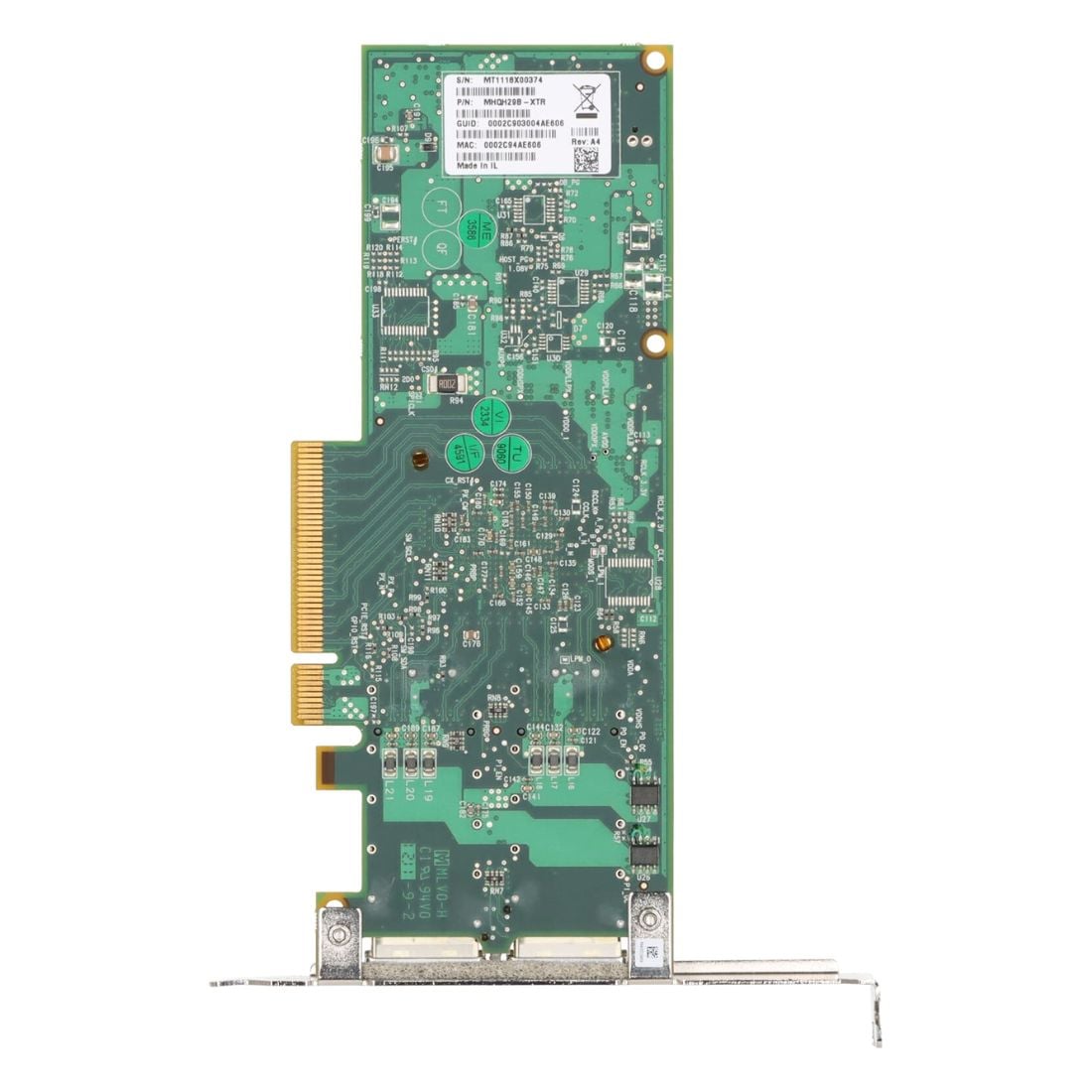
The Intel quad-port Ethernet converged network adapter provides four 10GbE connections through a PCIe Gen3 interface, making it suited for tasks that require high bandwidth and efficient data handling. It fits well in servers that manage multiple roles, from network traffic to storage and cluster communication. This adapter strikes a balance between performance and flexibility, making it a practical choice for modern data center environments. |
General Information |
|
|---|---|
| Brand | Intel |
| Part Number | EX710DA4HFG1P5 |
Connectivity & Physical |
|
|---|---|
| Weight | 3.00 |
| Condition | Refurbished |
Miscellaneous |
|
|---|---|
| Assembly Required | Yes |
| Eco Friendly | Yes |
| Compliance Standards | WEEE, RoHS, cURus, CE, FCC, CCC, UL, TUV, cULus, CSA, cUL |
Product Description |
|---|
This Intel quad-port Ethernet converged network adapter is built for high-performance networking needs. It combines four 10GbE ports on a single card, allowing multiple streams of network and storage traffic to be managed efficiently. This type of adapter is commonly found in enterprise servers, data centers, and virtualized environments where consolidated networking is crucial. Often used by IT professionals, system administrators, and data center engineers, this network adapter streamlines connectivity while reducing the number of physical interfaces needed. It supports converged I/O environments, letting the same hardware handle Ethernet, storage protocols like iSCSI or FCoE, and clustering communication. Key Features
Typically installed in rack or blade servers within data centers, this adapter helps organize traffic efficiently in complex network setups. The ability to converge multiple types of traffic onto one card reduces cabling and hardware costs. In practice, it enables smoother communication between storage arrays, compute nodes, and external networks without sacrificing speed or reliability. |
Use Cases |
|---|
The EX710DA4HFG1P5 Intel Quad Port 4x10GbE Ethernet Converged Network Adapter is primarily deployed in high-density server environments where multiple 10GbE connections are essential. It benefits IT professionals managing virtualized data centers, storage networks, and cluster communications that require low latency and high throughput. How It's Used:
This adapter supports operational efficiency by reducing the number of required network cards and cabling, enhancing scalability in dense server racks. Its capability to handle multiple traffic types concurrently ensures consistent performance for complex workloads in demanding IT infrastructures. |
 Shipping Options
 International Delivery
Requires a UPS, FedEx, or DHL account. Customers may arrange pickup from our US warehouse.
International Delivery
Requires a UPS, FedEx, or DHL account. Customers may arrange pickup from our US warehouse.
 Payment Methods
We accept Visa, Mastercard, AMEX, Discover, and Wire Transfer.
Payment Methods
We accept Visa, Mastercard, AMEX, Discover, and Wire Transfer.
 Purchase Orders
We process purchase orders for government agencies, enterprises, data centers, and SMBs.
Purchase Orders
We process purchase orders for government agencies, enterprises, data centers, and SMBs.