

Subscribe To Our Newsletter!
Subscribe to the newsletter to stay up to date with the latest news and most useful
Newsletter
↑
Back to Top



Product Overview |
|---|
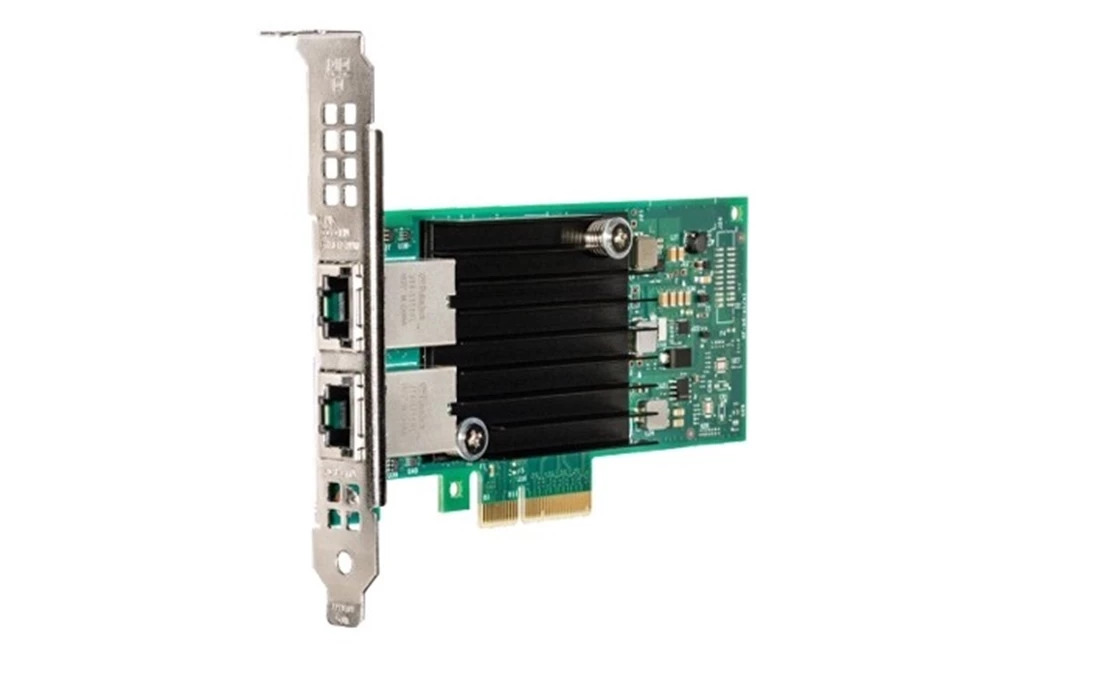
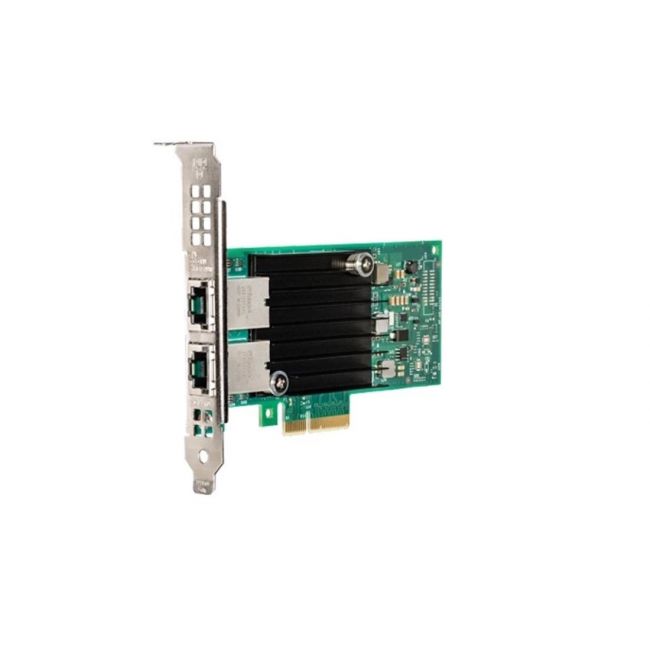
The DWD65 Dell Intel X550-T2 Dual Port 10 Gigabit Network Interface Card Copper provides dual 10GbE ports using copper connections, fitting well in server and workstation environments where fast and reliable network access is essential. It balances performance with compatibility by supporting standard RJ-45 cabling and is widely used to enhance network throughput without needing major infrastructure changes. |
General Information |
|
|---|---|
| Brand | Dell |
| Part Number | DWD65 |
Technical Information |
|
|---|---|
| Chipset/Controller | Intel X550 |
| Data Rate (Speed) | 10GbE |
| Data Center Bridging | Yes |
| Interface (Bus) | PCIe 3.0 x4 |
| Number of Ports | 2-Port (Dual) |
| Bracket Height | Both Brackets Included |
Connectivity & Physical |
|
|---|---|
| Form Factor | Standard PCIe Card |
| Port Type | RJ-45 (Copper) |
| Cabling Type | Cat6a |
| Weight | 5.00 |
| Condition | Refurbished |
Product Description |
|---|
The DWD65 Dell Intel X550-T2 is a dual-port 10 Gigabit Ethernet network interface card designed to deliver fast and stable network performance. Often found in data centers and enterprise environments, it provides the bandwidth needed for demanding applications such as virtualization, storage, and high-throughput computing. This network card is built for IT professionals and organizations looking to upgrade their server or workstation networking capabilities without switching to fiber optics. Its copper RJ-45 ports support existing cabling infrastructure, making it a convenient choice for many setups. Key Features
This NIC is commonly deployed in environments such as enterprise servers, virtualization hosts, and storage networks. Its use helps maintain smooth data flow and reduces bottlenecks in critical applications. By upgrading to this dual-port card, organizations can extend the life of their existing network hardware while meeting the increasing demands of modern data traffic. |
Use Cases |
|---|
The DWD65 Dell Intel X550-T2 Dual Port 10 Gigabit Network Interface Card Copper is designed for environments requiring high-throughput network connectivity with minimal infrastructure changes. It is particularly suited for data centers, virtualization hosts, and enterprise servers that rely on copper-based networking for cost-effective 10GbE performance. How It's Used:
This NIC facilitates operational efficiency by delivering scalable 10GbE connections over familiar copper infrastructure, enabling IT environments to meet increased network demands while maintaining compatibility with existing hardware and cabling. |
 Shipping Options
 International Delivery
Requires a UPS, FedEx, or DHL account. Customers may arrange pickup from our US warehouse.
International Delivery
Requires a UPS, FedEx, or DHL account. Customers may arrange pickup from our US warehouse.
 Payment Methods
We accept Visa, Mastercard, AMEX, Discover, and Wire Transfer.
Payment Methods
We accept Visa, Mastercard, AMEX, Discover, and Wire Transfer.
 Purchase Orders
We process purchase orders for government agencies, enterprises, data centers, and SMBs.
Purchase Orders
We process purchase orders for government agencies, enterprises, data centers, and SMBs.