

Subscribe To Our Newsletter!
Subscribe to the newsletter to stay up to date with the latest news and most useful
Newsletter
↑
Back to Top



Product Overview |
|---|
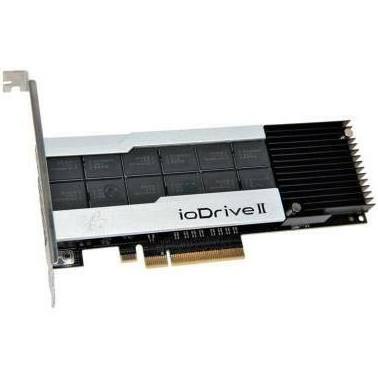
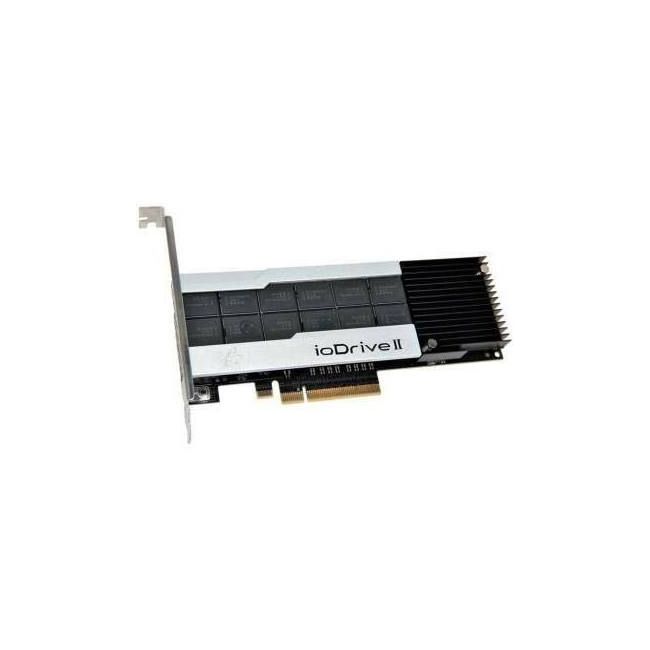
The Dell Fusion-io ioDrive II 1.2GB MLC PCIe Accelerator Card provides a dedicated flash storage solution that fits into PCIe slots, designed to improve application speed and system responsiveness. It is a practical choice for servers needing faster data throughput and lower latency compared to traditional spinning drives. |
General Information |
|
|---|---|
| Brand | Dell |
| Part Number | DG1MH |
Physical Characteristics |
|
|---|---|
| Weight | 5.00 |
| Condition | Refurbished |
Product Description |
|---|
The Dell Fusion-io ioDrive II 1.2GB MLC PCIe Accelerator Card enhances system performance by providing ultra-fast storage directly through the PCIe bus. It's commonly used in data centers or enterprise environments where quick read/write speeds are critical for applications such as databases and virtualization. Built for IT professionals and organizations focused on accelerating data processing, this card helps reduce bottlenecks by handling storage tasks more efficiently than traditional drives. It is often found in servers requiring high input/output operations per second (IOPS) and low latency. Key Features
This card is typically deployed in high-performance computing environments, where quick access to stored data is essential. It plays a crucial role in speeding up data-heavy applications, helping teams achieve faster results without upgrading entire storage systems. |
Use Cases |
|---|
The Dell Fusion-io ioDrive II 1.2GB MLC PCIe Accelerator Card is typically deployed in server environments requiring high-speed flash storage to enhance data processing and reduce latency. It is suited for IT infrastructures where application acceleration and quick data access are critical, such as virtualization hosts and database servers. How It's Used:
This PCIe flash accelerator card integrates seamlessly into existing server architectures, offering a scalable path to improve operational throughput and reduce latency. Its form factor and interface enable straightforward deployment in rack-mounted servers, facilitating enhanced performance without extensive infrastructure changes. |
 Shipping Options
 International Delivery
Requires a UPS, FedEx, or DHL account. Customers may arrange pickup from our US warehouse.
International Delivery
Requires a UPS, FedEx, or DHL account. Customers may arrange pickup from our US warehouse.
 Payment Methods
We accept Visa, Mastercard, AMEX, Discover, and Wire Transfer.
Payment Methods
We accept Visa, Mastercard, AMEX, Discover, and Wire Transfer.
 Purchase Orders
We process purchase orders for government agencies, enterprises, data centers, and SMBs.
Purchase Orders
We process purchase orders for government agencies, enterprises, data centers, and SMBs.