Subscribe To Our Newsletter!
Subscribe to the newsletter to stay up to date with the latest news and most useful
Newsletter
↑
Back to Top



Product Overview |
|---|
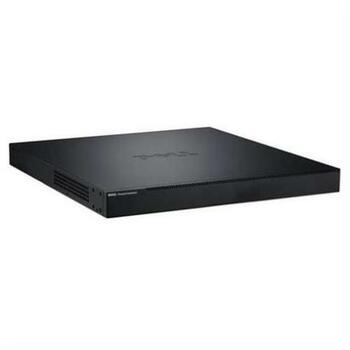
The Dell PowerConnect 6248 is a 48-port Gigabit Ethernet Layer 3 switch that fits well in enterprise network infrastructures. It handles both switching and routing tasks, allowing seamless communication within and between network segments while supporting essential features for traffic management and security. |
General Information |
|
|---|---|
| Brand | Dell |
| Part Number | FWXNG |
| Condition | Refurbished |
Technical Information |
|
|---|---|
| Switch Ports | 48 |
| Number of Ports | 48-Ports |
| Port Type | 10/100/1000Base-T, SFP+, USB Console, Serial Console (RJ-45) |
| Port Speed | 10/100/1000Base-T |
| UpLink Ports | 4 x 10G SFP+ |
| POE Support | No |
| VLAN Support | Yes |
| Max VLANs Supported | 1-4094 |
| Layer Support | Layer 3 |
| Connector Type | RJ-45,SFP+ |
Performance |
|
|---|---|
| Jumbo Frame Support | Up To 9216 Bytes |
Management and Configuration |
|
|---|---|
| Routing Protocols | Static, RIP, OSPF |
| Remote Protocols | Yes |
| Management Interfaces | Web GUI (HTTP/HTTPS),CLI (SSH, Telnet),SNMP |
| Security Features | ACL,802.1X,SSH,RADIUS,TACACS+ |
| Remote Management Protocol | SNMPv1/v2/v3,SSH,Telnet,HTTP,HTTPS |
| Routing Protocol | Static,RIP,OSPF |
Physical Characteristics |
|
|---|---|
| Weight | 6.50 |
| Operating Temperature | 0°C to 40°C |
Miscellaneous |
|
|---|---|
| Compliance Standards | WEEE, RoHS, CE, FCC, UL |
Product Description |
|---|
The Dell PowerConnect 6248 is a robust Layer 3 switch designed to manage network traffic efficiently in medium to large enterprise environments. It is commonly found in data centers, server rooms, and campus networks where reliable, high-throughput switching is essential. Network administrators and IT professionals benefit from its versatile features that enhance both performance and manageability. Key Features
This switch is typically deployed at the core or distribution layer within enterprise networks, providing reliable backbone connectivity. It helps optimize network traffic flow, making it easier to manage large volumes of data and improve overall network stability. |
Use Cases |
|---|
The Dell PowerConnect 6248 is well-suited for medium to large enterprise networks where robust Layer 3 routing and high-density Gigabit connectivity are critical. Network administrators managing data center top-of-rack environments or campus backbone segments benefit from its combination of advanced routing and switching capabilities. How It's Used:
By combining Layer 3 routing with a high port count and quality of service features, the PowerConnect 6248 supports scalable network architectures that can adapt to evolving performance and segmentation needs. Its rack-mount design also facilitates streamlined deployment in dense IT environments. |
 Shipping Options
 International Delivery
Requires a UPS, FedEx, or DHL account. Customers may arrange pickup from our US warehouse.
International Delivery
Requires a UPS, FedEx, or DHL account. Customers may arrange pickup from our US warehouse.
 Payment Methods
We accept Visa, Mastercard, AMEX, Discover, and Wire Transfer.
Payment Methods
We accept Visa, Mastercard, AMEX, Discover, and Wire Transfer.
 Purchase Orders
We process purchase orders for government agencies, enterprises, data centers, and SMBs.
Purchase Orders
We process purchase orders for government agencies, enterprises, data centers, and SMBs.