Subscribe To Our Newsletter!
Subscribe to the newsletter to stay up to date with the latest news and most useful
Newsletter
↑
Back to Top



| Product Overview |
|---|
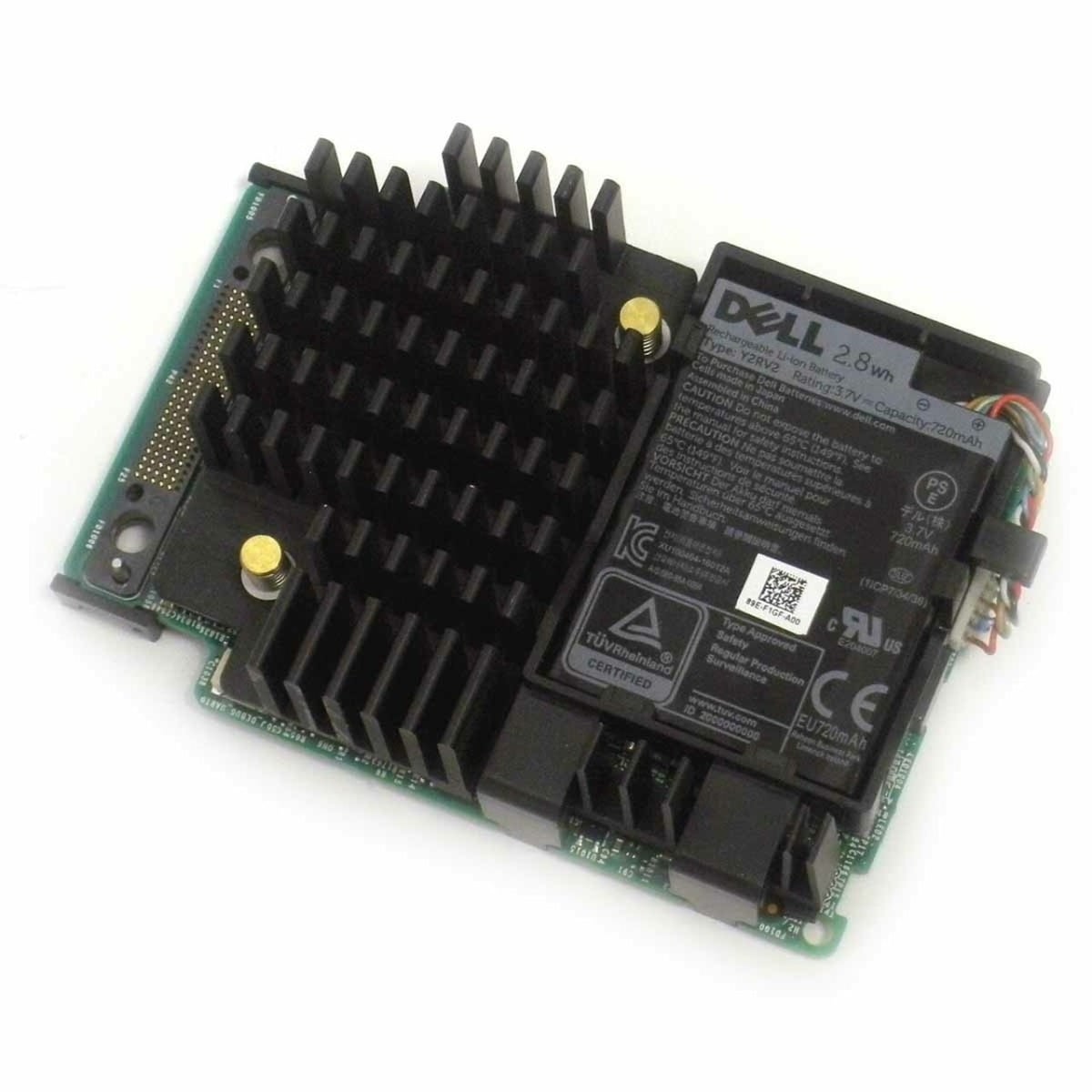
The Dell PERC H740P RAID controller manages multiple SAS and SATA drives, fitting neatly into enterprise Dell servers. It provides fast data transfer and flexible RAID options, supporting critical storage needs in business environments without adding unnecessary complexity. |
| General Information | |
|---|---|
| Brand | Dell |
| Part Number | 5FMY4 |
| Technical Specification | |
|---|---|
| Chipset | Broadcom / LSI SAS3108 (12Gb/s RAID-on-Chip) |
| Host Interface | PCIe 3.1 x8 |
| Data Rate | 12 Gb/s per port |
| RAID Levels | 0,1,5,6,10,50,60 |
| Cache | 2GB NV Cache |
| Ports | 8 |
| Connectivity | SAS, SATA |
| Compatibility | Dell PowerEdge servers (select 13G/14G models such as R630/R640/R730/R740/R740xd/T630/T640) - verify with Dell server HCL for exact compatibility |
| Physical Characteristics | |
|---|---|
| Form Factor | Mini Mono (Dell proprietary mezzanine/low-profile adapter) |
| Weight | 5.00 |
| Condition | Refurbished |
| Miscellaneous | |
|---|---|
| Eco Friendly | Yes |
| Product Description |
|---|
The Dell PERC H740P is a robust RAID controller built for managing multiple high-performance drives in enterprise storage environments. It's commonly found in Dell PowerEdge servers, providing reliable RAID functionality to maintain data integrity and boost storage efficiency. Designed for IT professionals and system administrators, this controller handles large workloads and safeguards critical data through various RAID configurations. Its compatibility with 12Gb/s SAS and SATA drives makes it suitable for demanding database, virtualization, and backup applications. Key Features
This RAID controller is typically deployed in data centers and enterprise server rooms where high availability and data protection are critical. Its role in managing storage arrays ensures systems stay online and data remains secure, even under heavy workloads. Administrators rely on it to optimize storage layouts without sacrificing speed or reliability. |
| Use Cases |
|---|
The Dell PERC H740P RAID Controller is designed for enterprise data centers and virtualized server environments requiring high-speed and reliable storage connectivity. It is particularly suitable for IT professionals managing Dell PowerEdge servers who need robust RAID configurations to safeguard data and optimize performance under demanding workloads. How It's Used:
This RAID controller supports operational efficiency by integrating seamlessly into Dell server ecosystems, allowing administrators to scale storage arrays while maintaining high data availability. Its advanced RAID capabilities contribute to managing intensive workloads with reduced downtime risks. |
 Shipping Options
 International Delivery
Requires a UPS, FedEx, or DHL account. Customers may arrange pickup from our US warehouse.
International Delivery
Requires a UPS, FedEx, or DHL account. Customers may arrange pickup from our US warehouse.
 Payment Methods
We accept Visa, Mastercard, AMEX, Discover, and Wire Transfer.
Payment Methods
We accept Visa, Mastercard, AMEX, Discover, and Wire Transfer.
 Purchase Orders
We process purchase orders for government agencies, enterprises, data centers, and SMBs.
Purchase Orders
We process purchase orders for government agencies, enterprises, data centers, and SMBs.