

Subscribe To Our Newsletter!
Subscribe to the newsletter to stay up to date with the latest news and most useful
Newsletter
↑
Back to Top



Product Overview |
|---|
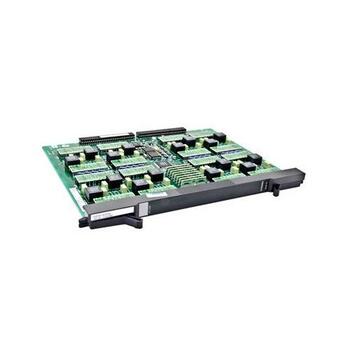
The Dell 10/40Gbps I/O Aggregator for PowerEdge M1000E effectively consolidates network traffic from multiple blade servers into fewer high-speed connections. It fits directly into the PowerEdge M1000E chassis, serving as a central point to combine 10Gbps and 40Gbps data streams. This helps simplify the network setup and ensures that server workloads communicate efficiently, reducing potential data congestion within the system. |
General Information |
|
|---|---|
| Brand | Dell |
| Part Number | 1WWPC |
| Product Type | Network Interface Module (NIM) |
Technical Information |
|
|---|---|
| Data Rate | 10/40Gbps |
| Compatibility | PowerEdge M1000e |
| Connector Type | QSFP+ |
| product type | I/O Aggregator |
| Product Category | Network Accessories |
Physical Characteristics |
|
|---|---|
| Form Factor | Chassis I/O module (PowerEdge M1000e) |
| Weight | 3.00 |
| Condition | Refurbished |
Miscellaneous |
|
|---|---|
| Assembly Required | Yes |
| Eco Friendly | Yes |
| Compliance Standards | WEEE, RoHS, cURus, CE, FCC, CCC, UL, TUV, cULus, CSA, cUL |
Product Description |
|---|
This Dell 10/40Gbps I/O Aggregator is built to efficiently consolidate network traffic from blade servers housed within the PowerEdge M1000E chassis. It manages multiple high-speed connections, streamlining data flow between the servers and network infrastructure. Commonly found in data centers and enterprise environments, this aggregator helps maintain robust network throughput for demanding workloads. IT professionals and system administrators typically use it to enhance the connectivity and performance of their blade server setups. Key Features
This I/O Aggregator is usually deployed inside server racks where multiple blade servers operate, helping keep network traffic organized and efficient. By consolidating connections, it supports smoother data handling, which is critical for maintaining uptime and performance in busy data center applications. |
Use Cases |
|---|
The 1WWPC Dell 10/40Gbps I/O Aggregator is commonly deployed in data centers leveraging PowerEdge M1000E blade chassis to streamline high-bandwidth network traffic. IT administrators managing virtualization environments and compute clusters benefit from its ability to consolidate multiple blade server connections into fewer, faster uplinks, improving data flow and reducing bottlenecks. How It's Used:
By centralizing I/O traffic within the PowerEdge M1000E chassis, the Dell aggregator enables improved operational efficiency and supports scalable network architectures. It facilitates consistent high-speed data transfer essential for demanding workloads, allowing IT teams to maintain performance while simplifying network management. |
 Shipping Options
 International Delivery
Requires a UPS, FedEx, or DHL account. Customers may arrange pickup from our US warehouse.
International Delivery
Requires a UPS, FedEx, or DHL account. Customers may arrange pickup from our US warehouse.
 Payment Methods
We accept Visa, Mastercard, AMEX, Discover, and Wire Transfer.
Payment Methods
We accept Visa, Mastercard, AMEX, Discover, and Wire Transfer.
 Purchase Orders
We process purchase orders for government agencies, enterprises, data centers, and SMBs.
Purchase Orders
We process purchase orders for government agencies, enterprises, data centers, and SMBs.