

Subscribe To Our Newsletter!
Subscribe to the newsletter to stay up to date with the latest news and most useful
Newsletter
↑
Back to Top



Product Overview |
|---|
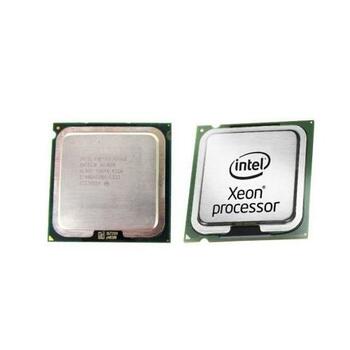
The Dell Xeon X5365 0HP810 processor provides four cores running at 3.00 GHz with an 8 MB L2 cache, fitting into LGA 771 server sockets. It serves as a dependable component in Dell server setups, offering balanced power for multitasking and data-heavy operations without requiring the latest platform updates. |
General Information |
|
|---|---|
| Brand | Dell |
| Part Number | 0HP810 |
Technical Information |
|
|---|---|
| Processor Family | Other |
| # Of Cores | 4 Core |
| Total Threads | 4 |
| Base Clock Speed | 3.00 GHz |
| Lithography | Other |
| Socket Type | LGA 771 |
| Cache | 8 MB |
Physical Characteristics |
|
|---|---|
| Weight | 3.00 |
| Condition | Refurbished |
Product Description |
|---|
The Dell 0HP810 Xeon X5365 processor delivers reliable multi-core processing power for servers and high-performance workstations. Built for demanding tasks, it is often found in data centers and enterprise setups requiring stable and efficient computation. This processor caters to IT professionals and businesses needing robust hardware to manage complex workloads, including virtualization, database management, and computational applications. Key Features
Typically installed in Dell server systems, this processor helps maintain steady operation under heavy loads. Its capabilities make it well-suited for businesses running multiple applications or services simultaneously, ensuring efficient resource management. |
Use Cases |
|---|
The Dell Xeon X5365 processor is primarily deployed in legacy server environments that require stable quad-core processing power without transitioning to newer architectures. It is well-suited for organizations maintaining older Dell servers or infrastructure where workload consistency and hardware compatibility are critical. How It's Used:
By integrating this processor, organizations can sustain operational efficiency within existing server architectures while managing moderate workloads. Its compatibility and balanced core count facilitate scalability in environments that prioritize consistent performance over cutting-edge technology. |
 Shipping Options
 International Delivery
Requires a UPS, FedEx, or DHL account. Customers may arrange pickup from our US warehouse.
International Delivery
Requires a UPS, FedEx, or DHL account. Customers may arrange pickup from our US warehouse.
 Payment Methods
We accept Visa, Mastercard, AMEX, Discover, and Wire Transfer.
Payment Methods
We accept Visa, Mastercard, AMEX, Discover, and Wire Transfer.
 Purchase Orders
We process purchase orders for government agencies, enterprises, data centers, and SMBs.
Purchase Orders
We process purchase orders for government agencies, enterprises, data centers, and SMBs.