Subscribe To Our Newsletter!
Subscribe to the newsletter to stay up to date with the latest news and most useful
Newsletter
↑
Back to Top



Product Overview |
|---|
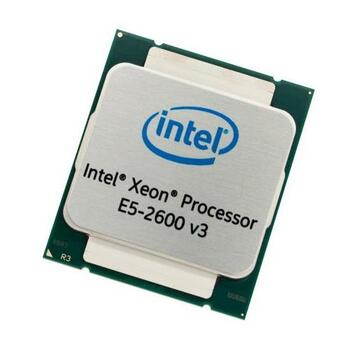
The Dell Xeon E5-2623 V3 is a quad-core server processor built for reliable mid-range server workloads. It fits into LGA 2011 sockets and offers a steady 3.00 GHz clock speed supported by a 10 MB L3 cache, making it well-suited for tasks like virtualization and database management in enterprise environments. |
General Information |
|
|---|---|
| Brand | Intel |
| Part Number | 06T3W1 |
Technical Information |
|
|---|---|
| Processor Family | Xeon E5 |
| # Of Cores | 4 Core |
| Total Threads | 8 |
| Max Turbo Frequency | 3.50 GHz |
| Base Clock Speed | 3.00 GHz |
| PCIe Version | PCIe 3.0 |
| Lithography | 22 nm |
| Socket Type | LGA 2011 |
| Cache | 10 MB |
| Thermal Design Power | 105 W |
Memory Specifications |
|
|---|---|
| Max Memory Size | 768 GB |
| Memory Types | DDR4-2133 |
| Max Memory Channels | 4 |
| Bandwidth | 68 GB/s |
Physical Characteristics |
|
|---|---|
| Weight | 3.00 |
| Condition | Refurbished |
Product Description |
|---|
The Dell Xeon E5-2623 V3 is a reliable quad-core processor designed for servers and workstations requiring stable multi-threaded performance. It’s commonly used in mid-range enterprise servers to handle workloads like virtualization, database management, and content delivery. Built for IT professionals and businesses looking for balance between power and efficiency, this CPU fits well in systems that prioritize dependable processing without pushing for the highest core counts. Its architecture supports a range of server tasks where steady processing speeds and cache size matter more than maximum core quantity. Key Features
This processor is typically deployed in business server environments, where reliable and consistent computational power is essential. You’ll often find it powering mid-tier servers that handle a mixture of applications without overwhelming heat or power demands. By striking a balance between clock speed and core count, it serves well in settings where stability and predictable performance outweigh raw processing power. |
Use Cases |
|---|
The Dell Xeon E5-2623 V3 processor is designed for mid-tier server environments requiring stable multi-core performance. It is particularly suited for IT departments managing virtualization, database applications, and medium-scale compute tasks where consistent throughput and data processing efficiency are critical. How It's Used:
This processor supports operational efficiency by balancing core count and clock speed for predictable performance in enterprise workloads. Its compatibility with LGA 2011 platforms ensures scalability across existing infrastructure, facilitating resource consolidation and streamlined maintenance. |
 Shipping Options
 International Delivery
Requires a UPS, FedEx, or DHL account. Customers may arrange pickup from our US warehouse.
International Delivery
Requires a UPS, FedEx, or DHL account. Customers may arrange pickup from our US warehouse.
 Payment Methods
We accept Visa, Mastercard, AMEX, Discover, and Wire Transfer.
Payment Methods
We accept Visa, Mastercard, AMEX, Discover, and Wire Transfer.
 Purchase Orders
We process purchase orders for government agencies, enterprises, data centers, and SMBs.
Purchase Orders
We process purchase orders for government agencies, enterprises, data centers, and SMBs.