Subscribe To Our Newsletter!
Subscribe to the newsletter to stay up to date with the latest news and most useful
Newsletter
↑
Back to Top



Product Overview |
|---|
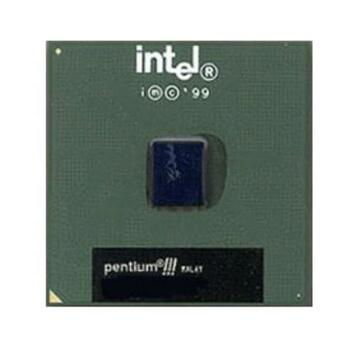
The Dell Pentium III 750MHz processor offers single-core processing with 512 KB L2 cache, making it a straightforward choice for older desktop systems. It fits into BGA479 sockets and supports fundamental computing tasks, mainly in legacy Dell machines and similar environments. |
General Information |
|
|---|---|
| Brand | Intel |
| Part Number | 0247YD |
Technical Information |
|
|---|---|
| Processor Family | Intel Pentium |
| Total Threads | 1 |
| Base Clock Speed | 750 MHz |
| Cache | 512 KB |
Physical Characteristics |
|
|---|---|
| Weight | 3.00 |
| Condition | Refurbished |
Product Description |
|---|
This Dell Pentium III processor operates at 750MHz with a single core, providing reliable performance for everyday computing needs. It features a 512 KB L2 cache that helps speed up access to frequently used data, which is essential in maintaining smooth operation in older desktop setups. Often found in legacy Dell workstations and budget environments, this processor is built for users who require dependable processing power for tasks like office applications, web browsing, and basic multimedia. Its BGA479 socket ensures a stable connection to compatible motherboards. Key Features
This processor is typically deployed in refurbished or maintained legacy systems where modern processing power is not necessary. It serves well in educational, business, or industrial settings that rely on tried-and-tested hardware. Its role is to provide the foundation for basic computing without the need for high-end multitasking. |
Use Cases |
|---|
The Dell Pentium III 750MHz processor is primarily utilized in legacy computing environments where basic processing power is required without the need for modern multi-core capabilities. It serves well in scenarios where maintaining older hardware infrastructure is necessary, such as in specialized industrial or office applications with limited computational demands. How It's Used:
This processor enables continued operation of legacy equipment, ensuring operational consistency in environments where upgrading hardware is constrained by cost or compatibility. Its integration supports stable performance for fundamental workloads without the overhead of modern processing complexity. |
 Shipping Options
 International Delivery
Requires a UPS, FedEx, or DHL account. Customers may arrange pickup from our US warehouse.
International Delivery
Requires a UPS, FedEx, or DHL account. Customers may arrange pickup from our US warehouse.
 Payment Methods
We accept Visa, Mastercard, AMEX, Discover, and Wire Transfer.
Payment Methods
We accept Visa, Mastercard, AMEX, Discover, and Wire Transfer.
 Purchase Orders
We process purchase orders for government agencies, enterprises, data centers, and SMBs.
Purchase Orders
We process purchase orders for government agencies, enterprises, data centers, and SMBs.