

Subscribe To Our Newsletter!
Subscribe to the newsletter to stay up to date with the latest news and most useful
Newsletter
↑
Back to Top



Product Overview |
|---|
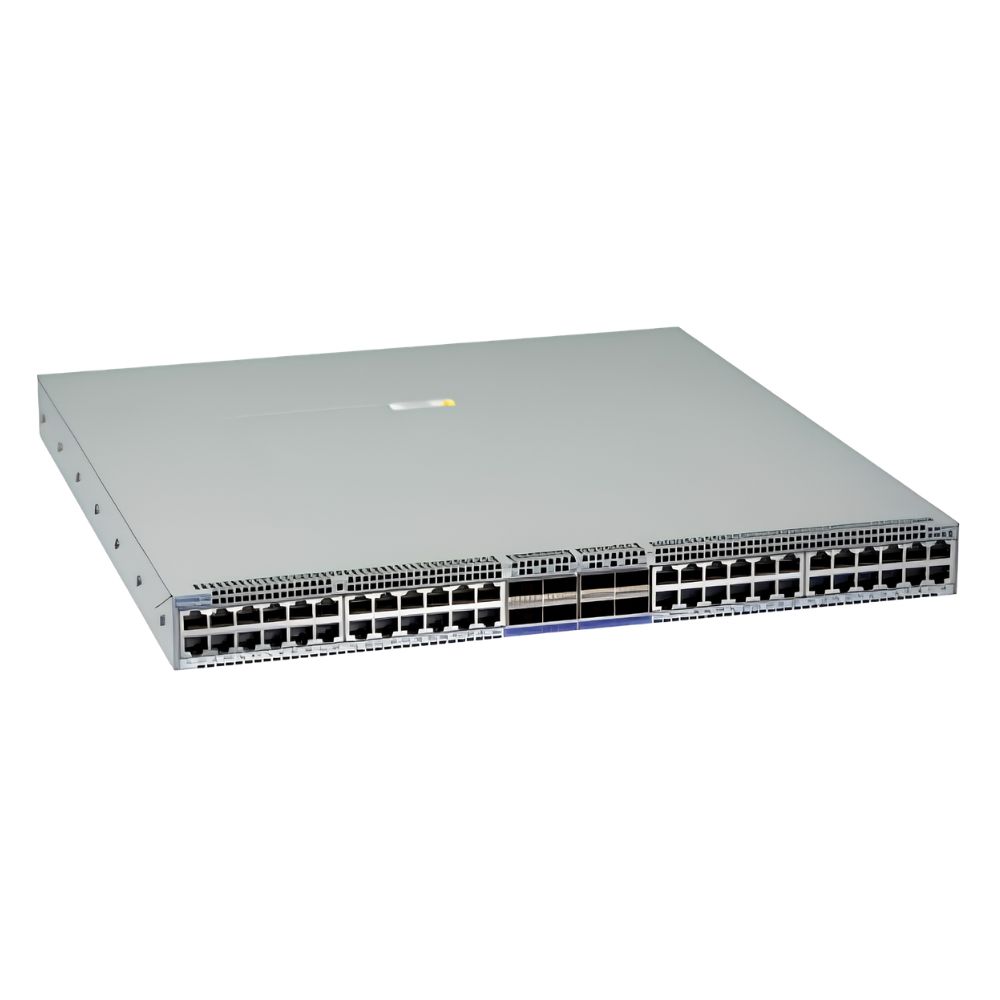
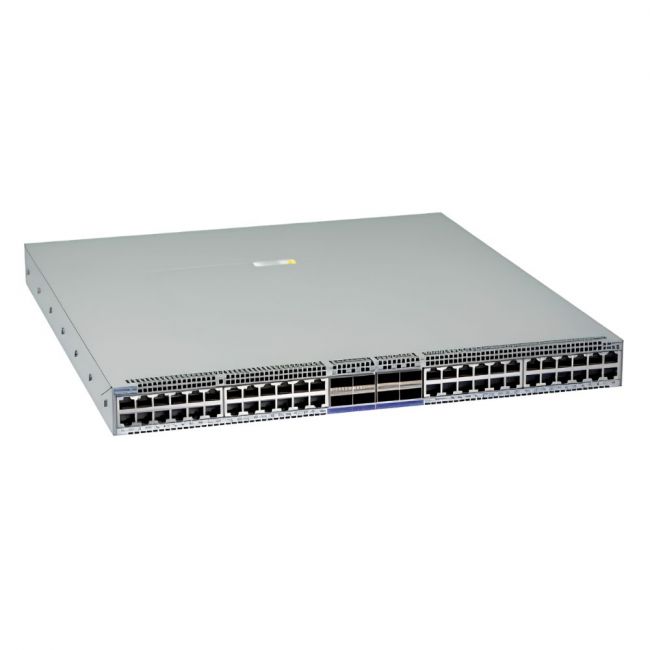
The Arista DCS-7050SX3-48C8C-R switch delivers 48 10 Gigabit Ethernet SFP ports alongside 8 100 Gigabit Ethernet QSFP100 ports, fitting within a rack-mountable chassis designed for data center applications. It caters to environments requiring a mix of 10GbE access and 100GbE uplink capacity, supporting flexible network architectures. |
General Information |
|
|---|---|
| Brand | Arista |
| Condition | Refurbished |
Technical Information |
|
|---|---|
| Switch Type | Layer 3, Managed Switch |
| Form Factor | Rack-Mountable |
| Mount Type | 1U Rack |
| Switch Ports | 48 x 10Gb SFP+ ports, 8 x 100Gb QSFP28 ports |
| Port Type | 100G QSFP28, SFP+, USB Console, Serial Console (RJ-45) |
| Port Speed | 10Gbps,100Gbps |
| UpLink Ports | 8 x 100GbE QSFP28 |
| POE Support | No |
| Switching Capacity | 2.56 Tbps |
| Switch Forwarding Rate | 3,809 Mpps (64-byte frames, approximate) |
| DRAM | 16 GB |
| Flash Memory | 8 GB |
| VLAN Support | Yes |
| Max VLANs Supported | 1-4094 |
| Stackable | No |
| Layer Support | Layer 3 |
| Connector Type | SFP+,QSFP28,USB Console,Serial Console (RJ-45) |
Performance |
|
|---|---|
| Latency | Low latency (sub-microsecond / <1 µs typical) |
| Jumbo Frame Support | Up To 9216 Bytes |
| MAC Address Table Size | 160000 entries (approx) |
Management and Configuration |
|
|---|---|
| Routing Protocols | Static, RIP, OSPF, BGP, VRRP, PIM-SM, IGMP |
| Remote Protocols | Yes |
| Management Interfaces | CLI (SSH), Web UI, Arista CloudVision, eAPI (JSON/REST), SNMP, NETCONF |
| Security Features | ACLs, IEEE 802.1X, RADIUS/TACACS+, SSH, Role-Based Access Control (RBAC), MACsec (platform/feature dependent) |
| Management Type | In-band and Out-of-band (serial console) |
| Remote Management Protocol | SSH,HTTPS,SNMP,REST (eAPI),NETCONF |
| Routing Protocol | Yes |
Power & Cooling |
|
|---|---|
| Fans | Front-to-back hot-swappable fans (field replaceable) |
| Power | AC 100-240V (redundant PSU support), typical power consumption dependent on configuration |
| Power Supply | Redundant hot-swappable AC power supplies (installed/optional depending on SKU) |
Physical Characteristics |
|
|---|---|
| Dimensions | 1.7 x 17.4 x 19.7 inches (H x W x D) |
| Weight | 3.00 |
| Operating Temperature | 0°C to 40°C (32°F to 104°F) |
Miscellaneous |
|
|---|---|
| Eco Friendly | Yes |
| Assembly Required | No |
| Compliance Standards | RoHS, CE, FCC, UL |
| Compliant Standards | IEEE 802.3, IEEE 802.3ae, IEEE 802.3ba, IEEE 802.1Q, IEEE 802.1D, IEEE 802.1p, IEEE 802.3ad |
Product Description |
|---|
The Arista DCS-7050SX3-48C8C-R is a network switch that offers a combination of 48 10 Gigabit Ethernet SFP ports alongside 8 100 Gigabit Ethernet QSFP100 ports. This configuration enables scalable connectivity options for data centers and enterprise network environments requiring both high-density 10GbE access and uplink aggregation with 100GbE speeds. This switch is typically deployed in data centers, cloud computing setups, and large enterprise networks where flexibility in port speeds and high bandwidth throughput are essential. Network engineers and IT professionals use this device to manage traffic efficiently and connect servers, storage, and other networking equipment within high-performance infrastructures. Key Features
This switch provides practical value by enabling organizations to consolidate networking equipment while supporting diverse traffic demands. The combination of 10GbE and 100GbE ports offers versatility in network design, accommodating various workloads and allowing for scalable expansion as network demand grows. |
Use Cases |
|---|
This Arista switch is typically used in data centers and enterprise networking environments where consolidation of 10GbE and 100GbE ports is necessary. It suits workloads involving server connectivity, storage networking, and aggregation of data traffic at the top of racks. How It's Used:
Overall, this switch plays a central role in managing network traffic where both high port density and multi-speed Ethernet support are critical. It enables efficient connectivity and scalability in complex network infrastructures. |
FAQ's |
|---|
|
 Shipping Options
 International Delivery
Requires a UPS, FedEx, or DHL account. Customers may arrange pickup from our US warehouse.
 Payment Methods
We accept Visa, Mastercard, AMEX, Discover, and Wire Transfer.
 Purchase Orders
We process purchase orders for government agencies, enterprises, data centers, and SMBs.