

Subscribe To Our Newsletter!
Subscribe to the newsletter to stay up to date with the latest news and most useful
Newsletter
↑
Back to Top



Product Overview |
|---|
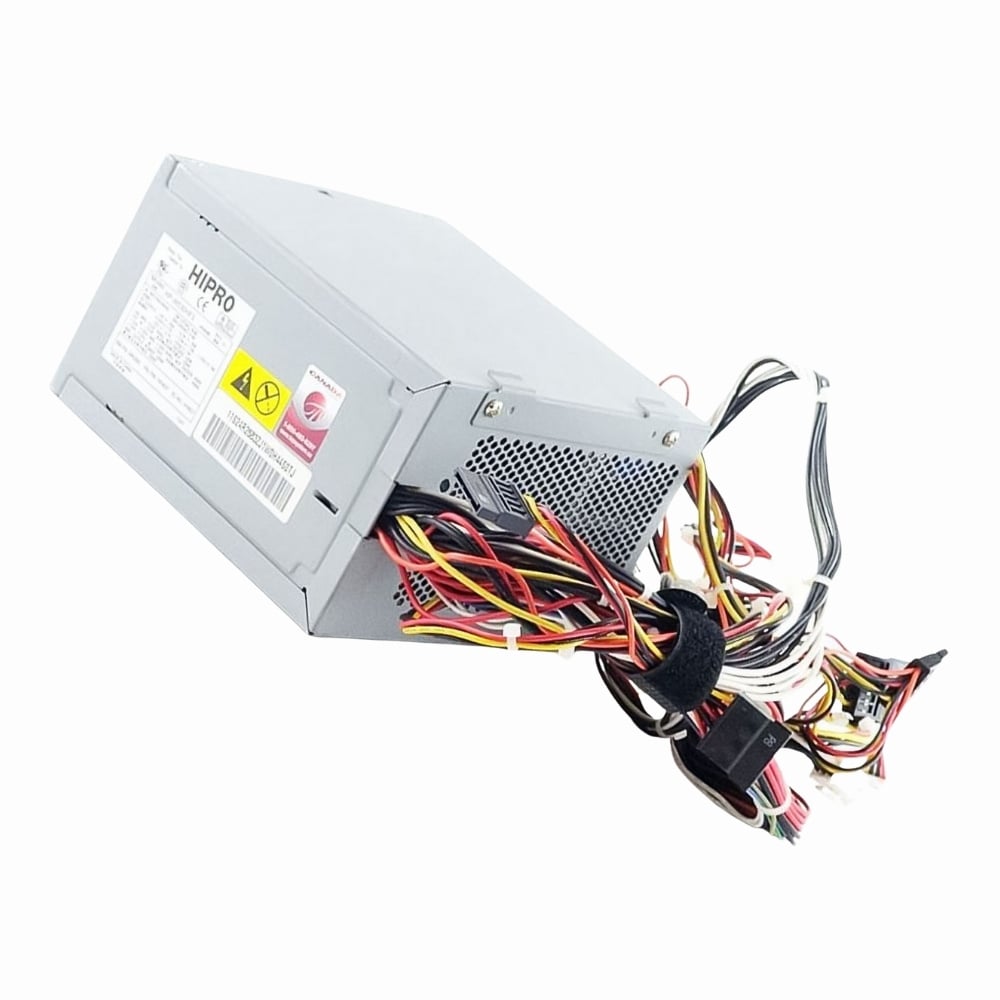
The D4898-69003 HP 370-Watts 100-240V 50-60Hz Hot-Swappable Power Supply delivers steady power to HP servers and enterprise hardware. Its flexible voltage range and hot-swap capability make it ideal for environments where uptime is critical and maintenance needs to happen without shutting systems down. |
General Information |
|
|---|---|
| Brand | HP |
| Part Number | D4898-69003 |
| Product Type | Server Power Supply |
| Condition | Refurbished |
Technical Information |
|
|---|---|
| Input Voltage | 100-240V AC |
| Input Frequency | 50-60Hz |
| Output | 12V DC |
| Max. Output Power | 370W |
| Hot Swappable | Yes |
| Redundant Support | Yes |
| Cooling Type | Active Fan |
| Modularity | Non-Modular |
| rail_design | Single 12V Rail |
| Number of Fans | 1 |
Compatibility |
|
|---|---|
| Form Factor | Proprietary |
Physical Characteristics |
|
|---|---|
| Weight | 3.00 |
Certifications and Environmental |
|
|---|---|
| Compliance Standards | WEEE, RoHS, CE |
Product Description |
|---|
This 370-watt hot-swappable power supply is built to keep your HP servers running smoothly without interruptions. It handles a wide input voltage range from 100 to 240 volts and supports both 50 Hz and 60 Hz frequencies, making it suitable for various global environments. Its hot-swappable feature means you can replace or add power supplies while the server remains operational, minimizing downtime in critical setups. Often found in data centers and enterprise server rooms, this power supply benefits IT professionals and system administrators responsible for maintaining continuous server availability. It is commonly used in HP systems requiring high reliability and efficient power management. Key Features
Power supplies like this are typically deployed in data centers, server farms, and corporate IT infrastructures. They play a crucial role in maintaining continuous operation by allowing quick swaps without shutting down equipment. This helps avoid costly interruptions and keeps essential services running smoothly. |
Use Cases |
|---|
The HP 370W hot-swappable power supply is primarily utilized within enterprise server environments where continuous uptime is critical. It is well-suited for data centers and IT infrastructures that require reliable power solutions to support virtualization, database management, and high-availability applications. How It's Used:
By facilitating hot-swappable and stable power delivery, this power supply enhances operational efficiency and system resilience. Its compatibility with a broad voltage range and enterprise-grade design supports scalable IT deployments requiring minimal service disruption. |
 Shipping Options
 International Delivery
Requires a UPS, FedEx, or DHL account. Customers may arrange pickup from our US warehouse.
International Delivery
Requires a UPS, FedEx, or DHL account. Customers may arrange pickup from our US warehouse.
 Payment Methods
We accept Visa, Mastercard, AMEX, Discover, and Wire Transfer.
Payment Methods
We accept Visa, Mastercard, AMEX, Discover, and Wire Transfer.
 Purchase Orders
We process purchase orders for government agencies, enterprises, data centers, and SMBs.
Purchase Orders
We process purchase orders for government agencies, enterprises, data centers, and SMBs.