

Subscribe To Our Newsletter!
Subscribe to the newsletter to stay up to date with the latest news and most useful
Newsletter
↑
Back to Top



Product Overview |
|---|
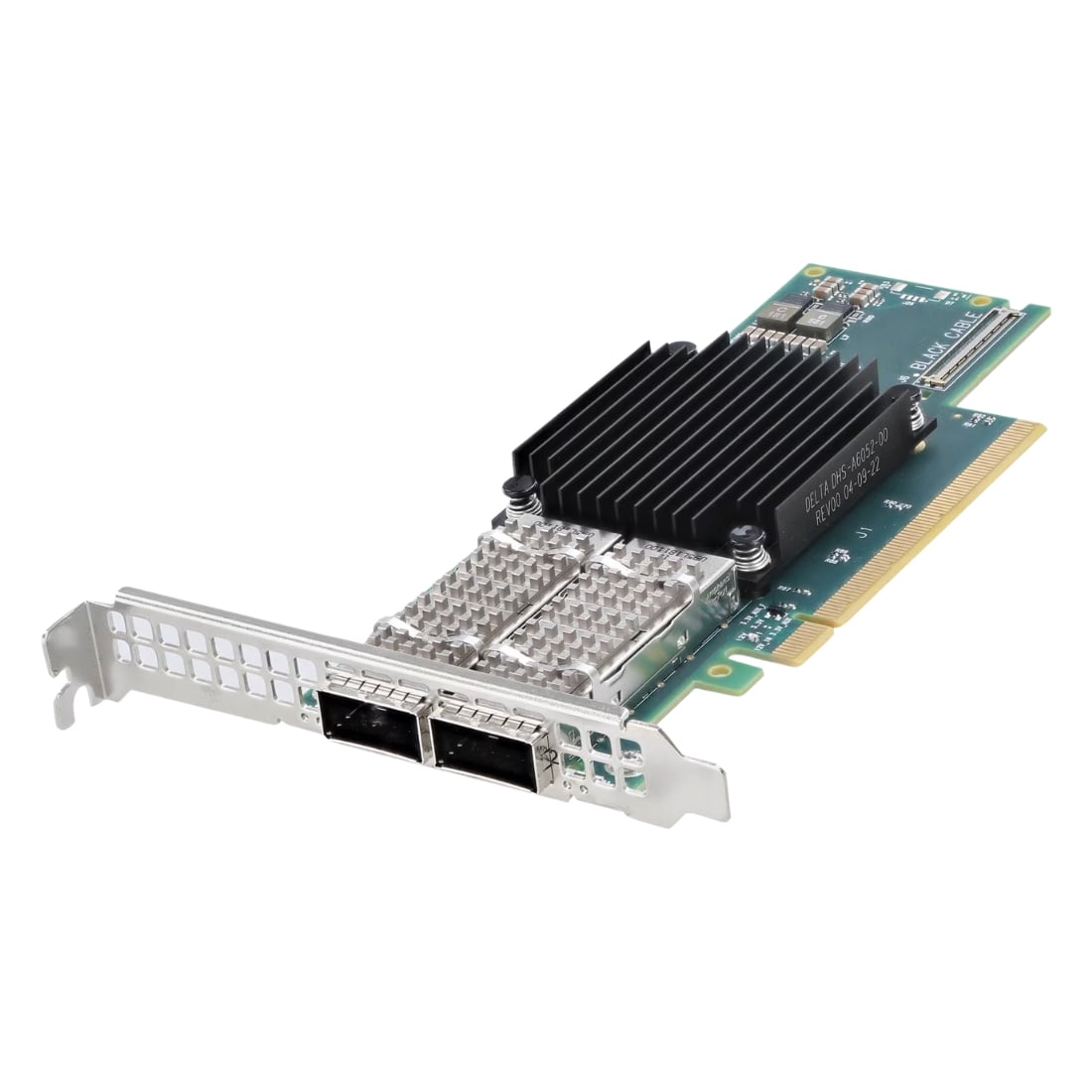
The CX454A Mellanox ConnectX-4 VPI adapter offers dual QSFP28 ports supporting 40 or 56GbE speeds and InfiniBand. It fits into PCIe 3.0 x8 slots to provide fast, efficient connectivity for servers and high-performance systems. This adapter bridges Ethernet and InfiniBand environments, making it a practical solution for diverse data center setups. |
General Information |
|
|---|---|
| Brand | Mellanox |
| Part Number | CX454A |
Connectivity & Physical |
|
|---|---|
| Weight | 3.00 |
| Condition | Refurbished |
Miscellaneous |
|
|---|---|
| Assembly Required | Yes |
| Eco Friendly | Yes |
| Compliance Standards | WEEE, RoHS, cURus, CE, FCC, CCC, UL, TUV, cULus, CSA, cUL |
Product Description |
|---|
The Mellanox ConnectX-4 VPI adapter provides versatile high-performance networking with support for both Ethernet and InfiniBand protocols at speeds up to 56Gbps. It’s commonly used in data centers and high-performance computing environments where low latency and high throughput are crucial. IT professionals and network engineers benefit from its flexible interface and strong virtualization capabilities. Key Features
This adapter is often found in server racks for cloud infrastructure, storage networks, and high-speed computing clusters. Its ability to handle both Ethernet and InfiniBand makes it a versatile choice for environments requiring flexible networking options while maintaining strong performance. |
Use Cases |
|---|
The CX454A Mellanox ConnectX-4 VPI adapter is commonly deployed in data centers and high-performance computing environments where seamless integration between Ethernet and InfiniBand networks is essential. It benefits IT professionals managing virtualization platforms, storage clusters, or latency-sensitive workloads requiring flexible, high-throughput connectivity. How It's Used:
This adapter enhances operational efficiency by bridging network protocols in complex infrastructures and supporting scalable throughput demands. Its advanced features assist in maintaining performance consistency across diverse workloads and evolving data center architectures. |
 Shipping Options
 International Delivery
Requires a UPS, FedEx, or DHL account. Customers may arrange pickup from our US warehouse.
International Delivery
Requires a UPS, FedEx, or DHL account. Customers may arrange pickup from our US warehouse.
 Payment Methods
We accept Visa, Mastercard, AMEX, Discover, and Wire Transfer.
Payment Methods
We accept Visa, Mastercard, AMEX, Discover, and Wire Transfer.
 Purchase Orders
We process purchase orders for government agencies, enterprises, data centers, and SMBs.
Purchase Orders
We process purchase orders for government agencies, enterprises, data centers, and SMBs.