

Subscribe To Our Newsletter!
Subscribe to the newsletter to stay up to date with the latest news and most useful
Newsletter
↑
Back to Top



Product Overview |
|---|
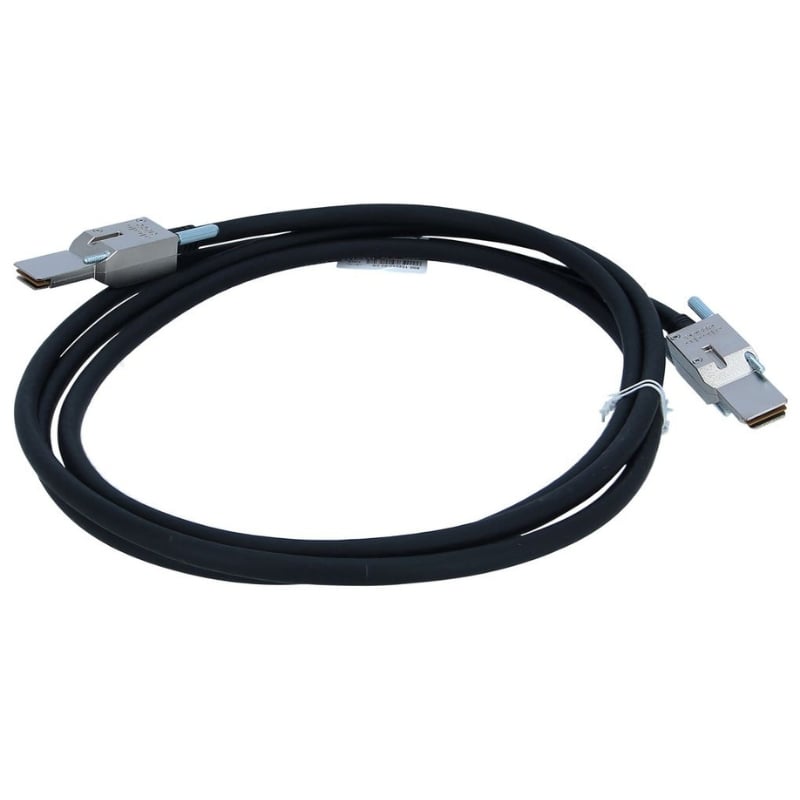
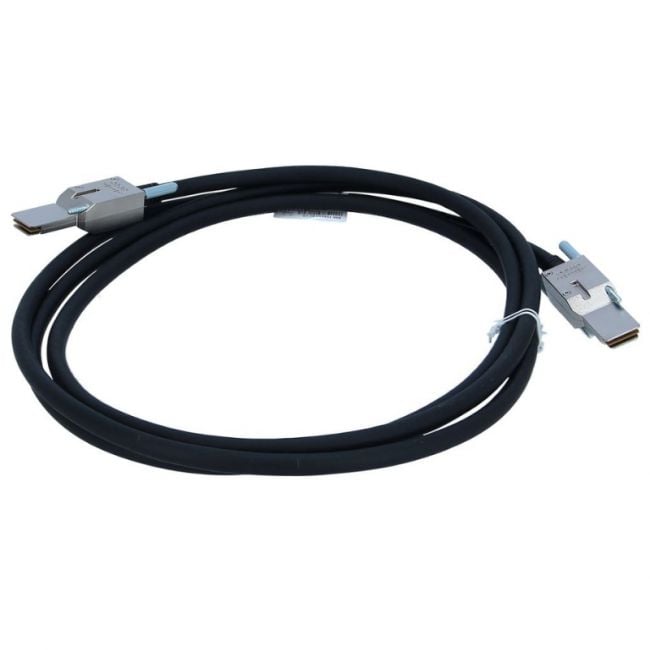
The STACK-T4-3M Cisco 3-meter stacking cable connects compatible Cisco switches to form a single logical unit, improving network scalability and performance. It's a straightforward component that fits into switch stacking setups, providing reliable data paths without fuss. |
General Information |
|
|---|---|
| Brand | Cisco |
| Part Number | STACK-T4-3M |
Technical Information |
|
|---|---|
| Cable Length | 3 m |
| product type | Stacking Cable |
| Product Category | Stacking Cable, Networking Cable |
Connectivity |
|
|---|---|
| Connector Type | Proprietary Cisco stacking connector (StackWise) |
Physical Characteristics |
|
|---|---|
| Weight | 5.00 |
| Condition | Refurbished |
Product Description |
|---|
This 3-meter stacking cable is built for linking multiple Cisco switches into a single stack, allowing them to operate as one unit. It’s commonly used in network setups that require seamless communication and increased bandwidth between stacked switches. Often found in enterprise environments, data centers, and campus networks, this cable benefits network administrators who need flexible and reliable switch stacking solutions. Key Features
This stacking cable is typically deployed in setups where multiple switches are physically spread out but need to function as a unified system. It helps maintain high throughput and simplifies network management by consolidating multiple devices. |
Use Cases |
|---|
The STACK-T4-3M Cisco 3-meter stacking cable is primarily utilized in network environments requiring high-speed, reliable switch stacking. Network architects and IT administrators in enterprise and campus settings benefit from its ability to simplify switch management and improve overall data throughput by linking multiple Catalyst switches. How It's Used:
This stacking cable facilitates operational efficiency by enabling aggregation of multiple switches into a single logical entity, simplifying network management and expanding capacity without sacrificing performance. Its use in diverse environments underscores its role in scalable and resilient network architecture. |
 Shipping Options
 International Delivery
Requires a UPS, FedEx, or DHL account. Customers may arrange pickup from our US warehouse.
International Delivery
Requires a UPS, FedEx, or DHL account. Customers may arrange pickup from our US warehouse.
 Payment Methods
We accept Visa, Mastercard, AMEX, Discover, and Wire Transfer.
Payment Methods
We accept Visa, Mastercard, AMEX, Discover, and Wire Transfer.
 Purchase Orders
We process purchase orders for government agencies, enterprises, data centers, and SMBs.
Purchase Orders
We process purchase orders for government agencies, enterprises, data centers, and SMBs.