

Subscribe To Our Newsletter!
Subscribe to the newsletter to stay up to date with the latest news and most useful
Newsletter
↑
Back to Top



Product Overview |
|---|
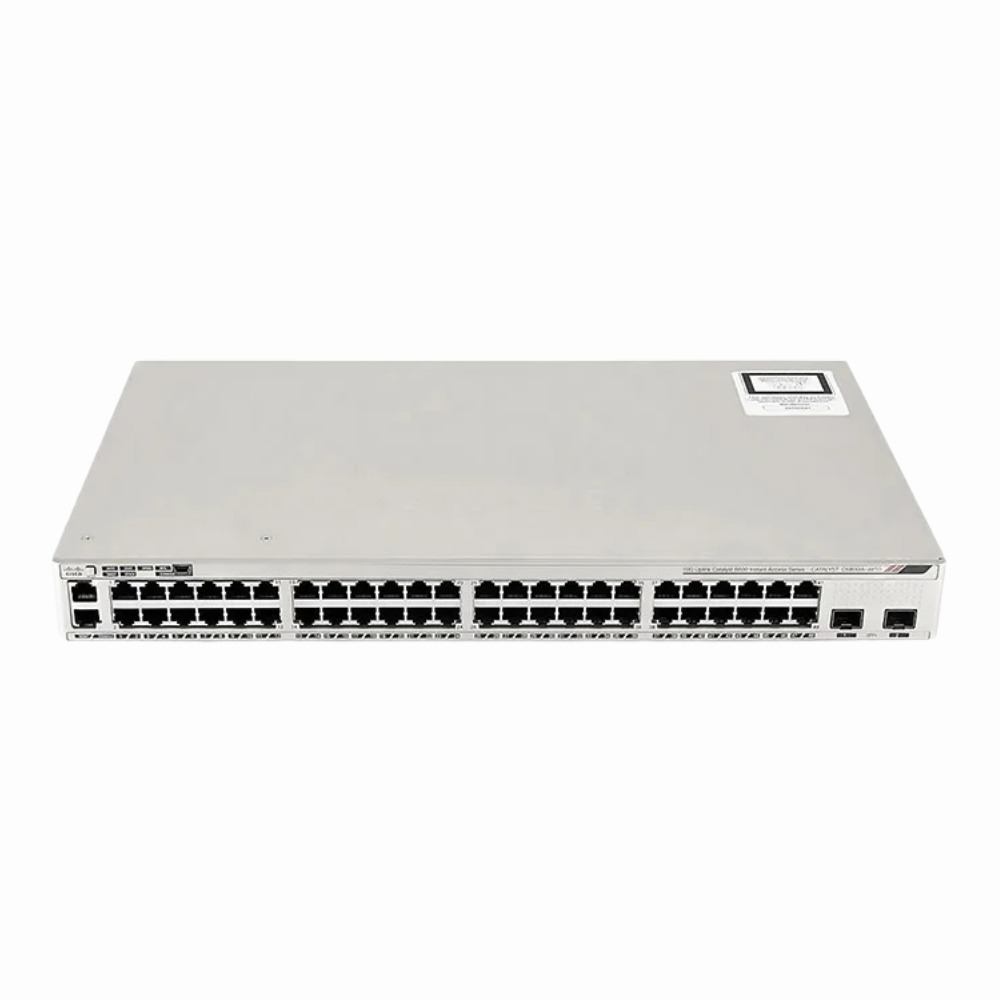
The Cisco Catalyst 6800IA-48TD is a 48-port gigabit switch with additional 10 Gigabit SFP+ uplinks, built for Layer 2 network environments. It fits well in enterprise access or aggregation layers where stable, managed connectivity is needed without extra complexity. |
General Information |
|
|---|---|
| Brand | Cisco |
| Part Number | C6800IA-48TD |
| Condition | Refurbished |
Technical Information |
|
|---|---|
| Switch Ports | 48 |
| Number of Ports | 48-Ports |
| Port Type | 1000Base-T, SFP+ |
| Port Speed | 1 Gbps |
| UpLink Ports | 2 |
| POE Support | No |
| VLAN Support | Yes |
| Stackable | No |
| Layer Support | Layer 2 |
| Connector Type | RJ-45,SFP+ |
Performance |
|
|---|---|
| Jumbo Frame Support | Up To 9216 Bytes |
Management and Configuration |
|
|---|---|
| Remote Protocols | Yes |
| Management Interfaces | CLI,Web GUI,SNMP,Serial Console (RJ-45),USB Console |
| Security Features | 802.1X,Access Control Lists (ACLs),SSH,Port Security |
| Remote Management Protocol | SSH,HTTPS,Telnet,SNMP |
Physical Characteristics |
|
|---|---|
| Weight | 3.00 |
Miscellaneous |
|
|---|---|
| Compliance Standards | WEEE, RoHS, CE, FCC, UL |
Product Description |
|---|
The Cisco Catalyst 6800IA-48TD is a Layer 2 managed switch designed for reliable gigabit connectivity in enterprise networks. It provides 48 copper Ethernet ports and 2 high-speed SFP+ uplink ports, making it a solid choice for aggregating access layer devices. Often found in medium to large network environments, this switch handles routine traffic efficiently with features tailored for simplified management and robust performance. Network administrators and IT teams benefit from its configurable options and compact 1U form factor. Key Features
This switch is typically deployed in wiring closets or data centers where reliable gigabit access and uplink flexibility are essential. Its role in networks is to connect end devices smoothly while enabling straightforward management and troubleshooting. |
Use Cases |
|---|
The Cisco Catalyst 6800IA-48TD is ideal for enterprise network segments requiring reliable gigabit access with scalable uplinks. It suits environments that demand granular Layer 2 management, such as medium to large corporate campuses and data aggregation points where efficient traffic segregation and forwarding are essential. How It's Used:
This switch enables streamlined network operations by consolidating numerous gigabit endpoints with scalable uplink capacity. Its Layer 2 capabilities support efficient VLAN management and traffic control, aiding in maintaining performance consistency and preparing the network for future growth within complex IT infrastructures. |
 Shipping Options
 International Delivery
Requires a UPS, FedEx, or DHL account. Customers may arrange pickup from our US warehouse.
International Delivery
Requires a UPS, FedEx, or DHL account. Customers may arrange pickup from our US warehouse.
 Payment Methods
We accept Visa, Mastercard, AMEX, Discover, and Wire Transfer.
Payment Methods
We accept Visa, Mastercard, AMEX, Discover, and Wire Transfer.
 Purchase Orders
We process purchase orders for government agencies, enterprises, data centers, and SMBs.
Purchase Orders
We process purchase orders for government agencies, enterprises, data centers, and SMBs.