

Subscribe To Our Newsletter!
Subscribe to the newsletter to stay up to date with the latest news and most useful
Newsletter
↑
Back to Top



Product Overview |
|---|
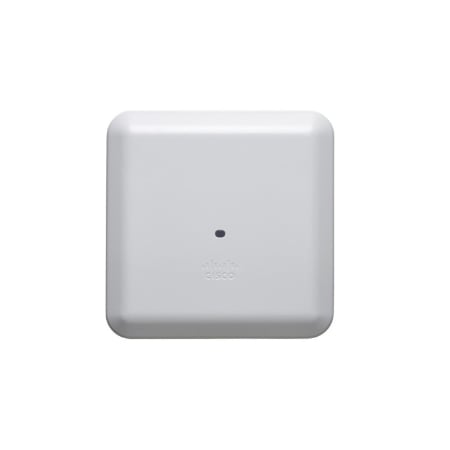
The Cisco Aironet 3802i wireless access point delivers advanced 802.11ac Wave 2 capabilities that enhance wireless performance and user capacity. It's tailored for indoor environments where consistent, high-speed Wi-Fi is critical, fitting well into enterprise networks that require scalable and manageable wireless solutions. |
General Information |
|
|---|---|
| Brand | Cisco |
| Part Number | AIR-AP3802I-E-K9 |
Technical Information |
|
|---|---|
| Frequency Bands | 2.4 GHz,5 GHz |
| Data Rate | Up to 1733 Mbps (5 GHz), up to 600 Mbps (2.4 GHz), combined up to ~2333 Mbps |
| Interface | 802.11ac Wave 2,802.11a,802.11b,802.11g,802.11n |
| WiFi Standard | IEEE 802.11ac Wave 2,IEEE 802.11a,IEEE 802.11b,IEEE 802.11g,IEEE 802.11n |
| Security | WPA2-PSK,WPA-PSK,WPA2-Enterprise (802.1X),802.11i,MAC filtering |
| MIMO | Yes |
| Ethernet Port | 2 x 10/100/1000 Ethernet (one supports PoE+ / 802.3at) |
Physical Characteristics |
|
|---|---|
| Weight | 3.00 |
| Condition | Refurbished |
Miscellaneous |
|
|---|---|
| Compliance Standards | WEEE, RoHS, CE, FCC, UL, cULus |
Product Description |
|---|
The Cisco Aironet 3802i is designed to provide high-performance wireless connectivity in busy office spaces, schools, and public venues. It uses 802.11ac Wave 2 technology to improve network speed and capacity, especially in environments with many users. Often found in enterprise settings, this access point supports multiple simultaneous device connections, improving overall wireless experience. IT administrators benefit from its integration with Cisco's management tools, making deployment and maintenance straightforward. Key Features
This access point is commonly deployed in office buildings, educational campuses, and other indoor environments where reliable, high-speed Wi-Fi is essential. It helps maintain smooth connections for multiple devices, reducing bottlenecks during peak usage. |
 Shipping Options
 International Delivery
Requires a UPS, FedEx, or DHL account. Customers may arrange pickup from our US warehouse.
International Delivery
Requires a UPS, FedEx, or DHL account. Customers may arrange pickup from our US warehouse.
 Payment Methods
We accept Visa, Mastercard, AMEX, Discover, and Wire Transfer.
Payment Methods
We accept Visa, Mastercard, AMEX, Discover, and Wire Transfer.
 Purchase Orders
We process purchase orders for government agencies, enterprises, data centers, and SMBs.
Purchase Orders
We process purchase orders for government agencies, enterprises, data centers, and SMBs.