

Subscribe To Our Newsletter!
Subscribe to the newsletter to stay up to date with the latest news and most useful
Newsletter
↑
Back to Top



Product Overview |
|---|
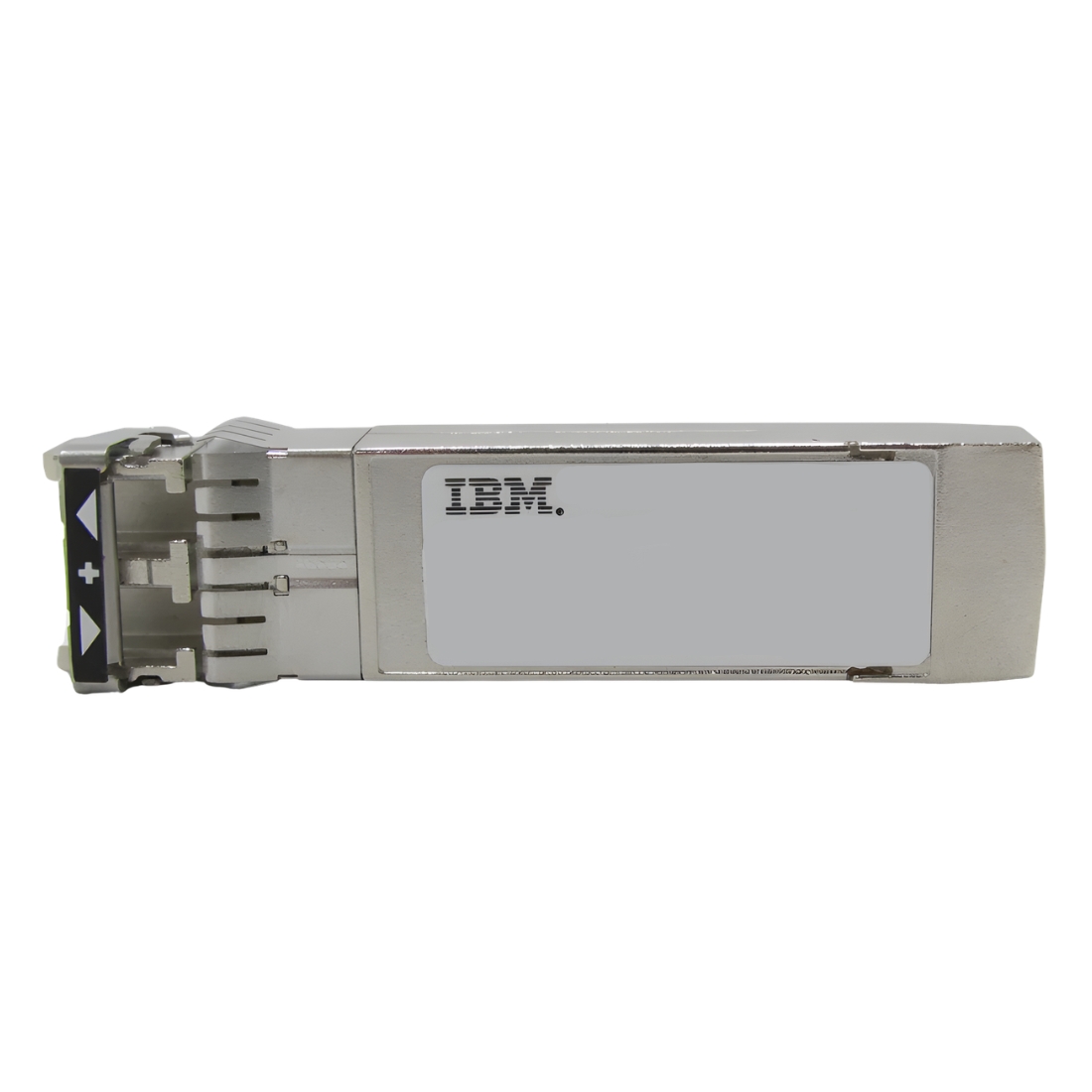
The AFBR-709SMZ-IB8 is a 10Gb/s SFP+ transceiver module made for multi-mode fiber networks. It fits into standard SFP+ slots and handles short-range data transmission efficiently, making it a practical choice for connecting switches and servers within data centers or campus networks. |
General Information |
|
|---|---|
| Brand | IBM |
| Part Number | AFBR-709SMZ-IB8 |
Technical Information |
|
|---|---|
| Form Factor | SFP+ |
| Media | MMF |
| Type | VCSEL |
| Power Consumption | ≤1 W (typ. ~0.7 W) |
| Protocols | 10GBase-SR,10GBase-SW |
| Connector | LC Duplex |
| DOM Support | Yes |
Physical Characteristics |
|
|---|---|
| Weight | 3.00 |
| Condition | Refurbished |
Product Description |
|---|
This SFP+ transceiver module is designed to transmit and receive data at 10 gigabits per second using multi-mode fiber. It operates at an 850nm wavelength and supports 10GBase-SW/SR standards, making it suitable for short-range communication within data centers or enterprise networks. Typically found in high-performance networking equipment, it enables fast and reliable fiber connectivity. Key Features
Commonly deployed in data centers, telecom rooms, and enterprise LANs, this transceiver supports backbone and server connections where high bandwidth and low latency are vital. It helps maintain stable data flows and reduces network downtime in demanding environments. |
Use Cases |
|---|
The AFBR-709SMZ-IB8 transceiver is ideal for short-range, high-bandwidth connections within data centers or enterprise networks utilizing multi-mode fiber infrastructure. It is especially suitable for environments requiring reliable 10Gb/s links between network switches, servers, and storage systems where latency and throughput are critical. How It's Used:
By delivering efficient short-range 10Gb/s connectivity over multi-mode fiber, this module helps maintain high network performance and scalability. It supports operational demands where density and low latency are essential, contributing to optimized infrastructure management. |
 Shipping Options
 International Delivery
Requires a UPS, FedEx, or DHL account. Customers may arrange pickup from our US warehouse.
 Payment Methods
We accept Visa, Mastercard, AMEX, Discover, and Wire Transfer.
 Purchase Orders
We process purchase orders for government agencies, enterprises, data centers, and SMBs.