

Subscribe To Our Newsletter!
Subscribe to the newsletter to stay up to date with the latest news and most useful
Newsletter
↑
Back to Top



Product Overview |
|---|
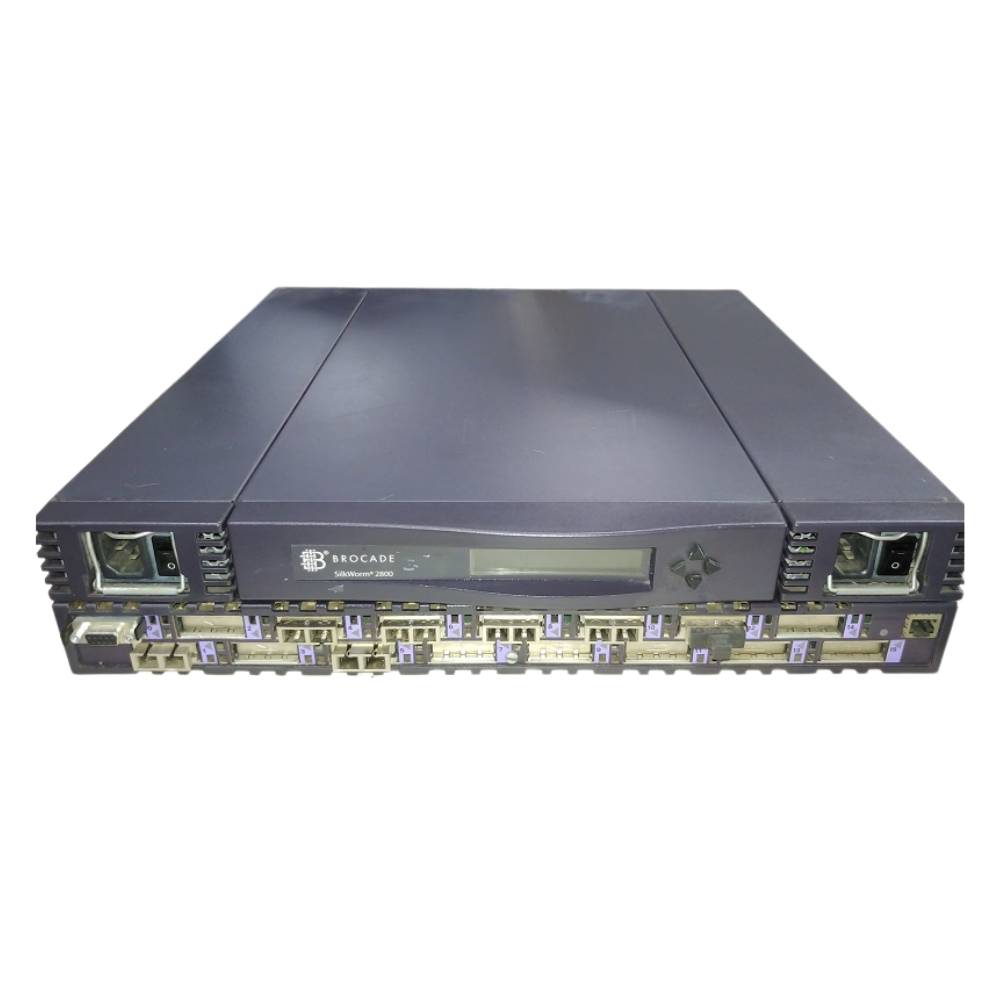
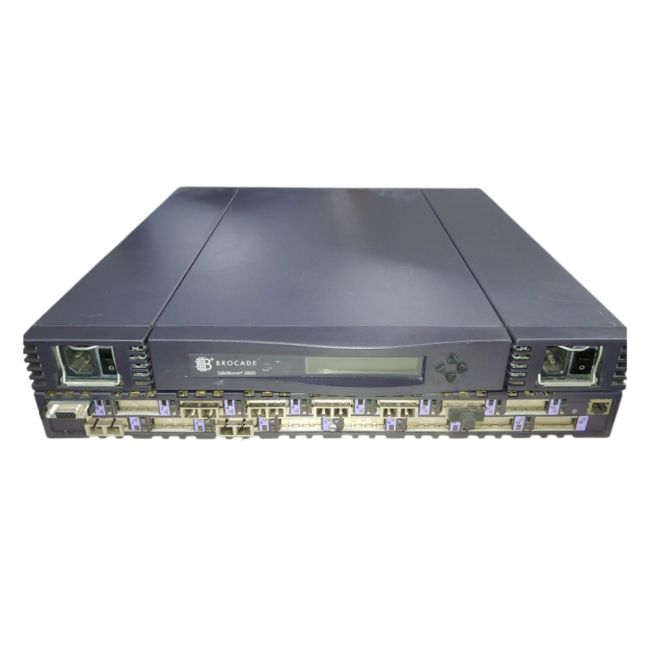
The Brocade Silkworm 2800 provides reliable Fibre Channel switching with 16 ports designed to connect storage devices and servers effectively. It fits well in mid-sized SAN deployments where steady data flow and fabric management are essential without extra complexity. |
General Information |
|
|---|---|
| Brand | Brocade |
Technical Information |
|
|---|---|
| Protocol | Fibre Channel (FC) |
| Network Topology | Switched Fabric (N-Port) |
Advanced Features & Compatibility |
|
|---|---|
| Management Features | Full Fabric Support, Diagnostics (D_Port) |
Physical Characteristics |
|
|---|---|
| Form Factor | 1U Rackmount |
| Weight | 3.00 |
| Condition | Refurbished |
Miscellaneous |
|
|---|---|
| Assembly Required | No |
Product Description |
|---|
The Brocade Silkworm 2800 is a Fibre Channel SAN switch designed to facilitate high-speed data transfer within storage area networks. Commonly found in enterprise and mid-sized data centers, it provides reliable connectivity between servers and storage devices. Built for storage and IT professionals, this switch offers essential fabric services while maintaining straightforward management. It often appears in environments requiring stable and efficient SAN infrastructure. Key Features
This switch plays a vital role in maintaining consistent and reliable storage network connectivity. Its stable performance and manageable features make it a dependable choice for SAN infrastructure. |
Use Cases |
|---|
This switch is typically deployed in enterprise and medium-sized data centers where dependable SAN connectivity is necessary. It suits environments where storage networks need basic but reliable switching capabilities to support server-to-storage communication. How It's Used:
In these settings, the switch contributes to efficient storage network operations by providing consistent performance and essential fabric features. It helps maintain smooth data transfers and scalable connectivity as demands evolve. |
 Shipping Options
 International Delivery
Requires a UPS, FedEx, or DHL account. Customers may arrange pickup from our US warehouse.
International Delivery
Requires a UPS, FedEx, or DHL account. Customers may arrange pickup from our US warehouse.
 Payment Methods
We accept Visa, Mastercard, AMEX, Discover, and Wire Transfer.
Payment Methods
We accept Visa, Mastercard, AMEX, Discover, and Wire Transfer.
 Purchase Orders
We process purchase orders for government agencies, enterprises, data centers, and SMBs.
Purchase Orders
We process purchase orders for government agencies, enterprises, data centers, and SMBs.