

Subscribe To Our Newsletter!
Subscribe to the newsletter to stay up to date with the latest news and most useful
Newsletter
↑
Back to Top



Product Overview |
|---|
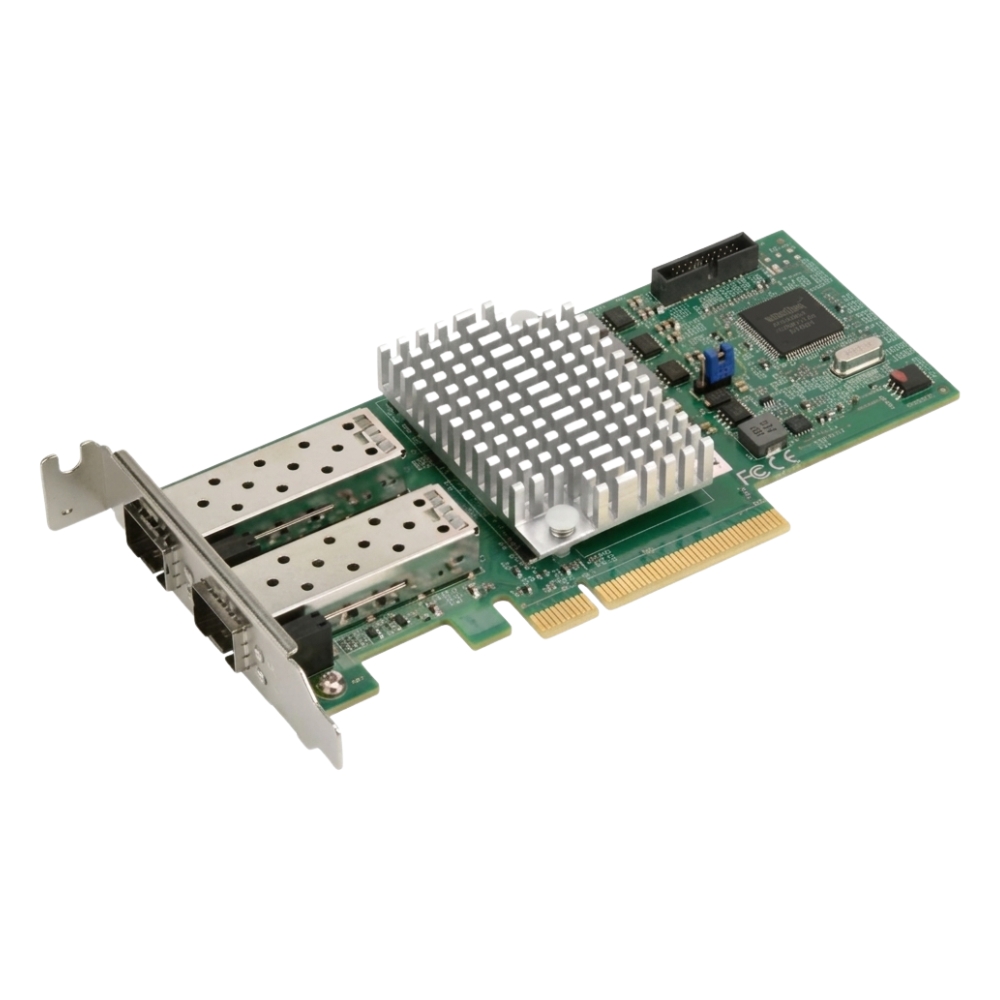
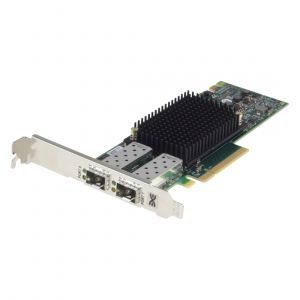
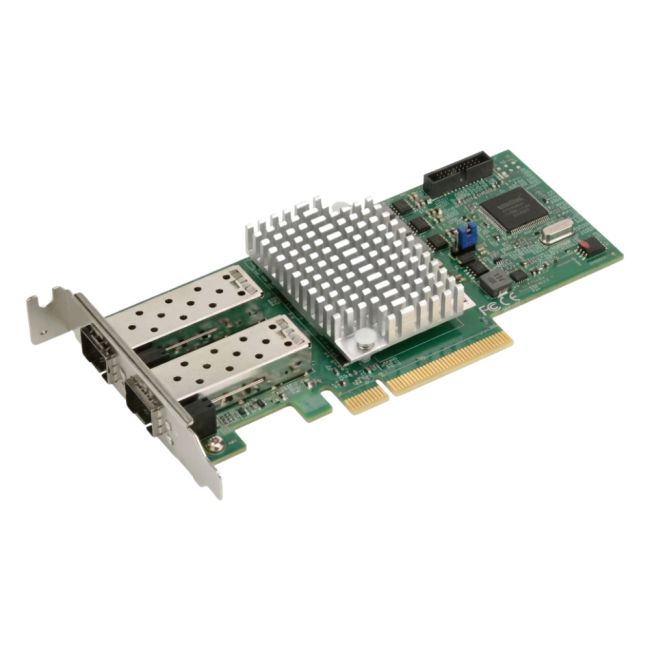
The Supermicro AOC-S25G-B2S is a dual-port 25GbE network interface card supporting low latency RoCE protocol. It fits into standard PCIe slots and is designed for use in server environments requiring fast and efficient network communication. |
General Information |
|
|---|---|
| Brand | Supermicro |
Technical Information |
|
|---|---|
| Product Type | Network Interface Card |
| Virtualization Support | SR-IOV |
| Data Rate (Speed) | 25GbE |
| Data Center Bridging | Yes |
| Interface (Bus) | PCIe 3.0 x8 |
| Number of Ports | 2-Port (Dual) |
| Offload Support | RDMA, RoCE v2, PXE Boot, Wake-on-LAN (WoL), Jumbo Frames |
| Bracket Height | Both Brackets Included |
Connectivity & Physical |
|
|---|---|
| Form Factor | Standard PCIe Card |
| Port Type | SFP28 |
| Weight | 3.00 |
| Condition | Refurbished |
Miscellaneous |
|
|---|---|
| Assembly Required | No |
| Compliance Standards | RoHS, CE, FCC |
Product Description |
|---|
The AOC-S25G-B2S from Supermicro is a network interface card designed to provide dual 25 Gigabit Ethernet (GbE) connectivity. It is engineered to support low latency communication using RDMA over Converged Ethernet (RoCE), making it suitable for demanding network workloads. This card typically integrates into server systems requiring high-speed data transfer and efficient packet processing, particularly in data center and enterprise environments. Key Features
The AOC-S25G-B2S network interface card plays a critical role in environments where minimizing communication delays and maximizing data transfer rates are important. It helps servers handle intensive network traffic with reduced latency, which is essential for certain enterprise and cloud computing applications. |
Use Cases |
|---|
This network card is typically used in data centers and enterprise IT settings where 25GbE connectivity and low latency are required. It benefits workloads that demand rapid data exchange and efficient network protocols. How It's Used:
Overall, this NIC serves as a vital component for managing high-speed network traffic with minimized communication delays, improving server performance in demanding network scenarios. |
FAQ's |
|---|
|
 Shipping Options
 International Delivery
Requires a UPS, FedEx, or DHL account. Customers may arrange pickup from our US warehouse.
 Payment Methods
We accept Visa, Mastercard, AMEX, Discover, and Wire Transfer.
 Purchase Orders
We process purchase orders for government agencies, enterprises, data centers, and SMBs.