

Subscribe To Our Newsletter!
Subscribe to the newsletter to stay up to date with the latest news and most useful
Newsletter
↑
Back to Top



Product Overview |
|---|
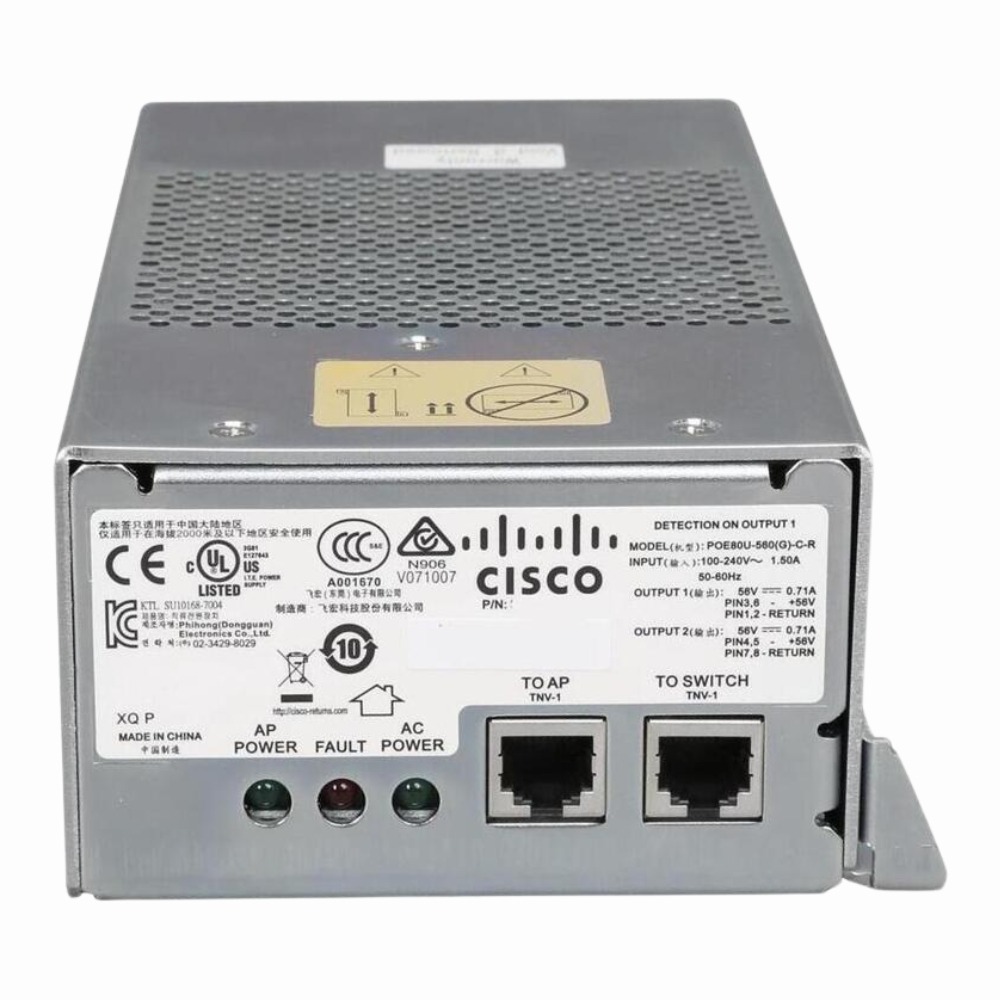
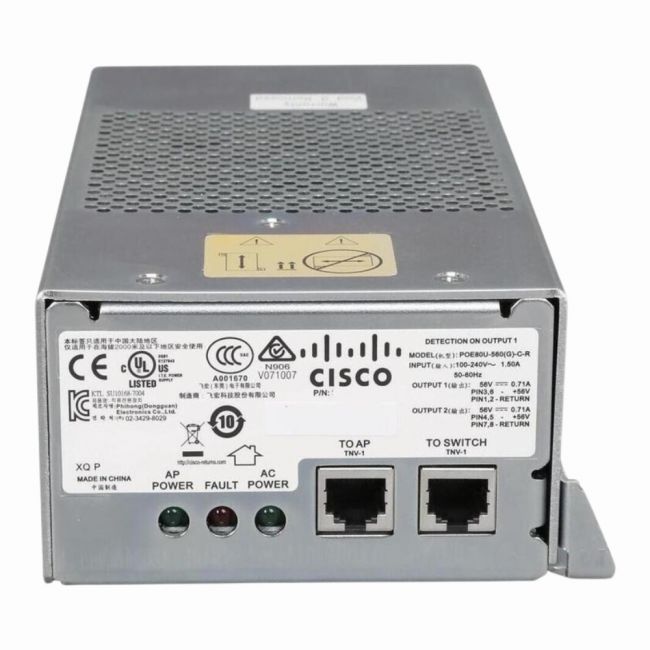
The Cisco AIR-PWRINJ1500-2 PoE injector supplies power and data connectivity to the Aironet 1522AG Lightweight Outdoor Mesh Access Point. It fits into outdoor wireless setups where reliable power delivery over Ethernet simplifies installation and helps maintain network stability across wireless mesh nodes. |
General Information |
|
|---|---|
| Brand | Cisco |
| Part Number | AIR-PWRINJ1500-2 |
| Product Type | Server Power Supply |
Miscellaneous |
|
|---|---|
| Compliance Standards | RoHS, CE, FCC |
Physical Characteristics |
|
|---|---|
| Weight | 9.00 |
| Condition | Refurbished |
Product Description |
|---|
The Cisco AIR-PWRINJ1500-2 is a Power over Ethernet injector designed specifically for the Aironet 1522AG Lightweight Outdoor Mesh Access Point. It enables both power and data transmission through a single Ethernet cable, simplifying installation in outdoor environments. Commonly found in wireless mesh networks, this injector helps maintain consistent network performance across outdoor access points, supporting seamless connectivity in areas like campuses, parks, and large outdoor venues. Network administrators and IT professionals benefit from its straightforward setup and dependable power delivery. Key Features
This PoE injector is typically deployed in outdoor wireless mesh infrastructures where running separate power lines is impractical. It plays a key role in enabling mesh access points to provide extended wireless coverage with minimal wiring complexity. |
Use Cases |
|---|
The Cisco AIR-PWRINJ1500-2 PoE injector is primarily utilized in outdoor wireless mesh network deployments where Aironet 1522AG Lightweight Outdoor Mesh Access Points are installed. It benefits network administrators and IT specialists managing remote or distributed environments requiring robust and simplified power and data delivery via a single Ethernet cable. How It's Used:
By integrating power and data delivery in a single device, the AIR-PWRINJ1500-2 enhances operational efficiency and reduces installation complexity for outdoor wireless mesh configurations. This contributes to improved network scalability and consistent performance in distributed outdoor environments. |
 Shipping Options
 International Delivery
Requires a UPS, FedEx, or DHL account. Customers may arrange pickup from our US warehouse.
International Delivery
Requires a UPS, FedEx, or DHL account. Customers may arrange pickup from our US warehouse.
 Payment Methods
We accept Visa, Mastercard, AMEX, Discover, and Wire Transfer.
Payment Methods
We accept Visa, Mastercard, AMEX, Discover, and Wire Transfer.
 Purchase Orders
We process purchase orders for government agencies, enterprises, data centers, and SMBs.
Purchase Orders
We process purchase orders for government agencies, enterprises, data centers, and SMBs.