

Subscribe To Our Newsletter!
Subscribe to the newsletter to stay up to date with the latest news and most useful
Newsletter
↑
Back to Top



| Product Overview |
|---|
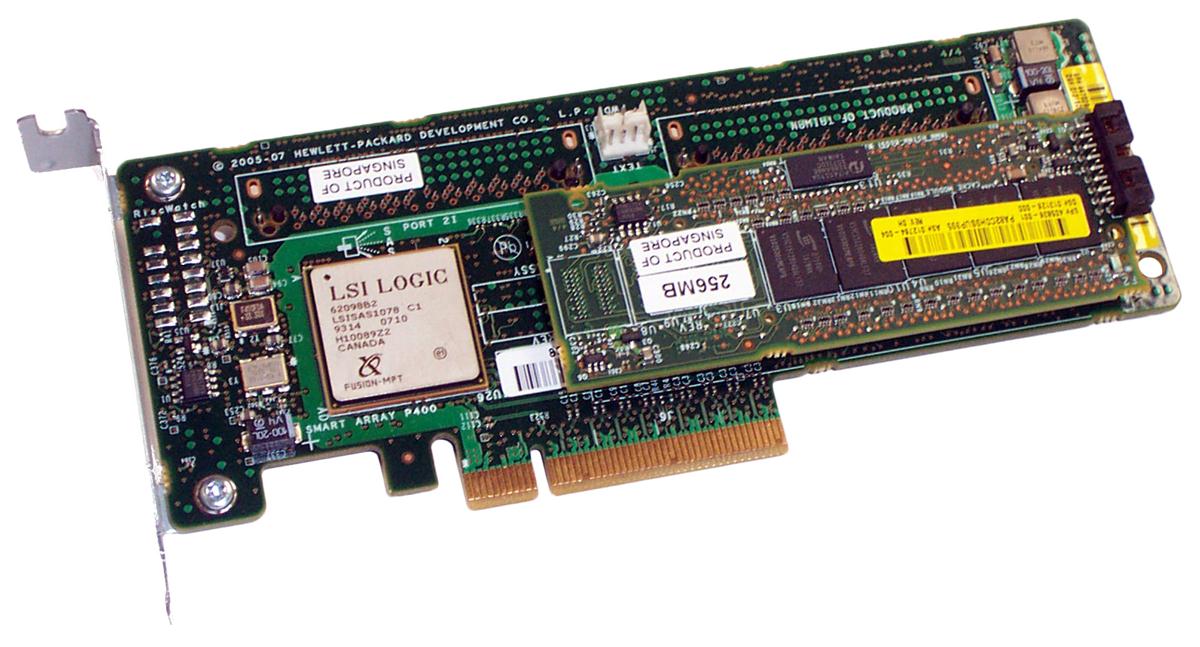
The AD397A HP Smart Array P400 RAID controller card offers robust management of up to eight SAS drives through a PCI-Express connection. It fits into server environments that demand reliable RAID configurations and consistent data protection by leveraging its 256MB battery-backed write cache and support for multiple RAID levels. This controller is a practical solution for administrators looking to enhance storage performance and maintain data integrity in critical applications. |
| General Information | |
|---|---|
| Brand | HP |
| Part Number | AD397A |
| Technical Specification | |
|---|---|
| Host Interface | PCI Express x8 |
| Data Rate | 3 Gbps per SAS port |
| RAID Levels | 0,1,1+0,5,50 |
| Cache | 256 MB BBWC (Battery-Backed Write Cache) |
| Ports | 8 (SAS channels) |
| Connectivity | Serial Attached SCSI (SAS) 3 Gbps |
| Compatibility | HP ProLiant servers; Windows Server, Linux, VMware (driver support required) |
| Physical Characteristics | |
|---|---|
| Form Factor | PCI Express x8 server RAID controller (low-profile/full-height bracket variants) |
| Weight | 5.00 |
| Condition | Refurbished |
| Miscellaneous | |
|---|---|
| Eco Friendly | Yes |
| Compliance Standards | WEEE, RoHS, CE, FCC, UL, cULus |
| Product Description |
|---|
The AD397A HP Smart Array P400 is a RAID controller card designed to manage multiple Serial Attached SCSI (SAS) drives efficiently. It is commonly used in servers and storage arrays where reliable RAID configurations and data integrity are essential. Built for IT professionals and system administrators, this controller provides a flexible way to optimize storage performance and redundancy. It often finds a place in data centers, small to medium business servers, and applications that require consistent storage reliability. Key Features
This controller is typically deployed in enterprise environments where maintaining uptime and data safety is critical. It plays a key role in balancing speed and fault tolerance, helping IT teams manage server storage more effectively. |
 Shipping Options
 International Delivery
Requires a UPS, FedEx, or DHL account. Customers may arrange pickup from our US warehouse.
International Delivery
Requires a UPS, FedEx, or DHL account. Customers may arrange pickup from our US warehouse.
 Payment Methods
We accept Visa, Mastercard, AMEX, Discover, and Wire Transfer.
Payment Methods
We accept Visa, Mastercard, AMEX, Discover, and Wire Transfer.
 Purchase Orders
We process purchase orders for government agencies, enterprises, data centers, and SMBs.
Purchase Orders
We process purchase orders for government agencies, enterprises, data centers, and SMBs.