

Subscribe To Our Newsletter!
Subscribe to the newsletter to stay up to date with the latest news and most useful
Newsletter
↑
Back to Top



Product Overview |
|---|
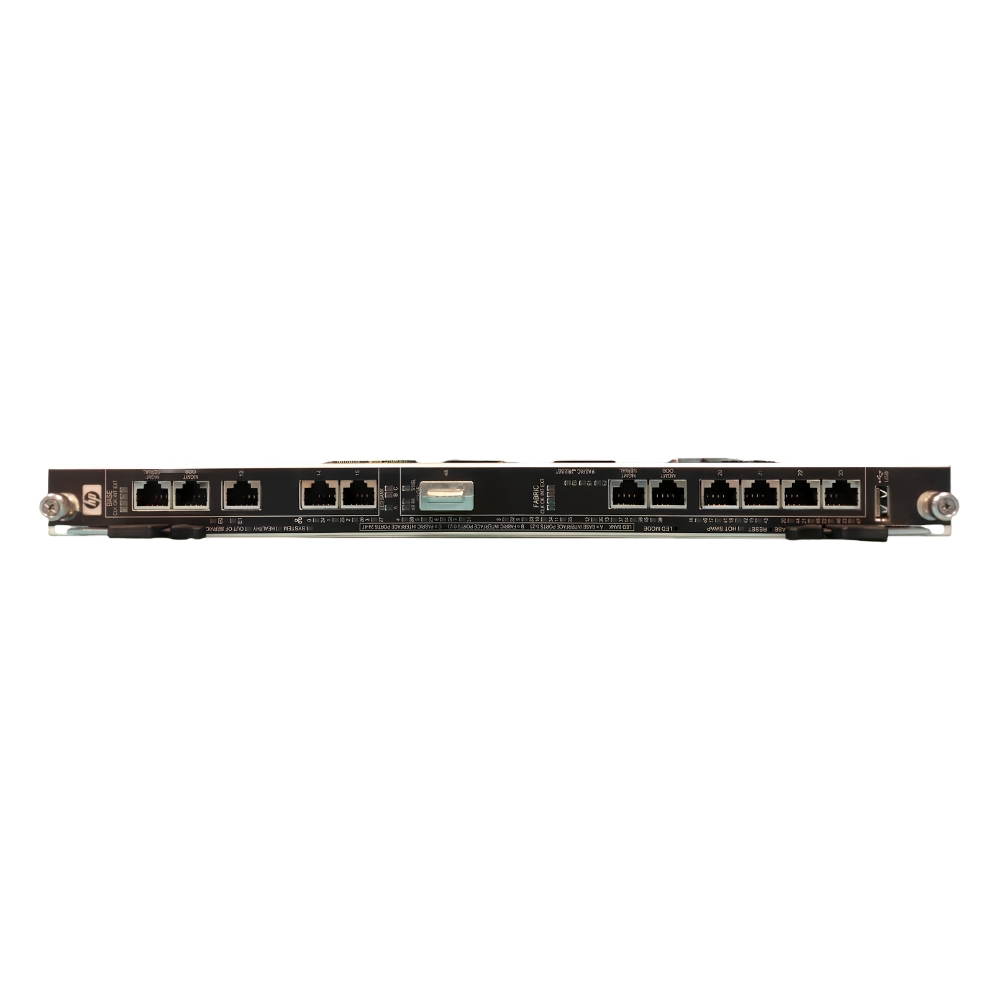
The AD173-60001 - HP Ethernet Blade Switch is a compact network device built for blade server chassis, providing efficient Ethernet connectivity across multiple servers. It fits within blade enclosures to offer high-speed, low-latency switching that supports dense server setups without adding significant complexity. |
General Information |
|
|---|---|
| Brand | HP |
| Condition | Refurbished |
Technical Information |
|
|---|---|
| Switch Type | Layer 2, Managed Switch |
| Form Factor | Chassis-Based |
| POE Support | No |
| VLAN Support | Yes |
| Stackable | No |
| Layer Support | Layer 2 |
Performance |
|
|---|---|
| Jumbo Frame Support | Up To 9216 Bytes |
Management and Configuration |
|
|---|---|
| Remote Protocols | Yes |
Physical Characteristics |
|
|---|---|
| Weight | 3.00 |
Product Description |
|---|
The AD173-60001 is an Ethernet blade switch designed to deliver reliable network connectivity within blade server environments. It is commonly found in data centers and enterprise computing setups where space-efficient and high-performance network solutions are essential. This switch is built for IT professionals managing blade chassis who require scalable and manageable network infrastructure. Key Features
By combining compact design with robust network functions, this blade switch plays a vital role in streamlining internal network communication. Its performance and stability contribute to maintaining consistent operational uptime and a manageable network environment. |
Use Cases |
|---|
The AD173-60001 Ethernet blade switch is typically deployed in enterprise data centers and virtualization environments where scalable, dense networking within blade server chassis is needed. It benefits IT teams managing blade infrastructures by simplifying network design and ensuring dependable internal communication. How It's Used:
This switch enhances operational efficiency by reducing cabling needs and network complexity in high-density server environments. It supports scalable deployments and helps maintain consistent network performance across blade server infrastructures. |
 Shipping Options
 International Delivery
Requires a UPS, FedEx, or DHL account. Customers may arrange pickup from our US warehouse.
International Delivery
Requires a UPS, FedEx, or DHL account. Customers may arrange pickup from our US warehouse.
 Payment Methods
We accept Visa, Mastercard, AMEX, Discover, and Wire Transfer.
Payment Methods
We accept Visa, Mastercard, AMEX, Discover, and Wire Transfer.
 Purchase Orders
We process purchase orders for government agencies, enterprises, data centers, and SMBs.
Purchase Orders
We process purchase orders for government agencies, enterprises, data centers, and SMBs.