

Subscribe To Our Newsletter!
Subscribe to the newsletter to stay up to date with the latest news and most useful
Newsletter
↑
Back to Top



Product Overview |
|---|
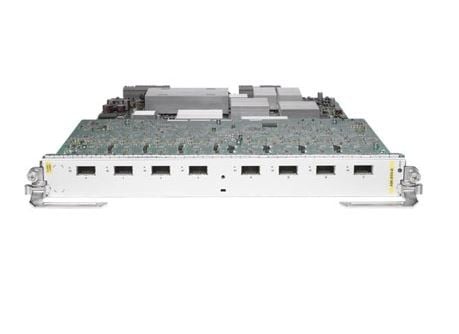
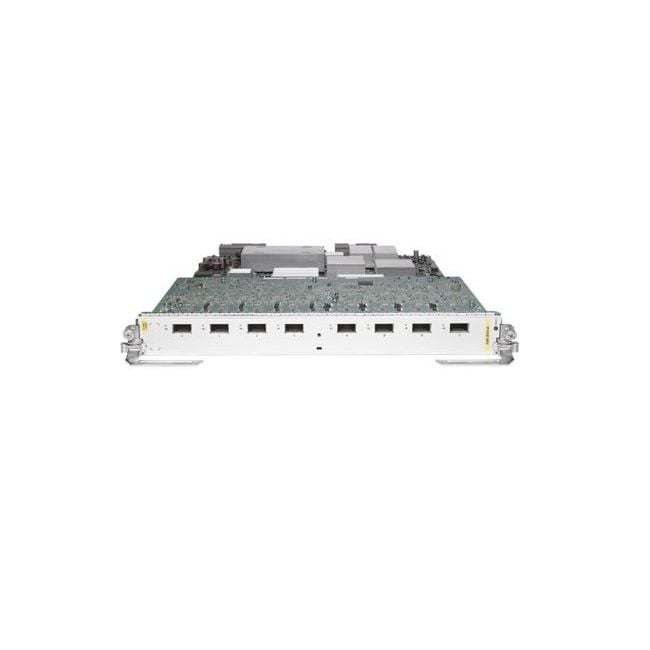
The Cisco A9K-8T-L module offers eight 10G ports that expand the ASR 9000 router’s capacity while maintaining low latency. It fits into high-performance network setups requiring reliable, scalable throughput and is a solid choice for service providers and enterprises managing demanding traffic loads. |
General Information |
|
|---|---|
| Brand | Cisco |
| Part Number | A9K-8T-L |
| Product Type | Network Interface Module (NIM) |
| Series | Cisco ASR 9000 Series |
Technical Information |
|
|---|---|
| Ports | 8 |
| Data Rate | 80 Gbps (aggregate) |
| Compatibility | Cisco ASR 9000 Series routers (A9K chassis) |
| Connector Type | SFP+ (8 x 10 Gigabit Ethernet) |
| product type | Low-Queue Line Rate Card |
| Product Category | Switch Expansion Module |
Physical Characteristics |
|
|---|---|
| Form Factor | Modular plug-in line card (router line card) |
| Weight | 5.00 |
| Condition | Refurbished |
Miscellaneous |
|
|---|---|
| Assembly Required | Yes |
| Eco Friendly | Yes |
Product Description |
|---|
The Cisco A9K-8T-L is an expansion module designed to enhance the performance and scalability of the ASR 9000 series routers. It provides eight 10 Gigabit Ethernet ports with an aggregate capacity of 80Gbps, ensuring low queue latency for real-time applications and high-demand traffic environments. Often found in service provider networks and large enterprise infrastructures, this module is built for operators who need reliable throughput and smooth packet processing under heavy loads. Network engineers and IT teams benefit from its ability to support complex routing protocols and maintain high availability. Key Features
This module is typically deployed in core and edge routing scenarios where network performance and low latency are critical. Its role in service provider backbones or large data centers helps maintain smooth data flows even during peak usage periods. |
Use Cases |
|---|
The Cisco A9K-8T-L module is designed for high-capacity network environments that require reliable, low-latency data handling. It is particularly suited for service providers and large enterprises looking to expand their Cisco ASR 9000 routers with additional 10G ports to support demanding routing workloads and scalable network growth. How It's Used:
This module enables network operators to maintain operational efficiency and scalability by providing consistent low queue latency and flexible port expansion. It supports complex routing environments where performance and throughput are critical, ensuring network infrastructure can grow without compromising data handling capabilities. |
 Shipping Options
 International Delivery
Requires a UPS, FedEx, or DHL account. Customers may arrange pickup from our US warehouse.
International Delivery
Requires a UPS, FedEx, or DHL account. Customers may arrange pickup from our US warehouse.
 Payment Methods
We accept Visa, Mastercard, AMEX, Discover, and Wire Transfer.
Payment Methods
We accept Visa, Mastercard, AMEX, Discover, and Wire Transfer.
 Purchase Orders
We process purchase orders for government agencies, enterprises, data centers, and SMBs.
Purchase Orders
We process purchase orders for government agencies, enterprises, data centers, and SMBs.