

Subscribe To Our Newsletter!
Subscribe to the newsletter to stay up to date with the latest news and most useful
Newsletter
↑
Back to Top



Product Overview |
|---|
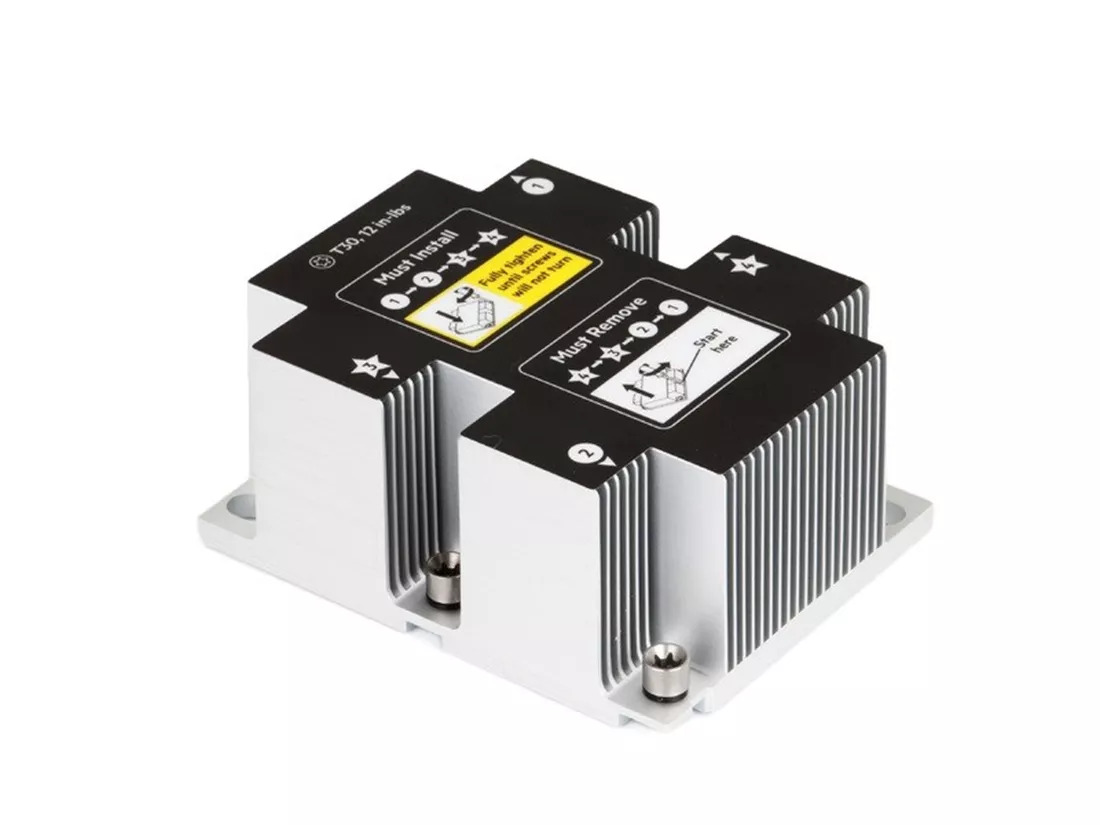
The HP Cooler Heatsink for ProLiant DL580 Gen10 Server is designed to effectively cool the server’s processors by dispersing heat generated during heavy computing tasks. It fits precisely within the server’s internal architecture, ensuring that the CPUs remain at optimal temperatures for stable operation. This component is integral for data centers and businesses relying on the DL580 Gen10 for handling intensive applications and workloads. |
General Information |
|
|---|---|
| Brand | HPE |
| Part Number | 879342-001 |
Technical Specification |
|
|---|---|
| Component Type | CPU Heatsink |
| Cooling Method | Passive |
| Material | Copper base, Aluminum fins, Copper heat pipes |
| Compatibility | HPE ProLiant DL580 Gen10 |
| Airflow Direction | Front-to-back |
Physical Characteristics |
|
|---|---|
| Form Factor | HP OEM server CPU heatsink (heatsink assembly for ProLiant DL580 Gen10) |
| Weight | 5.00 |
| Condition | Refurbished |
Miscellaneous |
|
|---|---|
| Assembly Required | Yes |
| Eco Friendly | Yes |
| Compliance Standards | WEEE, RoHS |
Product Description |
|---|
This HP cooler heatsink is built specifically for the ProLiant DL580 Gen10 server, where managing processor temperatures is critical for performance and reliability. It’s commonly found in enterprise data centers and environments running demanding applications where system uptime is crucial. Engineered for use by IT professionals and system administrators, this heatsink supports cooling for multiple processors, helping to maintain optimal thermal conditions during intensive processing tasks. It’s an essential component for servers handling heavy virtualization, database management, or large-scale computing. Key Features
This heatsink is typically installed during server assembly or maintenance and plays a key role in keeping critical hardware components within safe operating temperatures. By reliably removing heat, it allows the server to run smoothly under extensive workloads without thermal throttling or unexpected shutdowns. |
Use Cases |
|---|
The HP Cooler Heatsink for ProLiant DL580 Gen10 is essential in maintaining optimal thermal conditions within enterprise-grade servers operating in data center and high-performance computing environments. Organizations with demanding virtualization or database workloads benefit from this cooling solution to ensure processor longevity and system reliability. How It's Used:
By ensuring effective heat dissipation, this heatsink supports sustained performance and scalability in environments with high computational demand. Its integration helps reduce thermal-induced failures, allowing IT operations to maintain system uptime and efficiency. |
 Shipping Options
 International Delivery
Requires a UPS, FedEx, or DHL account. Customers may arrange pickup from our US warehouse.
International Delivery
Requires a UPS, FedEx, or DHL account. Customers may arrange pickup from our US warehouse.
 Payment Methods
We accept Visa, Mastercard, AMEX, Discover, and Wire Transfer.
Payment Methods
We accept Visa, Mastercard, AMEX, Discover, and Wire Transfer.
 Purchase Orders
We process purchase orders for government agencies, enterprises, data centers, and SMBs.
Purchase Orders
We process purchase orders for government agencies, enterprises, data centers, and SMBs.