

Subscribe To Our Newsletter!
Subscribe to the newsletter to stay up to date with the latest news and most useful
Newsletter
↑
Back to Top



Product Overview |
|---|
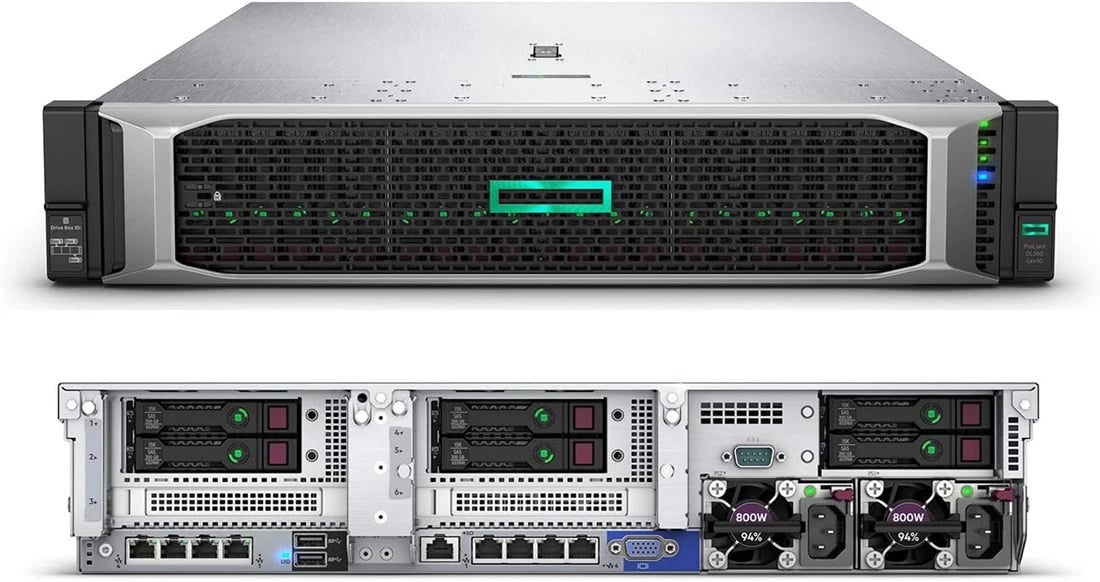
The HP ProLiant DL380 Gen10 server combines solid processing power and flexible storage options within a compact 2U rack design. It fits well in data centers and business environments needing reliable and scalable servers. With its Intel Xeon Silver processor and support for both SATA and SAS drives, it covers a wide range of use cases from virtualization to general enterprise applications. |
General Information |
|
|---|---|
| Brand | HPE |
| Part Number | 875760-S01 |
Technical Information |
|
|---|---|
| Memory | 16GB DDR4 SDRAM (1 x 16GB), ECC RDIMM |
| Processor | 1x Intel Xeon Silver 4110 2.10 GHz (8 cores / 16 threads), 11 MB Cache, Intel C621 Chipset, ~85W TDP |
| Storage | No HDD/SSD included; Integrated 6Gb/s SATA and 12Gb/s SAS controller (HPE Smart Array/HBA depending on configuration) |
Physical Characteristics |
|
|---|---|
| Weight | 5.00 |
| Condition | Refurbished |
Miscellaneous |
|
|---|---|
| Assembly Required | Yes |
| Eco Friendly | Yes |
| Compliance Standards | WEEE, RoHS, cURus, CE, FCC, CCC, UL, TUV, cULus, CSA, cUL |
Product Description |
|---|
The HP ProLiant DL380 Gen10 is a versatile 2U rack server built for medium to large enterprise environments. It’s commonly used for data-intensive workloads, virtualization, and general business applications requiring dependable compute power. Often found in data centers and IT infrastructures, this model caters well to system administrators and IT professionals who need a balance of processing speed and expandability. Key Features
This server is typically deployed in rack-mounted data centers where space efficiency and scalability are priorities. It supports businesses with reliable processing for applications like databases, virtualization, and file services without demanding excessive power or cooling. Its configuration makes it a practical choice for IT teams managing mixed workloads and seeking a balance between performance and resource use. |
Use Cases |
|---|
The HPE Intel Xeon Silver 4110 DL380 Gen10 server is designed for mid-sized and enterprise data centers requiring reliable, scalable compute resources. Its 2U rack form factor and versatile storage options make it suitable for environments where balanced processing and storage flexibility are essential, such as virtualization platforms and business-critical applications. How It's Used:
This server platform supports operational efficiency through its balanced compute and storage capabilities, enabling scalable deployment across diverse IT workloads. Its design facilitates expanded capacity without compromising performance, aligning well with organizational growth and evolving infrastructure demands. |
 Shipping Options
 International Delivery
Requires a UPS, FedEx, or DHL account. Customers may arrange pickup from our US warehouse.
International Delivery
Requires a UPS, FedEx, or DHL account. Customers may arrange pickup from our US warehouse.
 Payment Methods
We accept Visa, Mastercard, AMEX, Discover, and Wire Transfer.
Payment Methods
We accept Visa, Mastercard, AMEX, Discover, and Wire Transfer.
 Purchase Orders
We process purchase orders for government agencies, enterprises, data centers, and SMBs.
Purchase Orders
We process purchase orders for government agencies, enterprises, data centers, and SMBs.