

Subscribe To Our Newsletter!
Subscribe to the newsletter to stay up to date with the latest news and most useful
Newsletter
↑
Back to Top



Product Overview |
|---|
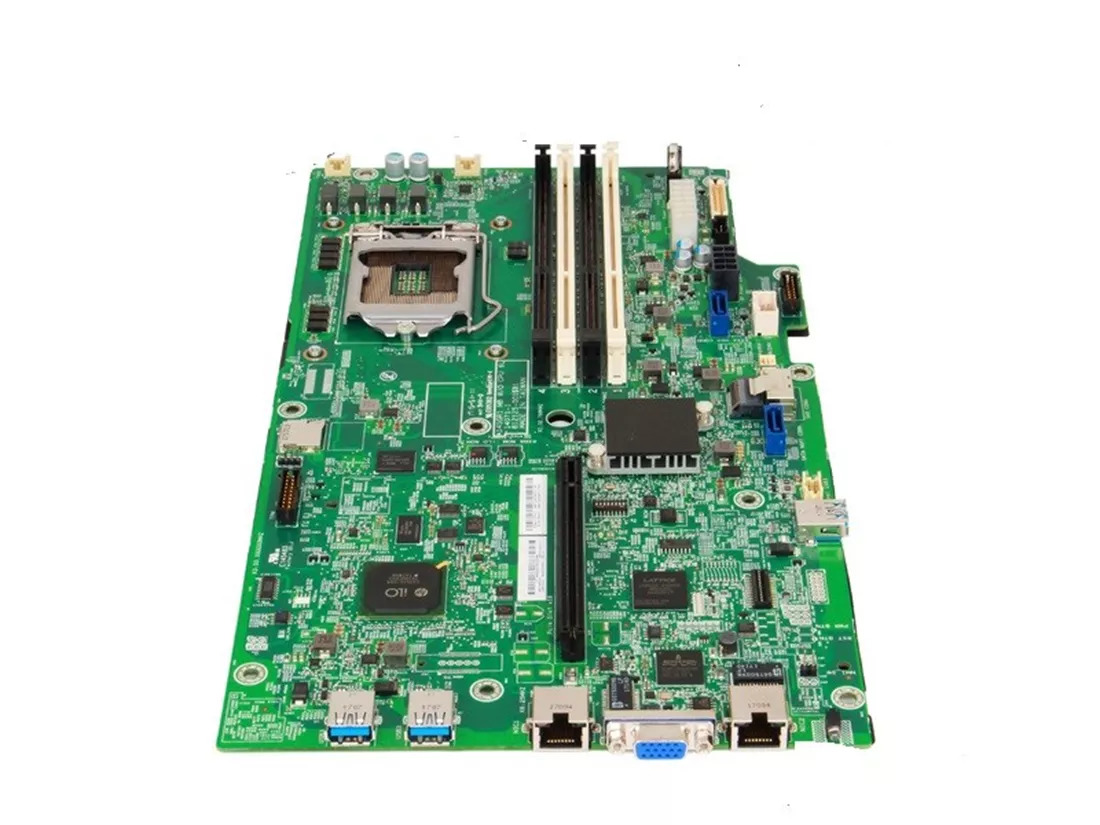
The HPE 873609-001 ProLiant DL20 Gen9 System Board serves as the core platform for the DL20 Gen9 server, facilitating communication between CPU, memory, and peripherals. It’s tailored to fit within HPE’s compact server design, supporting professional workloads that demand steady performance and data reliability in small-scale enterprise environments. |
General Information |
|
|---|---|
| Brand | HPE |
| Part Number | 873609-001 |
Technical Information |
|
|---|---|
| Chipset | Intel C236 |
| Compatible Processors | Intel Xeon E3-1200 v5/v6 series; 6th/7th Gen Intel Core i3; Intel Pentium; Intel Celeron (LGA1151 platform) |
| Board Socket Type | LGA 1151 |
| Memory Slots | 2 |
| Memory Support | DDR4 UDIMM (ECC supported), 2133 MT/s, up to 64 GB (2 x 32 GB) |
| Expansion Slots | 1 x PCIe 3.0 x16 (low-profile/full-length depending on chassis) |
| USB Port | Typically 4 total (front and rear mix of USB 2.0 and USB 3.0 ports) |
Physical Characteristics |
|
|---|---|
| Form Factor | Proprietary HPE server system board (for ProLiant DL20 Gen9, 1U rack server) |
| Weight | 5.00 |
| Condition | Refurbished |
Miscellaneous |
|
|---|---|
| Assembly Required | Yes |
| Eco Friendly | Yes |
Product Description |
|---|
The HPE ProLiant DL20 Gen9 System Board is the main circuit board designed to power the DL20 Gen9 server. It handles communication between the processor, memory, and other critical components. Often found in small to medium business server setups, this system board is built for reliable daily computing tasks and data management. IT administrators and system builders value it for its compatibility with Intel Xeon processors and support for error-correcting memory. Key Features
This system board is commonly deployed in office servers or edge computing environments where reliable uptime and data integrity are essential. It plays a crucial role in maintaining system stability and performance without unnecessary complexity. |
Use Cases |
|---|
The HPE 873609-001 ProLiant DL20 Gen9 System Board is commonly deployed in small to medium-sized enterprise settings where compact server solutions are required. It is ideal for IT professionals managing workloads that necessitate consistent processing power and reliable memory performance within space-constrained server rooms or edge locations. How It's Used:
This system board underpins operational efficiency by enabling stable server performance and scalability within constrained physical footprints. Its integration into the DL20 Gen9 platform supports business-critical applications with dependable throughput in diverse deployment scenarios. |
 Shipping Options
 International Delivery
Requires a UPS, FedEx, or DHL account. Customers may arrange pickup from our US warehouse.
International Delivery
Requires a UPS, FedEx, or DHL account. Customers may arrange pickup from our US warehouse.
 Payment Methods
We accept Visa, Mastercard, AMEX, Discover, and Wire Transfer.
Payment Methods
We accept Visa, Mastercard, AMEX, Discover, and Wire Transfer.
 Purchase Orders
We process purchase orders for government agencies, enterprises, data centers, and SMBs.
Purchase Orders
We process purchase orders for government agencies, enterprises, data centers, and SMBs.