

Subscribe To Our Newsletter!
Subscribe to the newsletter to stay up to date with the latest news and most useful
Newsletter
↑
Back to Top



Product Overview |
|---|
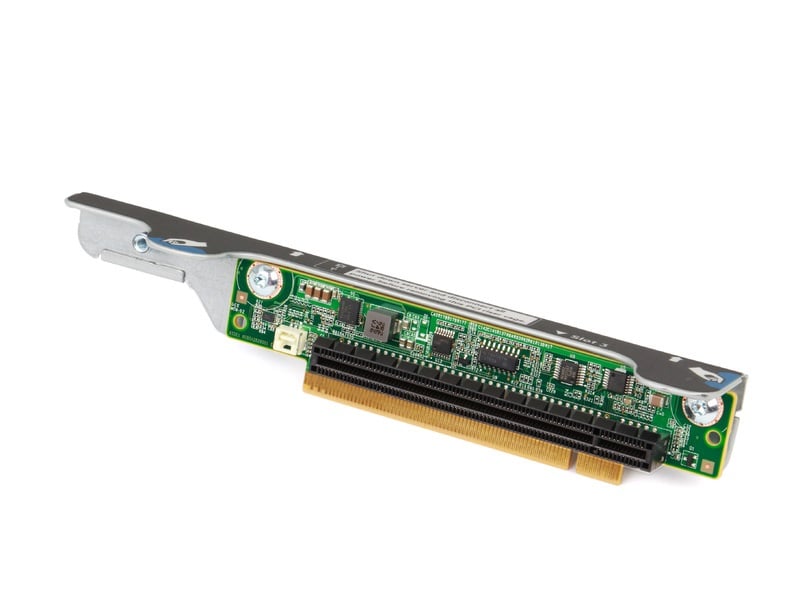
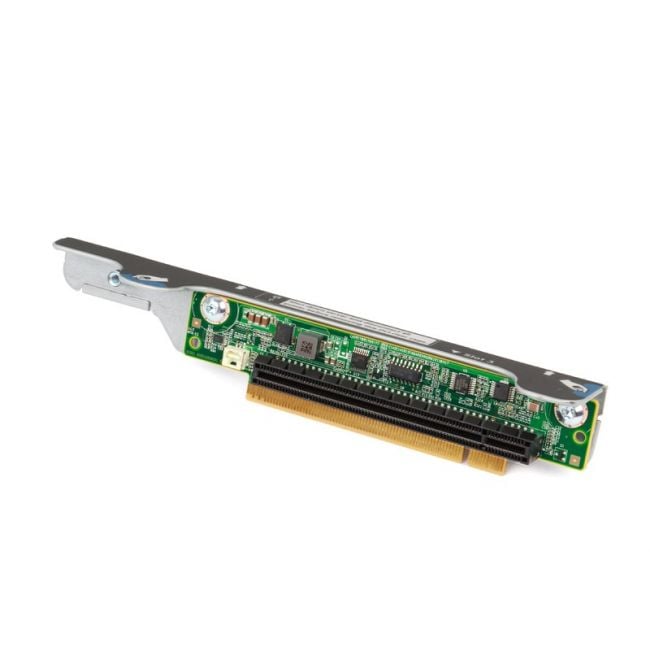
The HP Low Profile Riser Kit 2 provides the ProLiant DL360 Gen10 server with a way to add two low profile PCIe expansion cards. It fits neatly inside the server chassis, helping users increase hardware options without changing the server’s physical size. This riser is a practical component for IT environments needing more flexibility from their existing rack servers. |
General Information |
|
|---|---|
| Brand | HPE |
| Part Number | 867982-B21 |
Technical Specification |
|
|---|---|
| Host Interface | Server motherboard PCIe riser connector (PCIe riser) |
| Ports | 2 (low-profile PCIe slots) |
| Compatibility | HPE ProLiant DL360 Gen10 |
Physical Characteristics |
|
|---|---|
| Form Factor | Low-profile riser (server riser card) |
| Weight | 5.00 |
| Condition | Refurbished |
Miscellaneous |
|
|---|---|
| Assembly Required | Yes |
| Eco Friendly | Yes |
| Compliance Standards | WEEE, RoHS, CE, FCC, UL |
Product Description |
|---|
The HP Low Profile Riser Kit 2 is built for the ProLiant DL360 Gen10 server to expand its PCIe slot availability. It provides an efficient way to add low profile PCIe cards while maintaining a compact server form factor. This riser kit is often found in data centers where maximizing server capabilities within limited space is essential. IT professionals and system administrators use this riser kit to enhance server functionality without increasing the chassis size. It helps in accommodating additional network cards, storage controllers, or GPU cards that are low profile compatible. Key Features
This riser kit is typically deployed in enterprise server setups where space is at a premium but expansion is necessary. It helps maintain the compact nature of the DL360 Gen10 while allowing customization to meet specific workload demands. Its role in practical environments includes improving server capabilities for virtualization, storage, or networking enhancements while preserving efficient cooling and maintenance access. |
Use Cases |
|---|
The HP Low Profile Riser Kit 2 is typically utilized in data centers and enterprise IT environments where space efficiency and hardware expansion are critical. It benefits system administrators and IT professionals managing ProLiant DL360 Gen10 servers who require enhanced connectivity options without altering server form factors. How It's Used:
This riser kit supports operational scalability by allowing seamless integration of additional PCIe expansion cards within existing server infrastructures. It helps maintain compact rack deployments while delivering enhanced hardware flexibility crucial to evolving IT workloads. |
 Shipping Options
 International Delivery
Requires a UPS, FedEx, or DHL account. Customers may arrange pickup from our US warehouse.
International Delivery
Requires a UPS, FedEx, or DHL account. Customers may arrange pickup from our US warehouse.
 Payment Methods
We accept Visa, Mastercard, AMEX, Discover, and Wire Transfer.
Payment Methods
We accept Visa, Mastercard, AMEX, Discover, and Wire Transfer.
 Purchase Orders
We process purchase orders for government agencies, enterprises, data centers, and SMBs.
Purchase Orders
We process purchase orders for government agencies, enterprises, data centers, and SMBs.