

Subscribe To Our Newsletter!
Subscribe to the newsletter to stay up to date with the latest news and most useful
Newsletter
↑
Back to Top



Product Overview |
|---|
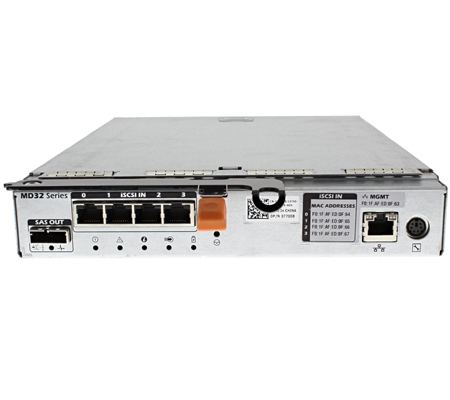
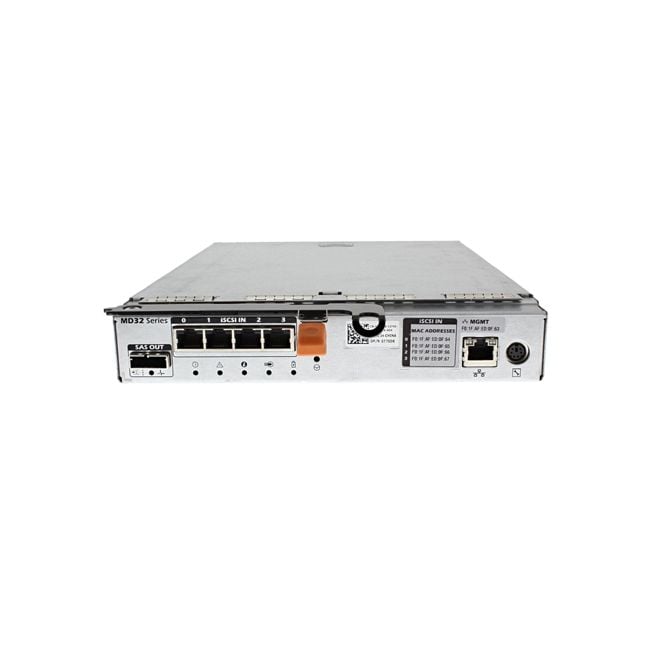
The Dell PowerVault MD3200i MD3220i 4-Port iSCSI Controller acts as the bridge between servers and storage arrays, managing data flow over IP networks. It fits into storage systems that require reliable iSCSI connectivity, balancing performance with redundancy to keep data accessible and secure in networked environments. |
General Information |
|
|---|---|
| Brand | Dell |
| Part Number | 81YXX |
Physical Characteristics |
|
|---|---|
| Weight | 5.00 |
| Condition | Refurbished |
Product Description |
|---|
This Dell PowerVault MD3200i MD3220i 4-Port iSCSI Controller manages data traffic between servers and storage arrays, providing reliable and scalable block storage solutions. It is often found in data centers and enterprise storage environments where robust networked storage is essential. Built for IT administrators and storage professionals, this controller allows for simplified management of storage resources while maintaining data integrity and uptime. It’s commonly used in setups that demand high availability and efficient data handling across a network. Key Features
This controller is typically deployed in medium to large business environments where managing large data volumes and ensuring uptime are critical. In practice, it helps maintain steady access to storage resources, making it easier for organizations to handle backups, virtualization, and data sharing without interruption. |
Use Cases |
|---|
The Dell PowerVault MD3200i MD3220i 4-Port iSCSI Controller is commonly deployed in medium to large enterprise storage environments requiring high-availability and efficient networked storage management. IT administrators and storage architects benefit from its robust dual-controller design and high-speed iSCSI connectivity, particularly in virtualized and clustered storage scenarios. How It's Used:
This controller enhances operational efficiency by ensuring continuous data availability and scalable network storage performance. Its design supports evolving storage demands, allowing IT teams to maintain robust infrastructure with simplified management and reliable connectivity. |
 Shipping Options
 International Delivery
Requires a UPS, FedEx, or DHL account. Customers may arrange pickup from our US warehouse.
International Delivery
Requires a UPS, FedEx, or DHL account. Customers may arrange pickup from our US warehouse.
 Payment Methods
We accept Visa, Mastercard, AMEX, Discover, and Wire Transfer.
Payment Methods
We accept Visa, Mastercard, AMEX, Discover, and Wire Transfer.
 Purchase Orders
We process purchase orders for government agencies, enterprises, data centers, and SMBs.
Purchase Orders
We process purchase orders for government agencies, enterprises, data centers, and SMBs.