

Subscribe To Our Newsletter!
Subscribe to the newsletter to stay up to date with the latest news and most useful
Newsletter
↑
Back to Top



Product Overview |
|---|
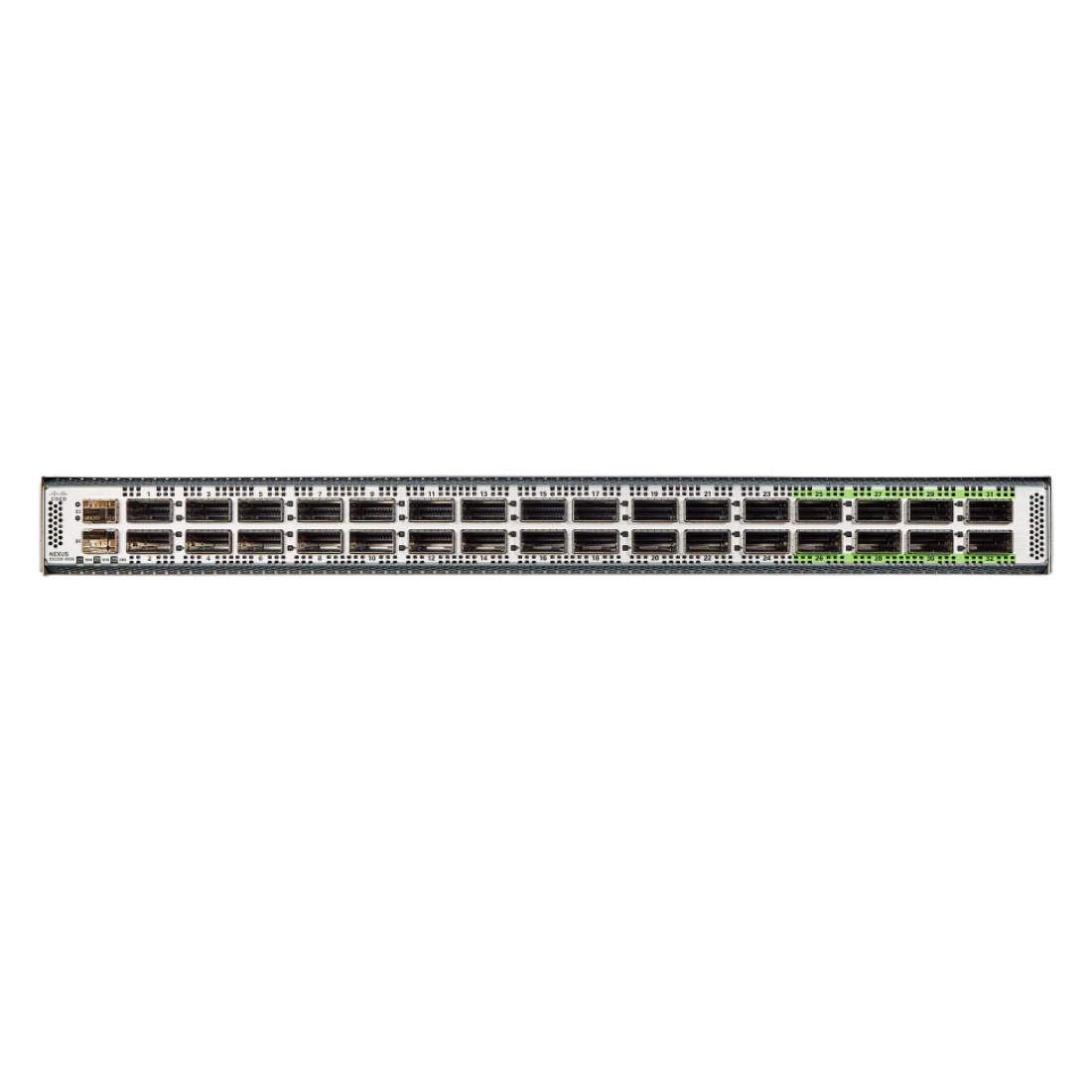
The Cisco Nexus 9300 Series 32-Port 40/50G Switch connects data center devices with high-speed ports supporting 40 and 50 Gigabit Ethernet. It's designed for environments needing reliable, low-latency connections and fits into Cisco’s broader Nexus ecosystem, helping manage traffic efficiently and support growing network demands. |
General Information |
|
|---|---|
| Brand | Cisco |
| Part Number | 800-46854-01 |
| Condition | Refurbished |
Technical Information |
|
|---|---|
| Switch Ports | 32 |
| Number of Ports | 32-Ports |
| Port Speed | 40Gbps,50Gbps |
| Max VLANs Supported | 1-4094 |
| Connector Type | QSFP28 |
Performance |
|
|---|---|
| Jumbo Frame Support | Up To 9216 Bytes |
Management and Configuration |
|
|---|---|
| Management Type | CLI,Web-Based (NX-OS),SNMP,REST API/RESTCONF |
| Security | ACLs,802.1X |
| Remote Management Protocol | SSH,HTTPS,SNMP,NETCONF,RESTCONF |
| Routing Protocol | OSPF,BGP,IS-IS,Static |
Physical Characteristics |
|
|---|---|
| Weight | 3.00 |
| Operating Temperature | 0°C to 40°C |
Product Description |
|---|
The Cisco Nexus 9300 Series 32-Port 40/50G Switch is built for high-performance data center operations, offering dense 40 and 50 Gigabit Ethernet connectivity in a compact form factor. Often found in modern enterprise and cloud network infrastructures, it supports demanding workloads requiring fast, reliable data transfer. Engineered for network architects and IT professionals, this switch helps streamline large-scale network deployments with its advanced features and robust design. It fits well where low latency and high throughput are critical, such as in server farms and storage networks. Key Features
This switch is typically deployed in large data centers and enterprise campuses where multiple high-speed connections are needed. It plays a vital role in enabling fast data flow and maintaining network stability under heavy load. Its real-world impact includes improved application responsiveness and enhanced capacity to support virtualization and cloud services. |
 Shipping Options
 International Delivery
Requires a UPS, FedEx, or DHL account. Customers may arrange pickup from our US warehouse.
International Delivery
Requires a UPS, FedEx, or DHL account. Customers may arrange pickup from our US warehouse.
 Payment Methods
We accept Visa, Mastercard, AMEX, Discover, and Wire Transfer.
Payment Methods
We accept Visa, Mastercard, AMEX, Discover, and Wire Transfer.
 Purchase Orders
We process purchase orders for government agencies, enterprises, data centers, and SMBs.
Purchase Orders
We process purchase orders for government agencies, enterprises, data centers, and SMBs.