

Subscribe To Our Newsletter!
Subscribe to the newsletter to stay up to date with the latest news and most useful
Newsletter
↑
Back to Top



Product Overview |
|---|
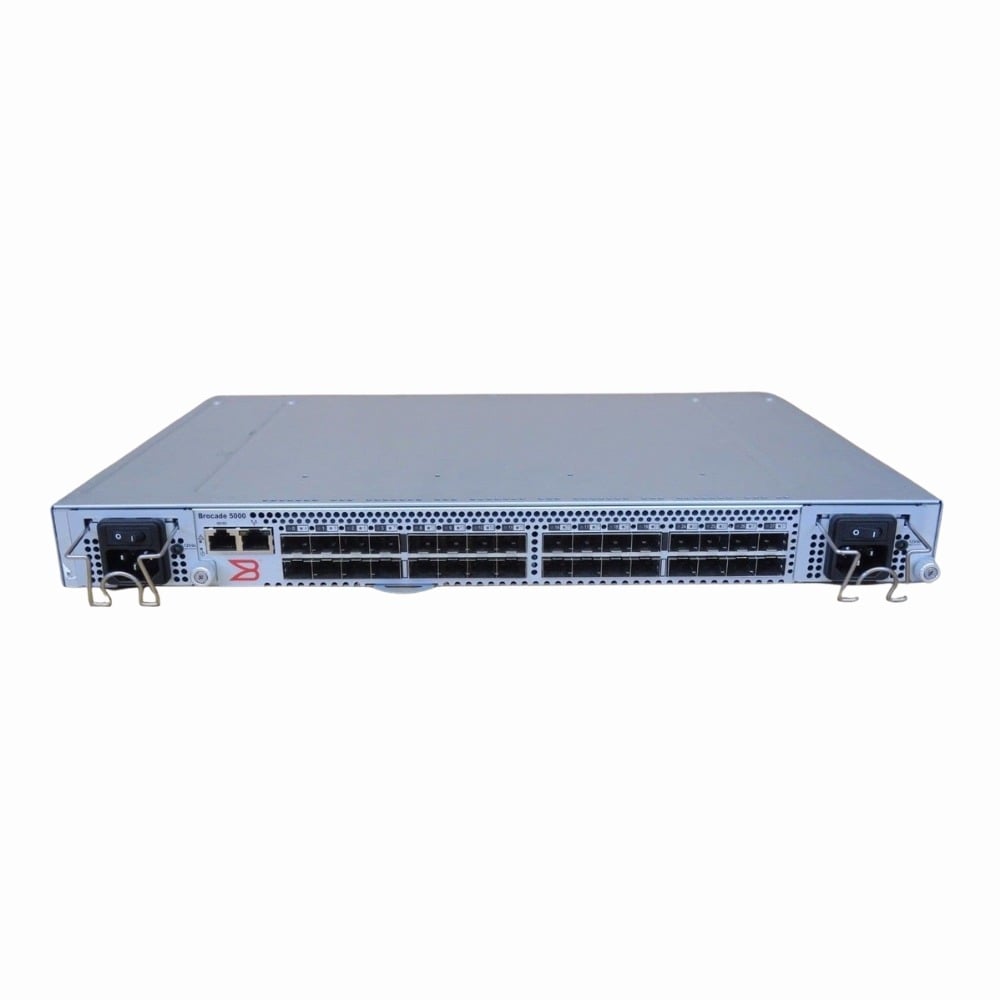
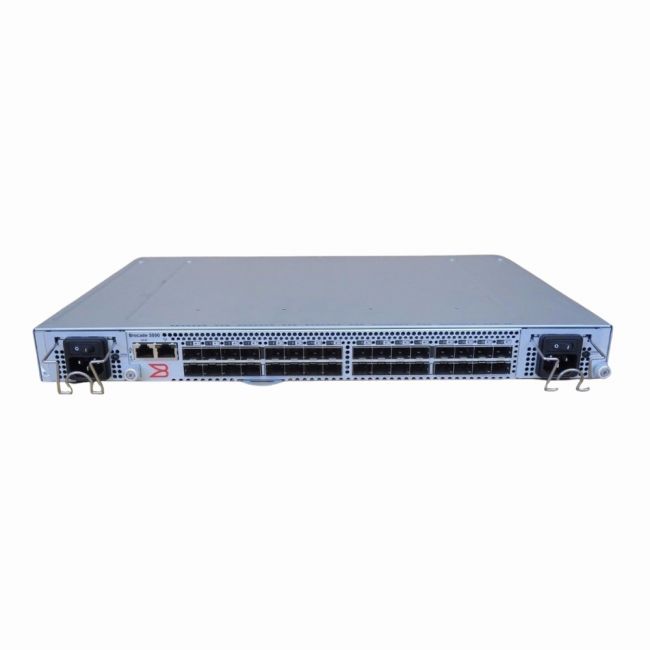
The Brocade 5000 4 Gb/s Fibre Channel SAN switch is a solid choice for connecting storage devices in medium-scale enterprise networks. It handles multiple ports with active and inactive configurations, making it adaptable to various setups while maintaining dependable performance in storage area networks. |
General Information |
|
|---|---|
| Brand | Brocade |
| Part Number | 80-1000682-02-16AP |
| Condition | Refurbished |
Technical Information |
|
|---|---|
| Switch Ports | 32 (16 active) |
| Number of Ports | 32-Ports |
| Port Type | SFP, Serial Console (RJ-45) |
| Port Speed | 4 Gbps |
| POE Support | No |
| DRAM | 256 MB |
| Flash Memory | Boot flash: 4 MB; Compact flash: 1 GB |
| VLAN Support | No |
| Stackable | No |
| Layer Support | Layer 2 |
| Connector Type | SFP (LC) |
Management and Configuration |
|
|---|---|
| Remote Protocols | Yes |
| Management Interfaces | 1× 10/100Base-T Ethernet (RJ‑45) + 1× serial RS-232 |
| Security Features | SSH,RADIUS,TACACS+,Role-based access control,FC zoning |
| Management Type | CLI (Fabric OS), Web GUI, SNMP |
| Remote Management Protocol | SSH,Telnet,SNMP,HTTP,HTTPS,Serial Console (RJ-45) |
Physical Characteristics |
|
|---|---|
| Weight | 4.00 |
Product Description |
|---|
The Brocade 5000 Fibre Channel SAN switch provides efficient storage networking with 32 ports and 16 active ports running at 4 Gb/s speeds. Built for mid-sized SAN environments, it allows seamless connection of storage devices and servers. Often found in data centers and enterprise storage setups, this switch supports zoning and traffic management to optimize data flow. IT professionals and storage administrators rely on it to maintain reliable and scalable network architectures. Key Features
This switch is typically deployed in enterprise storage networks where multiple servers and storage arrays must communicate efficiently. Its role is to ensure smooth data transfers and maintain uptime in environments demanding consistent storage access. |
 Shipping Options
 International Delivery
Requires a UPS, FedEx, or DHL account. Customers may arrange pickup from our US warehouse.
International Delivery
Requires a UPS, FedEx, or DHL account. Customers may arrange pickup from our US warehouse.
 Payment Methods
We accept Visa, Mastercard, AMEX, Discover, and Wire Transfer.
Payment Methods
We accept Visa, Mastercard, AMEX, Discover, and Wire Transfer.
 Purchase Orders
We process purchase orders for government agencies, enterprises, data centers, and SMBs.
Purchase Orders
We process purchase orders for government agencies, enterprises, data centers, and SMBs.