

Subscribe To Our Newsletter!
Subscribe to the newsletter to stay up to date with the latest news and most useful
Newsletter
↑
Back to Top



Product Overview |
|---|
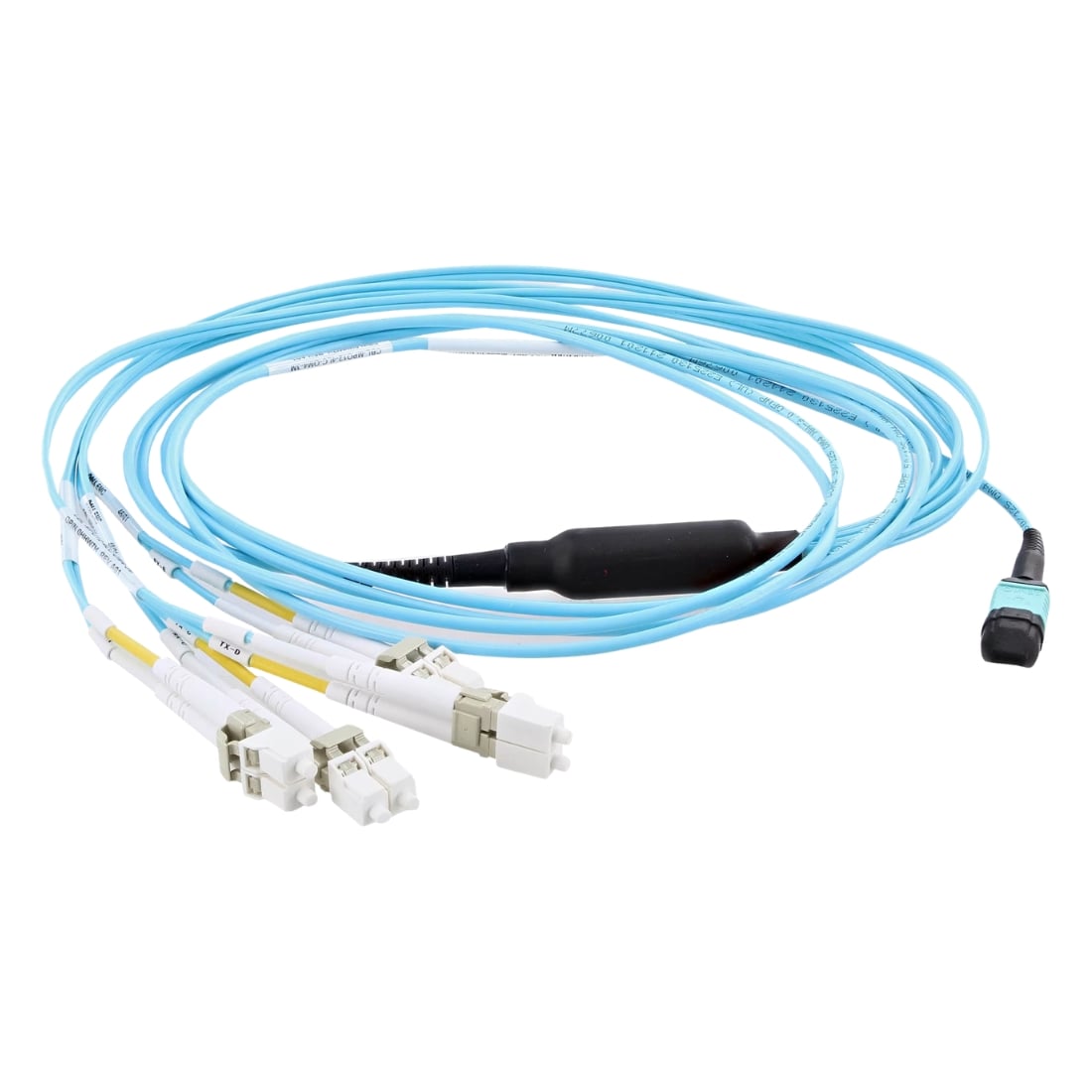
The Lenovo 1m MPO to 4x LC Breakout OM4 Multi Mode Fiber Cable converts a single MPO connection into four LC fibers, allowing seamless integration of high-speed multimode fiber links. It fits well in data center infrastructures where compact, reliable cabling is essential to support 40G and 100G Ethernet environments. |
General Information |
|
|---|---|
| Brand | Lenovo |
| Part Number | 7Z57A03573 |
| Alternate Part Number | 7Z57A03573-12-HU |
Technical Information |
|
|---|---|
| Cable Family | Fiber Optic |
| Cable Type | Breakout Cable |
| Standard | OM4 |
| Cable Length | 1m |
| Compatibility | MPO/MTP transceivers and LC multimode interfaces; suitable for 40GbE/100GbE SR4 and 10GbE links when used with appropriate multimode transceivers |
| product type | Multi Mode Fiber Cable |
| Product Category | Network Cable |
Connectivity |
|
|---|---|
| Connector A | MPO/MTP |
| Connector B | LC |
| Cable Connector Gender | Male to Male |
| Connector Type | MPO to LC |
Physical Characteristics |
|
|---|---|
| Form Factor | MPO to 4x LC |
| Condition | Refurbished |
Product Description |
|---|
This Lenovo 1m MPO to 4x LC breakout fiber cable is built to connect MPO-based equipment to devices with LC connectors. It’s commonly used in data centers and telecom environments where high bandwidth and reliable multimode fiber connections are needed. Often found in server rooms and network racks, this breakout cable helps simplify complex fiber setups by splitting a single MPO connector into four LC connections. Network engineers and IT professionals rely on this cable to maintain efficient data flow in environments demanding fast and stable connectivity. Key Features
This cable is typically deployed in high-density patch panels, network switches, and optical transceivers, where space and performance are critical. It plays a key role in maintaining smooth data transmission within enterprise and carrier-grade networks. |
Use Cases |
|---|
The 7Z57A03573 Lenovo 1m MPO to 4x LC Breakout OM4 Multi Mode Fiber Cable is primarily utilized in high-density data center environments where efficient fiber management and high-speed connectivity are critical. Network architects and infrastructure engineers benefit from its ability to streamline connections in virtualization clusters and storage area networks. How It's Used:
This fiber breakout cable contributes to improved operational efficiency by simplifying network topology and enabling modular scalability. Its use in multi-gigabit environments ensures consistent performance while maintaining manageable cable layouts essential for ongoing infrastructure maintenance. |
 Shipping Options
 International Delivery
Requires a UPS, FedEx, or DHL account. Customers may arrange pickup from our US warehouse.
International Delivery
Requires a UPS, FedEx, or DHL account. Customers may arrange pickup from our US warehouse.
 Payment Methods
We accept Visa, Mastercard, AMEX, Discover, and Wire Transfer.
Payment Methods
We accept Visa, Mastercard, AMEX, Discover, and Wire Transfer.
 Purchase Orders
We process purchase orders for government agencies, enterprises, data centers, and SMBs.
Purchase Orders
We process purchase orders for government agencies, enterprises, data centers, and SMBs.