

Subscribe To Our Newsletter!
Subscribe to the newsletter to stay up to date with the latest news and most useful
Newsletter
↑
Back to Top



Product Overview |
|---|
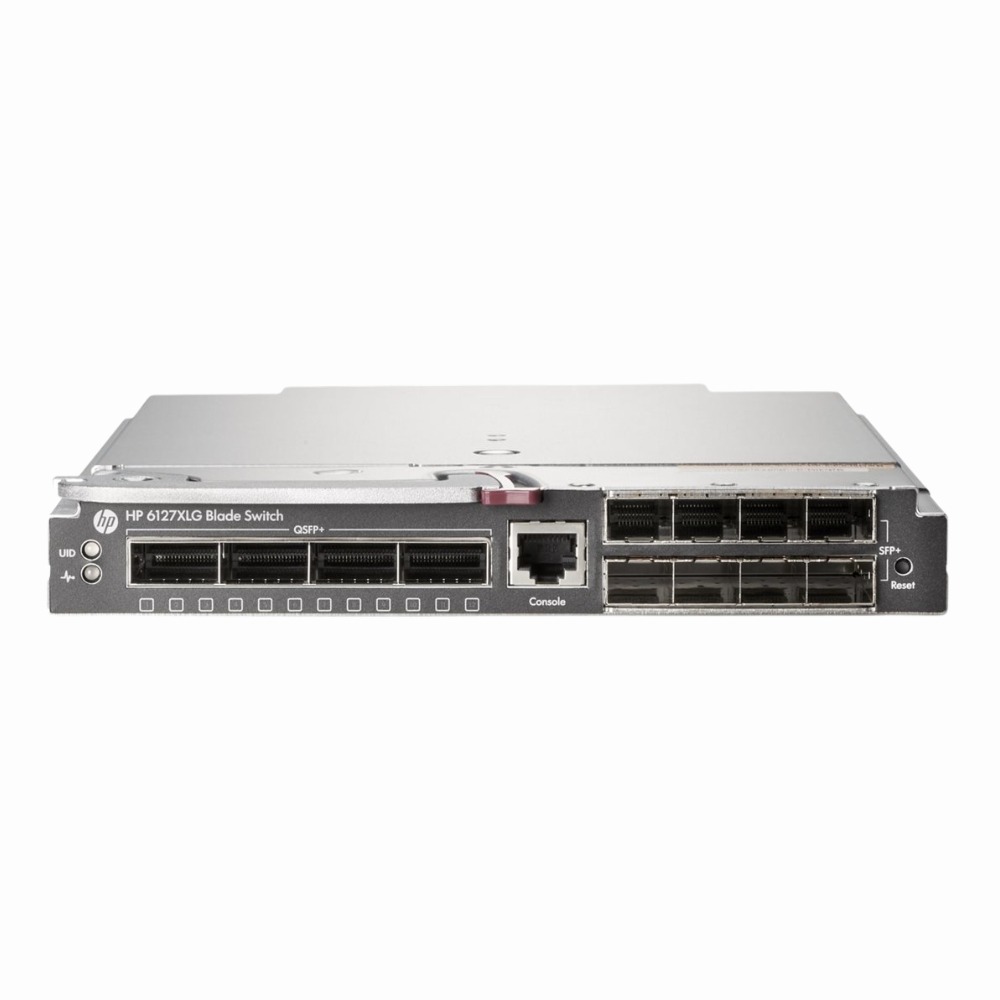
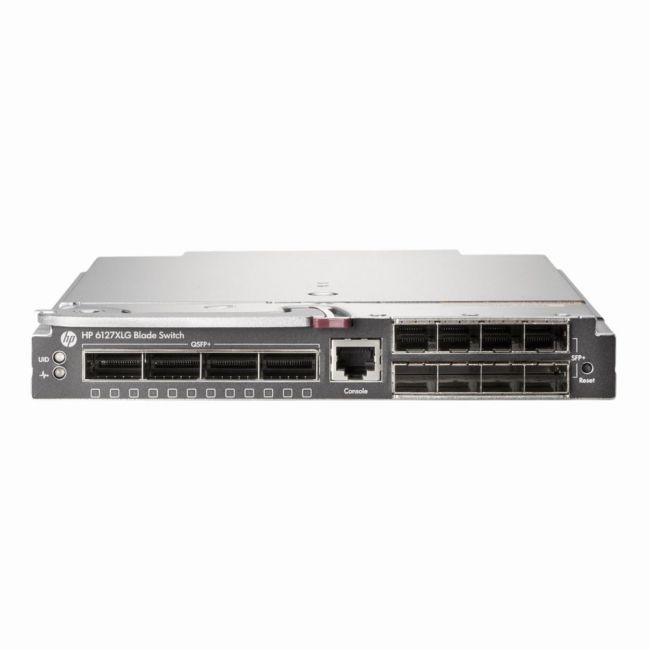
The HPE 797387-001 6127XLG Blade Switch serves as a vital network component designed specifically for HPE's BladeSystem. Its main function is to provide high-speed connectivity within blade server environments, supporting the fast exchange of data between servers and storage devices. This switch fits seamlessly into enterprise data centers where efficient, reliable network performance is necessary for day-to-day operations. |
General Information |
|
|---|---|
| Brand | HPE |
| Part Number | 797387-001 |
| Condition | Refurbished |
Technical Information |
|
|---|---|
| Number of Ports | 16-Ports |
| Port Type | 10G SFP+ |
| Port Speed | 10Gbps |
| UpLink Ports | 4 x 10Gb SFP+ |
| POE Support | No |
| Switching Capacity | 320 Gbps |
| VLAN Support | Yes |
| Max VLANs Supported | 1-4094 |
| Stackable | No |
| Layer Support | Layer 2 |
| Connector Type | SFP+ |
Performance |
|
|---|---|
| Jumbo Frame Support | Up To 9000 Bytes |
Management and Configuration |
|
|---|---|
| Remote Protocols | Yes |
| Management Interfaces | Web GUI, CLI (SSH/Telnet), SNMP |
| Security Features | ACLs, 802.1X, Port Security, Storm Control |
| Remote Management Protocol | SNMP, SSH, Telnet, HTTP/HTTPS |
Physical Characteristics |
|
|---|---|
| Weight | 5.00 |
Product Description |
|---|
The HPE 797387-001 6127XLG Blade Switch is built to deliver robust networking within data center blade environments. Often found in enterprise setups, it enables high-speed connections between servers and storage systems, improving overall network efficiency. IT professionals and network administrators commonly rely on this switch to maintain reliable and scalable communication within HPE BladeSystem architectures. Key Features
This switch is typically deployed in data centers where space and performance are critical. It plays a key role in connecting multiple server blades and ensuring low-latency communication. By handling large volumes of data with minimal delay, it helps maintain smooth operations in demanding IT infrastructures. |
Use Cases |
|---|
The HPE 797387-001 6127XLG Blade Switch is typically deployed within enterprise data centers utilizing HPE BladeSystem architectures. It is ideal for IT environments that demand high-speed, low-latency interconnectivity between blade servers and storage arrays, particularly in virtualization and cloud infrastructure setups. How It's Used:
This blade switch enhances operational efficiency by delivering high-speed networking tailored to dense blade server deployments. Its scalable design supports growing bandwidth needs and maintains performance consistency across critical business applications. |
 Shipping Options
 International Delivery
Requires a UPS, FedEx, or DHL account. Customers may arrange pickup from our US warehouse.
International Delivery
Requires a UPS, FedEx, or DHL account. Customers may arrange pickup from our US warehouse.
 Payment Methods
We accept Visa, Mastercard, AMEX, Discover, and Wire Transfer.
Payment Methods
We accept Visa, Mastercard, AMEX, Discover, and Wire Transfer.
 Purchase Orders
We process purchase orders for government agencies, enterprises, data centers, and SMBs.
Purchase Orders
We process purchase orders for government agencies, enterprises, data centers, and SMBs.