

Subscribe To Our Newsletter!
Subscribe to the newsletter to stay up to date with the latest news and most useful
Newsletter
↑
Back to Top



Product Overview |
|---|
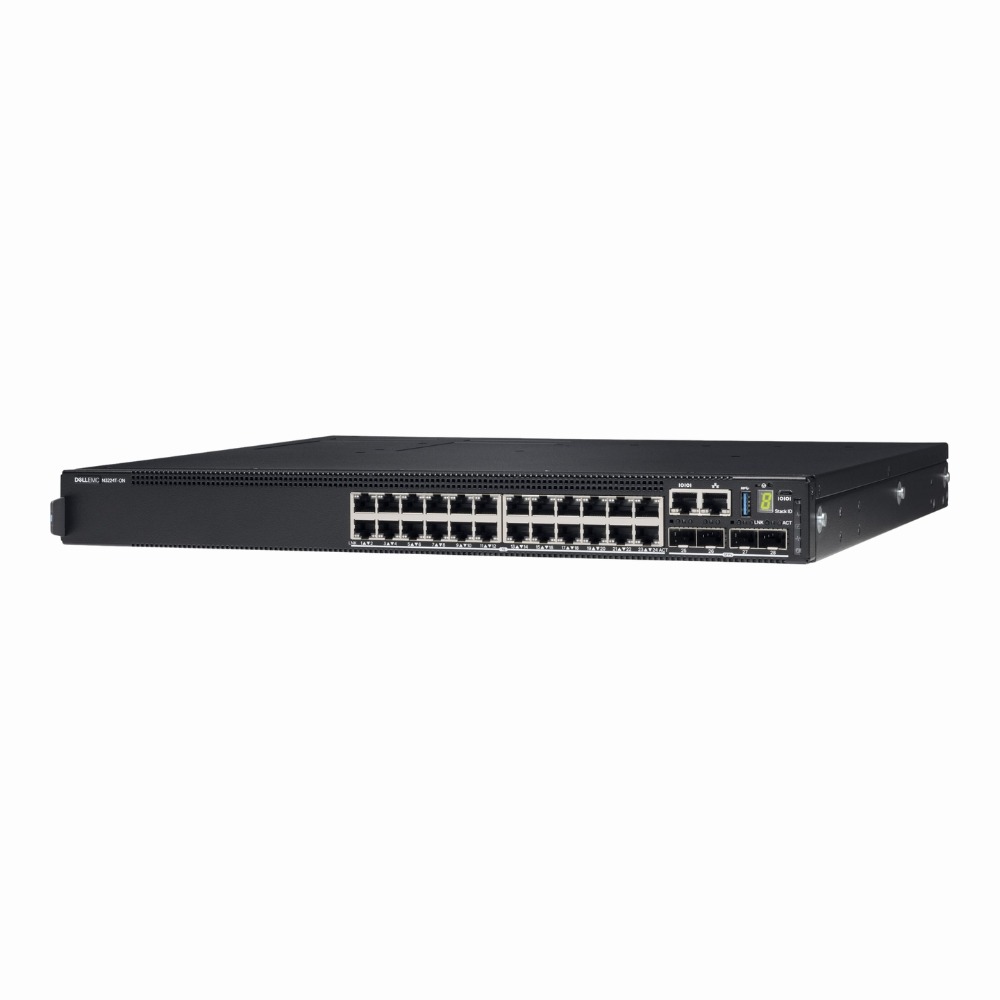
The Dell N3224T-On is a versatile Layer 3 switch designed to deliver a blend of copper and fiber connections with speeds ranging from 1Gbps to 100Gbps. It fits well in environments where both high capacity and flexible port options are important, serving as a key part of mid-size to large network infrastructures. |
General Information |
|
|---|---|
| Brand | Dell |
| Part Number | 74C4V |
| Condition | Refurbished |
Technical Information |
|
|---|---|
| Switch Ports | 24-Ports |
| Number of Ports | 24-Ports |
| Port Type | 10/100/1000Base-T, 10G SFP+, 100G QSFP28, Serial Console (RJ-45) |
| Port Speed | 10/100/1000Base-T |
| UpLink Ports | 4 x 10G SFP+, 2 x 100G QSFP28 |
| POE Support | No |
| Switching Capacity | 528 Gbps |
| VLAN Support | Yes |
| Max VLANs Supported | 1-4094 |
| Layer Support | Layer 3 |
| Connector Type | RJ-45,SFP+,QSFP28 |
Performance |
|
|---|---|
| Jumbo Frame Support | Up To 9216 Bytes |
Management and Configuration |
|
|---|---|
| Remote Protocols | Yes |
| Management Interfaces | Web GUI, Command Line Interface (CLI), SNMP, Serial Console (RJ-45) |
| Security Features | Access Control Lists (ACLs), 802.1X, RADIUS, SSH |
| Security | Yes |
| Remote Management Protocol | SNMPv1/v2c/v3, SSH, HTTP/HTTPS, RMON |
Physical Characteristics |
|
|---|---|
| Weight | 5.00 |
Product Description |
|---|
This Dell N3224T-On switch is built for medium to large networks requiring flexible connectivity options and high-speed data transfer. It’s commonly used in data centers and enterprise environments where both copper and fiber connections are necessary. Network administrators and IT teams benefit from its managed Layer 3 features that handle complex routing and traffic management. Key Features
This switch is often found in enterprise networks that need robust performance and flexibility at the access or aggregation layer. Its combination of port types helps bridge different network segments smoothly. In practice, it improves network efficiency while providing the tools IT staff need to maintain reliability and security. |
Use Cases |
|---|
The Dell N3224T-On switch is primarily deployed in mid-sized to large enterprise networks requiring a combination of high-speed fiber uplinks and versatile copper connectivity. Its Layer 3 capabilities make it suitable for environments where advanced routing and segmentation are necessary to manage complex traffic flows efficiently. How It's Used:
This switch enhances operational efficiency by providing scalable port configurations and robust Layer 3 management, enabling streamlined traffic handling in complex network architectures. Its combination of gigabit and multi-gigabit interfaces supports growing bandwidth demands while maintaining network segmentation and performance. |
 Shipping Options
 International Delivery
Requires a UPS, FedEx, or DHL account. Customers may arrange pickup from our US warehouse.
International Delivery
Requires a UPS, FedEx, or DHL account. Customers may arrange pickup from our US warehouse.
 Payment Methods
We accept Visa, Mastercard, AMEX, Discover, and Wire Transfer.
Payment Methods
We accept Visa, Mastercard, AMEX, Discover, and Wire Transfer.
 Purchase Orders
We process purchase orders for government agencies, enterprises, data centers, and SMBs.
Purchase Orders
We process purchase orders for government agencies, enterprises, data centers, and SMBs.