

Subscribe To Our Newsletter!
Subscribe to the newsletter to stay up to date with the latest news and most useful
Newsletter
↑
Back to Top



Product Overview |
|---|
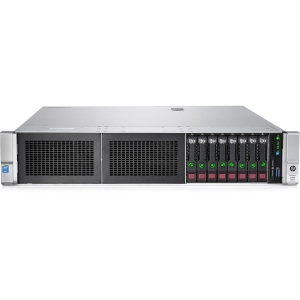
The HPE ProLiant DL380 Gen9 CTO Chassis is a 2U server frame that provides a reliable foundation for servers needing large storage capacity. It fits into standard racks and is built to support various enterprise workloads by accommodating up to twelve large drives, which makes it well-suited for organizations looking to balance space, storage, and performance in their server deployments. |
General Information |
|
|---|---|
| Brand | HPE |
| Part Number | 719061-B21 |
Physical Characteristics |
|
|---|---|
| Weight | 5.00 |
| Condition | Refurbished |
Product Description |
|---|
The HPE ProLiant DL380 Gen9 CTO Chassis is built for data centers requiring reliable and flexible server infrastructure. Often found in enterprise environments, this chassis accommodates up to 12 large form factor drives, enabling substantial storage capacity within a compact 2U rack space. IT professionals and system administrators commonly use this chassis to tailor server configurations for varied workloads, from virtualization to database hosting. Key Features
This chassis is typically deployed in enterprise server racks where storage density and flexibility matter. Its design helps maintain system reliability while handling demanding applications. In practice, it's a solid base for building customized servers that meet specific business requirements without unnecessary complexity. |
Use Cases |
|---|
The HPE ProLiant DL380 Gen9 12LFF 2U Server Chassis is ideal for IT environments that demand high storage density and robust processing capabilities. Organizations managing virtualization workloads, large-scale databases, or file storage solutions will benefit from its capacity to support multiple large form factor drives while fitting efficiently into standard data center racks. How It's Used:
This chassis provides a scalable platform that aligns with evolving business demands by balancing compute power and storage capacity in a compact form factor, thereby enhancing operational efficiency and simplifying infrastructure management. |
 Shipping Options
 International Delivery
Requires a UPS, FedEx, or DHL account. Customers may arrange pickup from our US warehouse.
International Delivery
Requires a UPS, FedEx, or DHL account. Customers may arrange pickup from our US warehouse.
 Payment Methods
We accept Visa, Mastercard, AMEX, Discover, and Wire Transfer.
Payment Methods
We accept Visa, Mastercard, AMEX, Discover, and Wire Transfer.
 Purchase Orders
We process purchase orders for government agencies, enterprises, data centers, and SMBs.
Purchase Orders
We process purchase orders for government agencies, enterprises, data centers, and SMBs.