

Subscribe To Our Newsletter!
Subscribe to the newsletter to stay up to date with the latest news and most useful
Newsletter
↑
Back to Top



Product Overview |
|---|
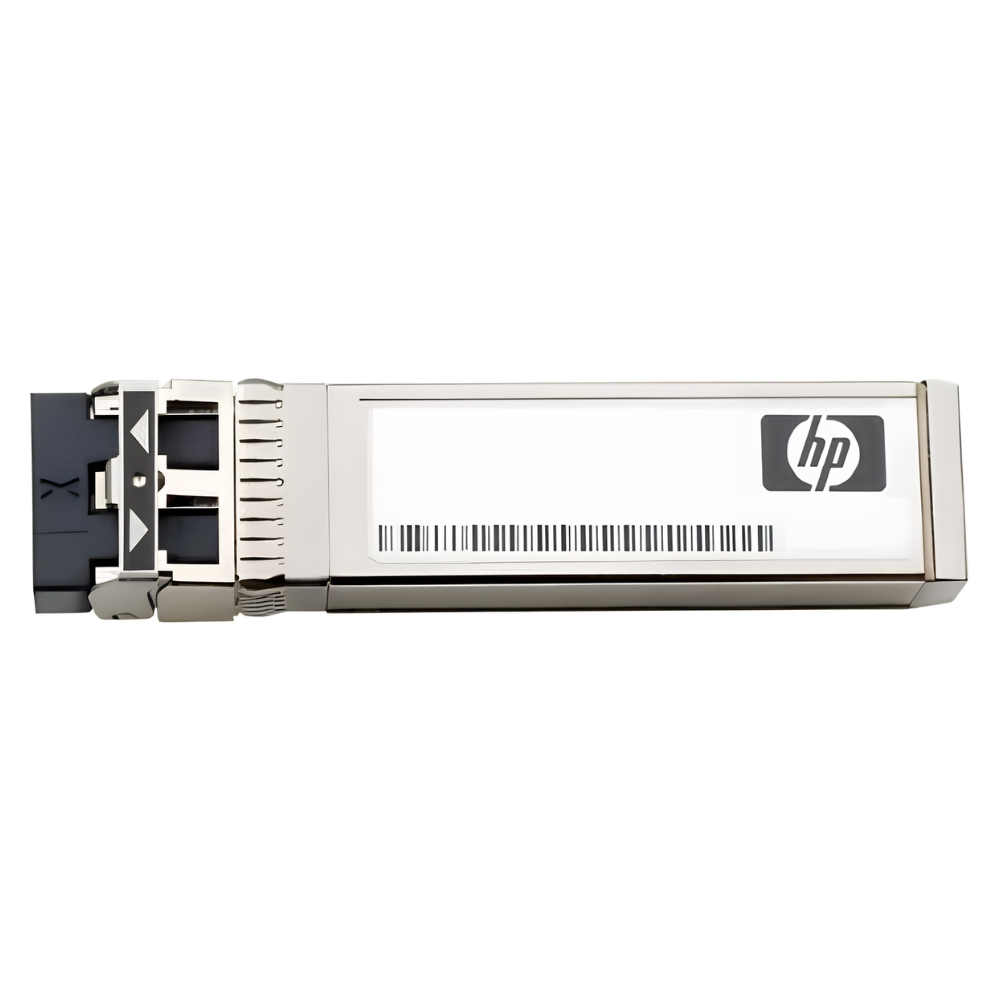
The 717875-001 HP MSA 2040 8Gb/s FC LC SFP+ Transceiver provides essential Fibre Channel connectivity for storage systems, offering a balance of performance and compatibility. It fits within storage arrays or switches that require high-speed optical links, making it an integral part of networked storage infrastructures. |
General Information |
|
|---|---|
| Brand | HP |
Technical Information |
|
|---|---|
| Form Factor | SFP+ |
| Media | MMF |
| Type | VCSEL |
| Power Consumption | 1.0 |
| Protocols | Fibre Channel (8Gb/s) |
| Connector | LC Duplex |
| DOM Support | Yes |
Physical Characteristics |
|
|---|---|
| Weight | 3.00 |
| Condition | Refurbished |
Product Description |
|---|
This 717875-001 HP MSA 2040 8Gb/s FC LC SFP+ Transceiver enables fast and stable Fibre Channel connectivity for storage area networks. It is commonly found in enterprise storage environments where robust data transfer and minimal latency are required. IT professionals managing HP storage systems rely on this transceiver to maintain consistent network performance. Key Features
This transceiver plays a crucial role in facilitating reliable data flows across storage networks, enhancing overall system responsiveness. Its integration into storage network setups helps maintain operational reliability and efficient data throughput without unnecessary complexity. |
Use Cases |
|---|
This transceiver is typically deployed in storage area networks supporting medium to large scale enterprise storage arrays. It is especially suited for environments requiring fast and reliable data transfer between storage devices and servers. Data centers and IT departments focused on storage optimization find this transceiver valuable for consistent network performance. How It's Used:
By ensuring dependable high-speed connections, this transceiver helps maintain efficiency and scalability in storage networking setups. Its role in stabilizing data transfer paths contributes to streamlined storage operations and better resource utilization. |
 Shipping Options
 International Delivery
Requires a UPS, FedEx, or DHL account. Customers may arrange pickup from our US warehouse.
International Delivery
Requires a UPS, FedEx, or DHL account. Customers may arrange pickup from our US warehouse.
 Payment Methods
We accept Visa, Mastercard, AMEX, Discover, and Wire Transfer.
Payment Methods
We accept Visa, Mastercard, AMEX, Discover, and Wire Transfer.
 Purchase Orders
We process purchase orders for government agencies, enterprises, data centers, and SMBs.
Purchase Orders
We process purchase orders for government agencies, enterprises, data centers, and SMBs.