

Subscribe To Our Newsletter!
Subscribe to the newsletter to stay up to date with the latest news and most useful
Newsletter
↑
Back to Top



Product Overview |
|---|
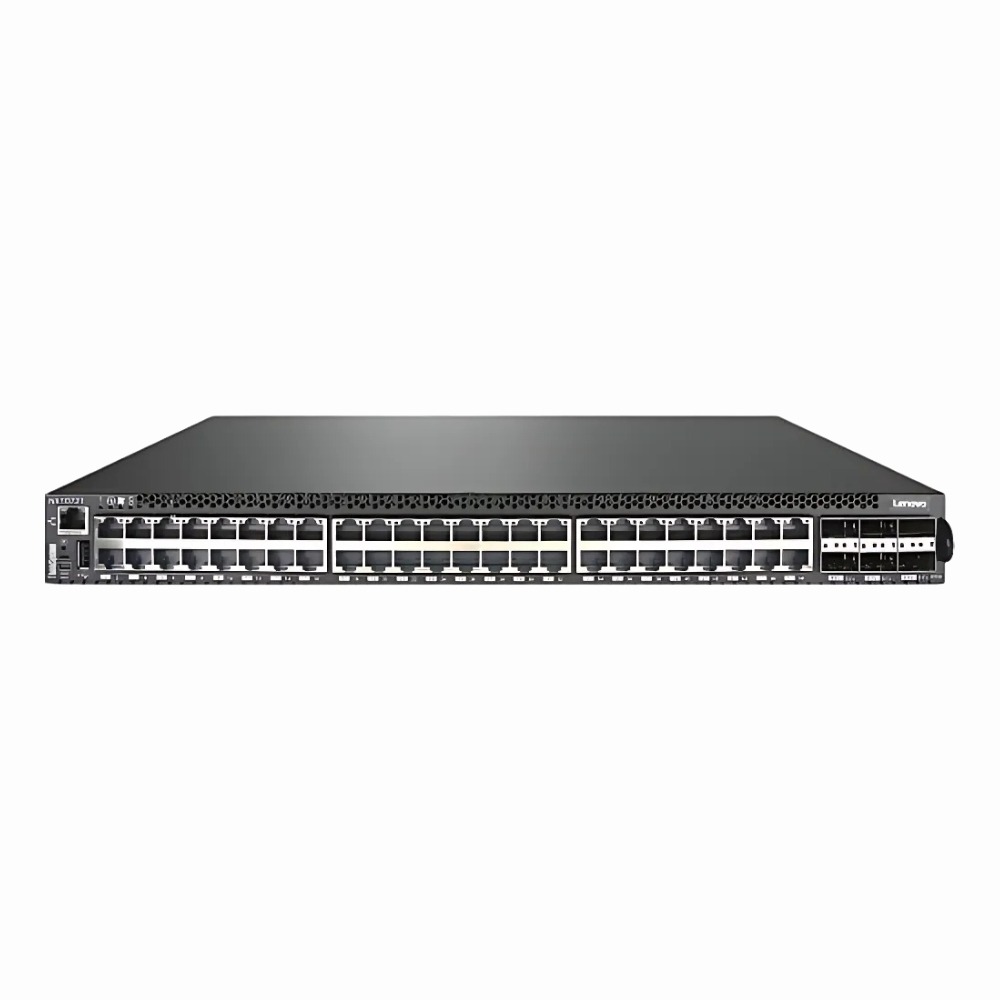
The Lenovo ThinkSystem NE1072T RackSwitch combines high-density 10GBase-T connectivity with QSFP+ uplinks, making it a solid option for data centers needing efficient Layer 3 routing and scalable network expansion. Its design supports front-to-rear airflow, fitting seamlessly into typical rack cooling setups while offering flexible management suited for enterprise environments. |
General Information |
|
|---|---|
| Brand | Lenovo |
| Part Number | 7159C2X |
| Condition | Refurbished |
Technical Information |
|
|---|---|
| Form Factor | Rack-Mountable |
| Mount Type | 1U Rack |
| Switch Ports | 48 x 10GBase-T RJ-45, 6 x QSFP+ (40GbE) uplink ports |
| Number of Ports | 54-Ports |
| Port Type | RJ-45, QSFP / QSFP+ |
| Port Speed | 10 Gbps for RJ‑45, 40 Gbps for QSFP+ |
| UpLink Ports | 6 × QSFP+, breakout capable to 4× SFP+ (10 GbE) per port |
| POE Support | No |
| Switching Capacity | 1.44 Tbps |
| Switch Forwarding Rate | 714 Mpps |
| VLAN Support | Yes |
| Max VLANs Supported | Supports up to 4,095 VLANs |
| Stackable | No |
| Layer Support | Layer 2, Layer 3 |
| Connector Type | Copper RJ‑45, QSFP+ optical/fiber, + mgmt RJ‑45, mini-USB, USB 2.0 |
Performance |
|
|---|---|
| Latency | 700 ns |
| Jumbo Frame Support | Up To 9216 Bytes |
| MAC Address Table Size | 208,000 entries |
Management and Configuration |
|
|---|---|
| Routing Protocols | Static, OSPF, BGP, VRRP |
| Remote Protocols | CLI, SNMP v1/2/3, HTTP, HTTPS, Telnet, SSH/SFTP/SCP, TFTP, SLP, Python REST |
| Management Interfaces | 1 × mgmt RJ‑45, 1 × mini-USB console, 1 × USB 2.0 |
| Security Features | RADIUS, TACACS+, LDAP, ACLs, CoPP, DHCP snooping/relay, RBAC, TPM 1.2, 802.1X |
| Security | 802.1X,RADIUS,TACACS+,ACLs,SSH |
| Remote Management Protocol | SNMPv1/v2c/v3, SSH, Telnet, HTTP/HTTPS, RADIUS, TACACS+ |
| Routing Protocol | Static routing, RIP, OSPF |
Power & Cooling |
|
|---|---|
| Fans | Front-to-rear airflow, variable-speed fans (front intake, rear exhaust) |
| Power | AC 100-240V, 50/60Hz |
Physical Characteristics |
|
|---|---|
| Dimensions | 1.7″ × 17.4″ × 19.2″ |
| Weight | 26.00 |
| Operating Temperature | 0°C to 40°C (32°F to 104°F) |
Miscellaneous |
|
|---|---|
| Compliance Standards | RoHS, CE, FCC, UL, cULus |
| Compliant Standards | IEEE 802.3, IEEE 802.3ab (1000BASE-T), IEEE 802.3an (10GBASE-T), IEEE 802.3ae (10GbE over fiber), IEEE 802.3ad (LACP), IEEE 802.1Q (VLAN), IEEE 802.1p (Priority), IEEE 802.1D (STP), IEEE 802.1w (RSTP), IEEE 802.1s (MST), IEEE 802.3x (Flow Control) |
Product Description |
|---|
The Lenovo ThinkSystem NE1072T RackSwitch is a high-performance network switch built for demanding data center environments. It offers 48 10GBase-T ports, providing ample capacity for connecting servers and storage devices with fast, reliable Ethernet. The switch also features 6 QSFP+ ports that support high-bandwidth uplinks or stacking configurations, making it flexible for scaling network capacity. Commonly found in enterprise and cloud data centers, this switch suits IT professionals and network administrators who need robust Layer 3 routing capabilities combined with versatile port options. Its front-to-rear airflow design helps maintain optimal temperatures in dense rack setups. Key Features
This switch is often deployed in data centers where high port density and speed are crucial. It helps streamline network infrastructure by consolidating connectivity and routing into a single device. By supporting both copper and high-speed uplinks, it balances flexibility and performance, making it a practical choice in environments managing heavy data flows. |
Use Cases |
|---|
The 7159C2X Lenovo ThinkSystem NE1072T RackSwitch is suited for environments that demand high-speed, reliable network connectivity with advanced management features. How It's Used:
This switch facilitates robust network performance and scalability, supporting critical infrastructure needs in data centers and large enterprise environments. |
 Shipping Options
 International Delivery
Requires a UPS, FedEx, or DHL account. Customers may arrange pickup from our US warehouse.
International Delivery
Requires a UPS, FedEx, or DHL account. Customers may arrange pickup from our US warehouse.
 Payment Methods
We accept Visa, Mastercard, AMEX, Discover, and Wire Transfer.
Payment Methods
We accept Visa, Mastercard, AMEX, Discover, and Wire Transfer.
 Purchase Orders
We process purchase orders for government agencies, enterprises, data centers, and SMBs.
Purchase Orders
We process purchase orders for government agencies, enterprises, data centers, and SMBs.