

Subscribe To Our Newsletter!
Subscribe to the newsletter to stay up to date with the latest news and most useful
Newsletter
↑
Back to Top



Product Overview |
|---|
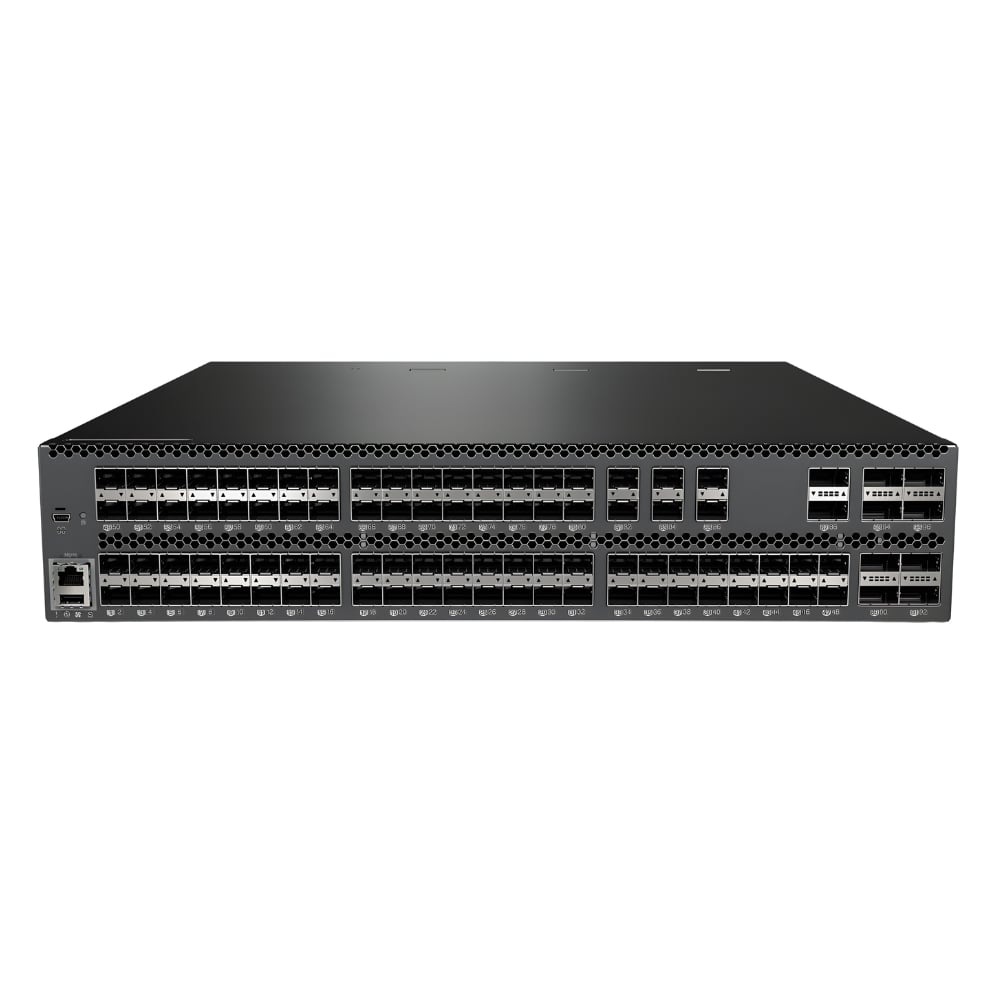
The Lenovo RackSwitch G8296 Base Open Bay is a 96-port 10GbE switch that fits into high-density data center racks. It provides essential connectivity for enterprise and cloud networks, balancing performance and flexibility. Its Open Bay design allows for various hardware configurations, making it a practical choice for evolving network setups. |
General Information |
|
|---|---|
| Brand | Lenovo |
| Part Number | 7159-CTO |
| Condition | Refurbished |
| Alternate Part Number | 7159-CTO-13-CT |
Technical Information |
|
|---|---|
| Switch Ports | 96 |
| Number of Ports | 96-Ports |
| Port Type | 10/100/1000Base-T |
| Port Speed | 10/100/1000 Mbps |
| POE Support | No |
| VLAN Support | Yes |
| Max VLANs Supported | 1-4094 |
| Layer Support | Layer 3 |
| Connector Type | RJ-45 |
Performance |
|
|---|---|
| Jumbo Frame Support | Up To 9216 Bytes |
Management and Configuration |
|
|---|---|
| Remote Protocols | Yes |
| Management Interfaces | Command Line Interface (CLI), Web GUI, SNMP, SSH, Telnet |
| Remote Management Protocol | SNMP, SSH, HTTPS, Telnet |
Physical Characteristics |
|
|---|---|
| Weight | 3.00 |
Product Description |
|---|
The Lenovo RackSwitch G8296 Base Open Bay is a high-performance network switch designed to handle demanding data center and enterprise workloads. It's commonly found in environments requiring dense, scalable 10 Gigabit Ethernet connectivity, such as server farms, cloud infrastructures, and large corporate networks. This switch is built for IT teams and network administrators who need reliable, low-latency switching that can adapt to evolving network demands. Its Open Bay design allows for flexible deployment and integration within Lenovo's RackSwitch series. Key Features
This switch is generally deployed in data centers and enterprise networks where high throughput and port density are essential. Its role often involves linking servers and storage systems to create a robust, scalable network backbone. Users benefit from its reliability and flexible design, allowing them to meet current network needs while accommodating future growth without major hardware changes. |
 Shipping Options
 International Delivery
Requires a UPS, FedEx, or DHL account. Customers may arrange pickup from our US warehouse.
International Delivery
Requires a UPS, FedEx, or DHL account. Customers may arrange pickup from our US warehouse.
 Payment Methods
We accept Visa, Mastercard, AMEX, Discover, and Wire Transfer.
Payment Methods
We accept Visa, Mastercard, AMEX, Discover, and Wire Transfer.
 Purchase Orders
We process purchase orders for government agencies, enterprises, data centers, and SMBs.
Purchase Orders
We process purchase orders for government agencies, enterprises, data centers, and SMBs.