

Subscribe To Our Newsletter!
Subscribe to the newsletter to stay up to date with the latest news and most useful
Newsletter
↑
Back to Top



Product Overview |
|---|
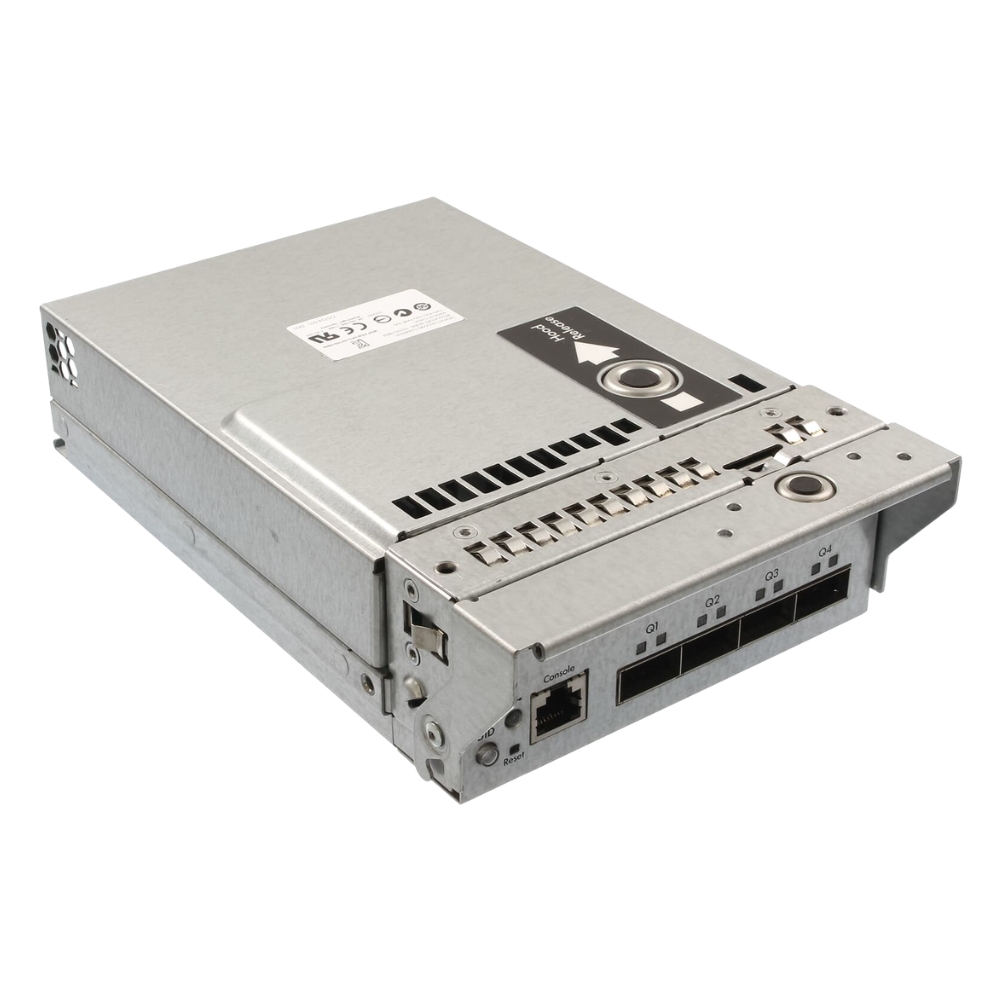
The 704652-B21 - HPE Moonshot 4-Ports 40GBase-X Uplink Module provides essential network uplink functionality for Moonshot server clusters. Designed to handle high data throughput and tight integration within the chassis, it fits seamlessly into modular server environments where efficient data aggregation is critical. |
General Information |
|
|---|---|
| Brand | HPE |
Technical Information |
|
|---|---|
| Ports | 4 |
| Compatibility | HPE Moonshot 1500 chassis, HPE Moonshot system |
| Data Transfer Rate | 40 Gbps |
| Connector Type | QSFP+ |
Physical Characteristics |
|
|---|---|
| Weight | 3.00 |
| Condition | Refurbished |
Miscellaneous |
|
|---|---|
| Assembly Required | No |
| Compliance Standards | WEEE, RoHS, CE, FCC |
Product Description |
|---|
The 704652-B21 - HPE Moonshot 4-Ports 40GBase-X Uplink Module delivers robust uplink capabilities for the HPE Moonshot system, facilitating rapid data transfers across server nodes. Often found in modular server environments, this uplink module helps consolidate network paths and improve bandwidth efficiency. Built for IT professionals managing dense compute infrastructures, the module supports seamless integration within Moonshot chassis setups, ensuring streamlined network performance. Network administrators and data center engineers benefit from its high data throughput and compact design. Key Features
This uplink module plays a crucial role in maintaining network integrity and speed within concentrated server deployments. Its reliability and performance contribute significantly to streamlined data center operations, accommodating growing bandwidth demands with minimal footprint. |
Use Cases |
|---|
The HPE Moonshot 4-Ports 40GBase-X Uplink Module is typically used in data centers leveraging high-density compute platforms. It serves organizations requiring fast, scalable network connections among server nodes in cloud and virtualization settings. Its design benefits network architects aiming to simplify uplink complexity within compact server ecosystems. How It's Used:
This uplink module supports operational efficiency by consolidating and accelerating data transfer paths. Its suitability for scalable environments helps maintain performance as workload demands increase, ensuring reliable network connectivity throughout modular server configurations. |
 Shipping Options
 International Delivery
Requires a UPS, FedEx, or DHL account. Customers may arrange pickup from our US warehouse.
International Delivery
Requires a UPS, FedEx, or DHL account. Customers may arrange pickup from our US warehouse.
 Payment Methods
We accept Visa, Mastercard, AMEX, Discover, and Wire Transfer.
Payment Methods
We accept Visa, Mastercard, AMEX, Discover, and Wire Transfer.
 Purchase Orders
We process purchase orders for government agencies, enterprises, data centers, and SMBs.
Purchase Orders
We process purchase orders for government agencies, enterprises, data centers, and SMBs.