

Subscribe To Our Newsletter!
Subscribe to the newsletter to stay up to date with the latest news and most useful
Newsletter
↑
Back to Top



Product Overview |
|---|
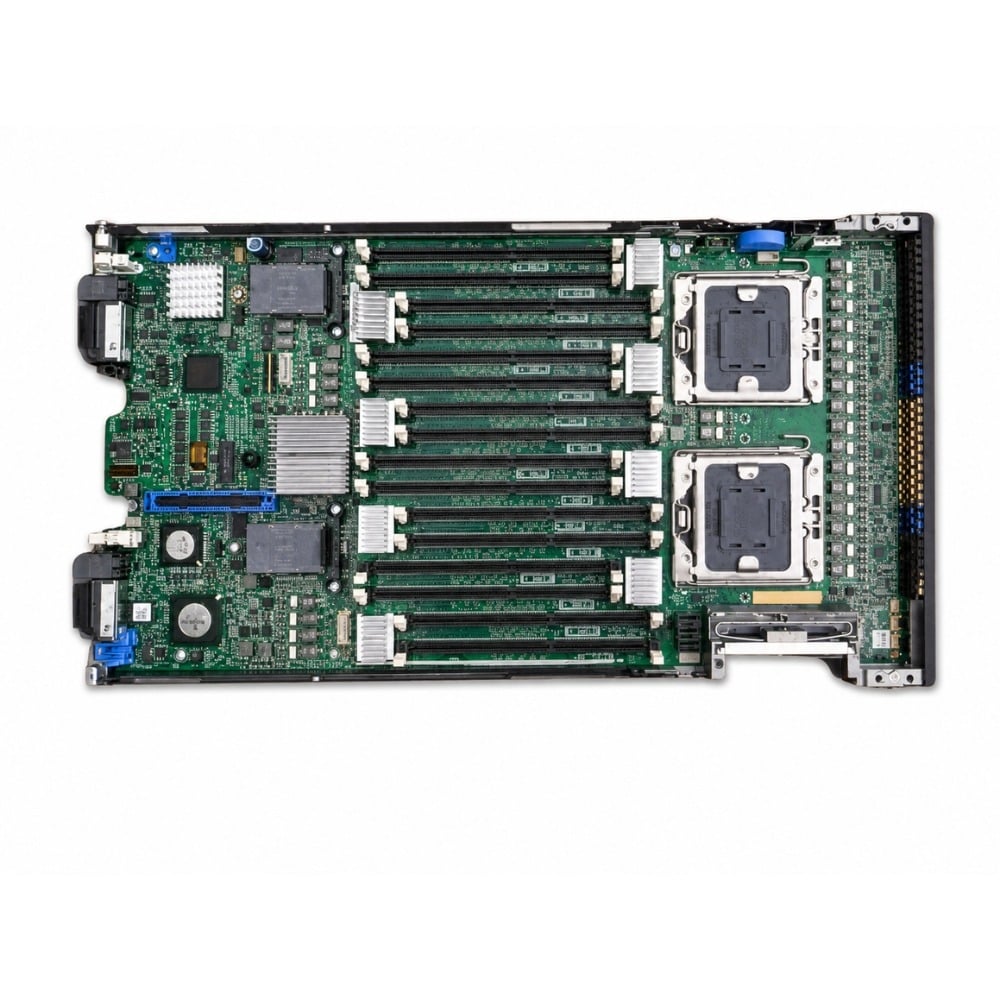
The IBM 69Y3050 system board serves as the core platform for BladeCenter HX5 servers, combining support for dual Xeon X7500 processors with up to 16 DDR3 memory modules. It fits into data center environments where reliable, scalable hardware is essential for managing complex workloads and maintaining uptime. |
General Information |
|
|---|---|
| Brand | IBM |
| Part Number | 69Y3050 |
Technical Information |
|
|---|---|
| Chipset | Intel 7500 (iE7500 / Nehalem-EX) |
| Compatible Processors | Intel Xeon 7500 series (Nehalem-EX) — examples: X7560, X7550, X7542, X7520; supports 2x processors (dual-socket) |
| Board Socket Type | LGA1567 |
| Memory Slots | 16 DIMM |
| Memory Support | DDR3 Registered ECC (RDIMM), 1066/1333 MT/s (server-class ECC/Registered memory) |
| Storage Interfaces | None onboard (storage provided via BladeCenter HX5 chassis/I/O modules), SAS, SATA (via chassis backplane or I/O modules) |
| Expansion Slots | PCIe (mezzanine) / proprietary BladeCenter HX5 mezzanine I/O connectors (integrated PCIe lanes for chassis I/O modules) |
Physical Characteristics |
|
|---|---|
| Form Factor | IBM BladeCenter HX5 blade (Blade form factor) |
| Weight | 5.00 |
| Condition | Refurbished |
Miscellaneous |
|
|---|---|
| Assembly Required | Yes |
| Eco Friendly | Yes |
| Compliance Standards | WEEE, RoHS, cURus, CE, FCC, CCC, UL, TUV, cULus, CSA, cUL |
Product Description |
|---|
This IBM system board is built for the BladeCenter HX5, designed to deliver robust server performance. It's commonly used in enterprise data centers where demanding workloads require powerful processing and extensive memory capacity. IT professionals and system administrators often deploy this motherboard to maximize computing resources in a compact blade environment. Key Features
This system board is typically deployed in high-density server setups where space and performance are critical. It plays a vital role in managing enterprise applications, virtualization, and database operations without compromising throughput or system stability. |
Use Cases |
|---|
The IBM 69Y3050 system board is primarily deployed in enterprise data centers focusing on high-density server environments where processing power and memory capacity directly impact application performance. IT administrators managing virtualization platforms or large-scale database services benefit greatly from this motherboard’s scalability and reliability within IBM BladeCenter HX5 chassis. How It's Used:
This system board’s integration within BladeCenter HX5 servers ensures operational efficiency through optimized hardware compatibility and scalability. Its design supports critical workloads by accommodating dense memory configurations and dual processors, which are essential for managing demanding enterprise applications and maintaining high service availability. |
 Shipping Options
 International Delivery
Requires a UPS, FedEx, or DHL account. Customers may arrange pickup from our US warehouse.
International Delivery
Requires a UPS, FedEx, or DHL account. Customers may arrange pickup from our US warehouse.
 Payment Methods
We accept Visa, Mastercard, AMEX, Discover, and Wire Transfer.
Payment Methods
We accept Visa, Mastercard, AMEX, Discover, and Wire Transfer.
 Purchase Orders
We process purchase orders for government agencies, enterprises, data centers, and SMBs.
Purchase Orders
We process purchase orders for government agencies, enterprises, data centers, and SMBs.