

Subscribe To Our Newsletter!
Subscribe to the newsletter to stay up to date with the latest news and most useful
Newsletter
↑
Back to Top



Product Overview |
|---|
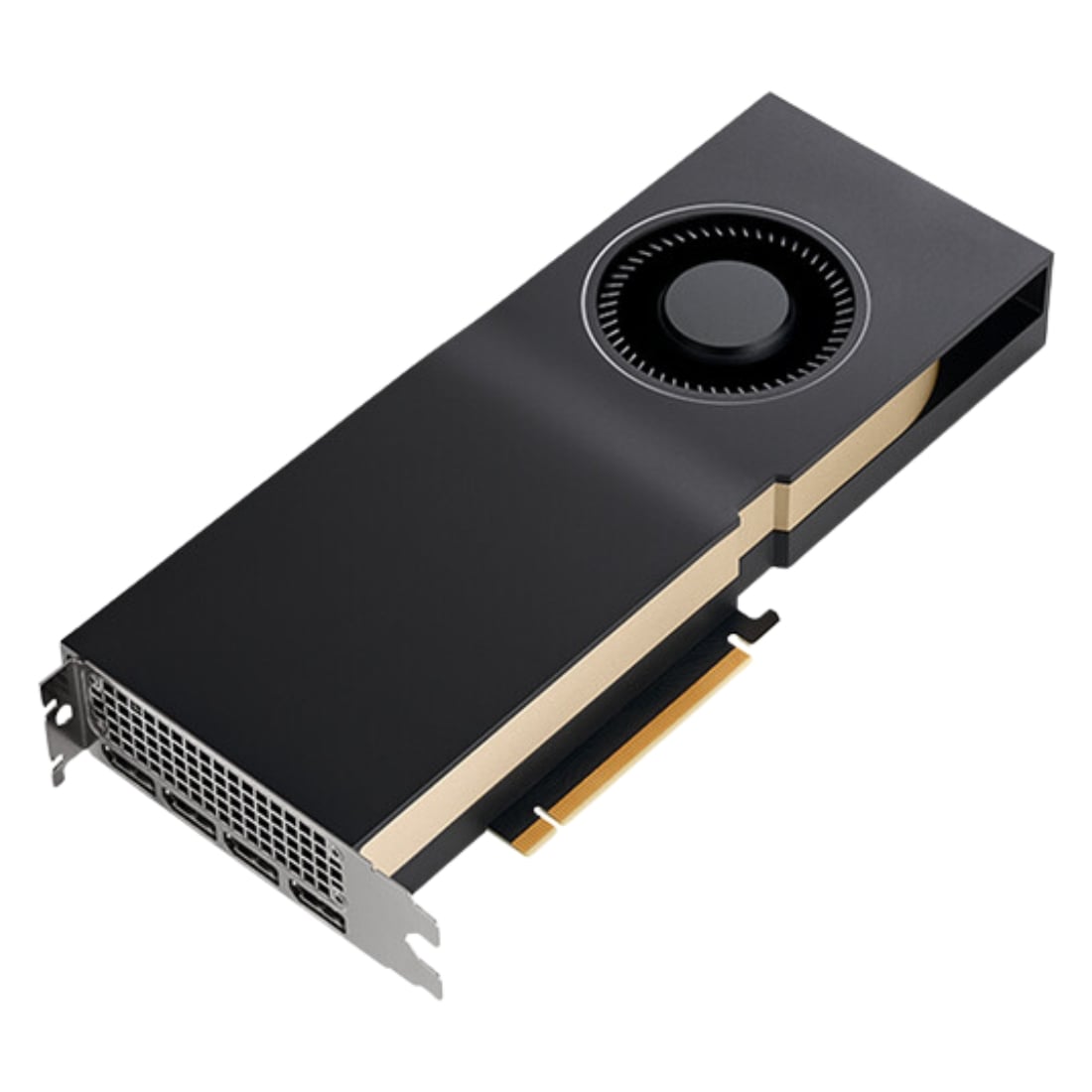
The NVIDIA Quadro RTX A5000 is designed to deliver powerful graphics performance for professional applications. It fits into demanding workstations where high memory capacity and multiple display outputs are necessary for complex rendering, visualization, and AI tasks. |
General Information |
|
|---|---|
| Brand | Nvidia |
| Part Number | 699-5G132-0500-800 |
Technical Information |
|
|---|---|
| Chipset | Nvidia |
| GPU Clock | 1670 MHz (Boost) |
| Bus Interface | PCI Express 4.0 x16 |
| Supported APIs | DirectX 12, OpenGL: 4.6, OpenCL, Vulkan: 1.2.175 , CUDA, Shader Model: 6.7, DirectCompute, DirectX |
| Output Interface | 4 x DisplayPort 1.4a (with DSC) |
| Suggested PSU | 650W recommended |
| Power Connectors | 2 x 8-pin PCIe |
Memory |
|
|---|---|
| Memory Size | 24GB |
| Interface | GDDR6 |
| Memory Bus | 384-bit |
Physical Characteristics |
|
|---|---|
| Slot Width | 2-slot |
| Weight | 3.00 |
| Condition | Refurbished |
Miscellaneous |
|
|---|---|
| Assembly Required | Yes |
| Eco Friendly | Yes |
| Compliance Standards | WEEE, RoHS, cURus, CE, FCC, CCC, UL, TUV, cULus, CSA, cUL |
Product Description |
|---|
The NVIDIA Quadro RTX A5000 is a professional-grade graphics card built for demanding visualization, rendering, and AI workloads. It is commonly found in workstations used by designers, engineers, and content creators who require reliable performance for 3D modeling, video editing, and simulation tasks. Often integrated into creative studios and engineering environments, this graphics card accelerates workflows by leveraging advanced GPU architecture and ample VRAM. Professionals who work with detailed visual data benefit greatly from its ability to handle complex scenes and multiple displays. Key Features
This graphics card is typically deployed in professional workstations where high-end graphical computations are essential. It plays a key role in industries such as architecture, media production, and scientific research by enabling fast, accurate visualization. Users benefit from reduced rendering times and smoother real-time interactions, which help streamline creative and technical projects. |
 Shipping Options
 International Delivery
Requires a UPS, FedEx, or DHL account. Customers may arrange pickup from our US warehouse.
International Delivery
Requires a UPS, FedEx, or DHL account. Customers may arrange pickup from our US warehouse.
 Payment Methods
We accept Visa, Mastercard, AMEX, Discover, and Wire Transfer.
Payment Methods
We accept Visa, Mastercard, AMEX, Discover, and Wire Transfer.
 Purchase Orders
We process purchase orders for government agencies, enterprises, data centers, and SMBs.
Purchase Orders
We process purchase orders for government agencies, enterprises, data centers, and SMBs.