

Subscribe To Our Newsletter!
Subscribe to the newsletter to stay up to date with the latest news and most useful
Newsletter
↑
Back to Top



Product Overview |
|---|
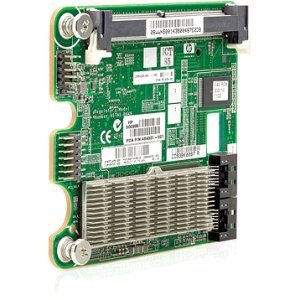
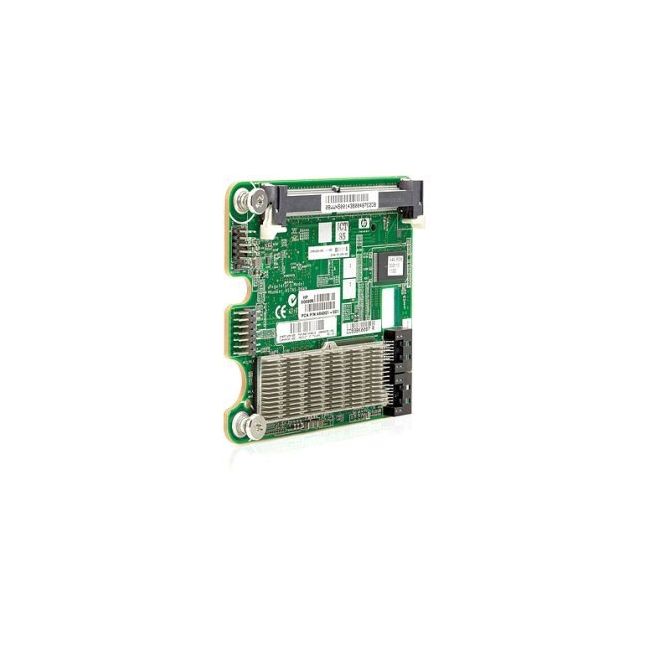
The HPE Smart Array P420i Mezzanine RAID Controller streamlines data management by providing hardware-based RAID functionality integrated directly into HPE servers. It fits into server mezzanine slots, offering a compact solution for enhancing storage reliability and performance without additional hardware complexity. |
General Information |
|
|---|---|
| Brand | HPE |
| Part Number | 689245-001 |
Physical Characteristics |
|
|---|---|
| Weight | 5.00 |
| Condition | Refurbished |
Product Description |
|---|
The HPE Smart Array P420i Mezzanine RAID Controller is designed to manage and protect data on HPE ProLiant servers by providing reliable RAID functionality. It is often found in enterprise environments where data integrity and storage performance are critical. Built for IT professionals and system administrators, this controller simplifies the management of multiple drives by supporting several RAID configurations, thereby enhancing fault tolerance and system uptime. It's commonly used in data centers, virtualization setups, and business servers where consistent storage performance is essential. Key Features
This RAID controller is typically deployed in mid-sized to large server environments where data reliability and scalability are necessary. It plays a key role in maintaining system stability by managing disk arrays effectively, minimizing downtime, and helping to safeguard critical information. |
Use Cases |
|---|
The HPE Smart Array P420i Mezzanine RAID Controller is primarily utilized in enterprise server environments where robust data redundancy and high I/O throughput are essential. It is suited for IT administrators managing HPE ProLiant servers who require efficient hardware RAID solutions embedded within compact server mezzanine slots. How It's Used:
This RAID controller facilitates streamlined storage management by integrating seamlessly with server architectures, thus improving operational efficiency. It enables scalable configurations that adapt to growing data demands while maintaining high performance and reliability in critical enterprise IT infrastructures. |
 Shipping Options
 International Delivery
Requires a UPS, FedEx, or DHL account. Customers may arrange pickup from our US warehouse.
International Delivery
Requires a UPS, FedEx, or DHL account. Customers may arrange pickup from our US warehouse.
 Payment Methods
We accept Visa, Mastercard, AMEX, Discover, and Wire Transfer.
Payment Methods
We accept Visa, Mastercard, AMEX, Discover, and Wire Transfer.
 Purchase Orders
We process purchase orders for government agencies, enterprises, data centers, and SMBs.
Purchase Orders
We process purchase orders for government agencies, enterprises, data centers, and SMBs.