

Subscribe To Our Newsletter!
Subscribe to the newsletter to stay up to date with the latest news and most useful
Newsletter
↑
Back to Top



Product Overview |
|---|
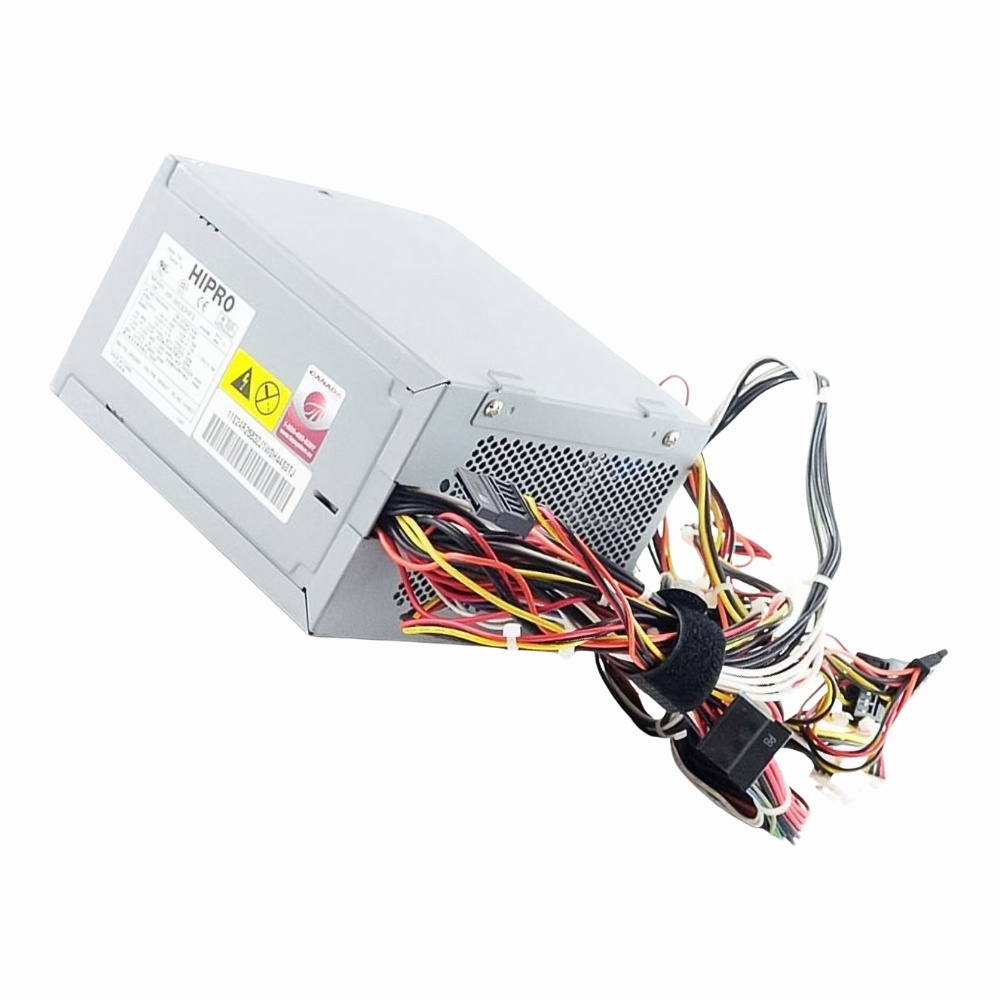
The NetApp 440-Watts 110-220V Power Supply Unit delivers steady power tailored specifically for NetApp storage systems. It fits into environments requiring a reliable energy source to keep storage hardware up and running, often seen in professional IT and data center setups where power consistency is essential. |
General Information |
|
|---|---|
| Brand | NetApp |
| Part Number | 65667-02A |
| Product Type | Storage Enclosure Power Supply |
| Condition | Refurbished |
Technical Information |
|
|---|---|
| Input Voltage | AC 110-220V |
| Input Frequency | 50Hz,60Hz |
| Output | 12V DC |
| Max. Output Power | 450W |
| Hot Swappable | Yes |
| Redundant Support | Yes |
| Cooling Type | Active Fan |
| Modularity | Non-Modular |
| rail_design | Single 12V Rail |
| Number of Fans | 1 |
Compatibility |
|
|---|---|
| Form Factor | Proprietary |
Physical Characteristics |
|
|---|---|
| Weight | 3.00 |
Certifications and Environmental |
|
|---|---|
| Compliance Standards | RoHS, CE, cULus |
Product Description |
|---|
This 440-watt power supply is crafted to provide consistent power to NetApp storage hardware, helping maintain continuous operation in data centers and enterprise environments. It’s commonly used in systems where uptime and energy efficiency are critical. Built for NetApp devices, this power supply suits IT professionals and system administrators who manage storage infrastructures and require dependable hardware components. It often appears in setups demanding robust power delivery within variable voltage settings. Key Features
This power supply unit is typically deployed in data centers and enterprise storage facilities where reliability is a priority. Its consistent performance ensures critical data systems remain powered without interruption. By integrating this unit, organizations can expect fewer hardware interruptions and smoother operation of their NetApp equipment, contributing to overall system stability. |
Use Cases |
|---|
The NetApp 440W 110-220V Power Supply Unit is primarily utilized in enterprise storage environments requiring dependable and uninterrupted power delivery. IT professionals managing data centers or storage clusters benefit from its compatibility and stable operation, ensuring mission-critical storage systems maintain optimal performance under varying power conditions. How It's Used:
This power supply unit enhances operational resilience by reducing downtime related to power inconsistencies. Its compact design facilitates scalable hardware upgrades while maintaining energy efficiency critical to sustained data storage workloads. |
 Shipping Options
 International Delivery
Requires a UPS, FedEx, or DHL account. Customers may arrange pickup from our US warehouse.
International Delivery
Requires a UPS, FedEx, or DHL account. Customers may arrange pickup from our US warehouse.
 Payment Methods
We accept Visa, Mastercard, AMEX, Discover, and Wire Transfer.
Payment Methods
We accept Visa, Mastercard, AMEX, Discover, and Wire Transfer.
 Purchase Orders
We process purchase orders for government agencies, enterprises, data centers, and SMBs.
Purchase Orders
We process purchase orders for government agencies, enterprises, data centers, and SMBs.