

Subscribe To Our Newsletter!
Subscribe to the newsletter to stay up to date with the latest news and most useful
Newsletter
↑
Back to Top



| Product Overview |
|---|
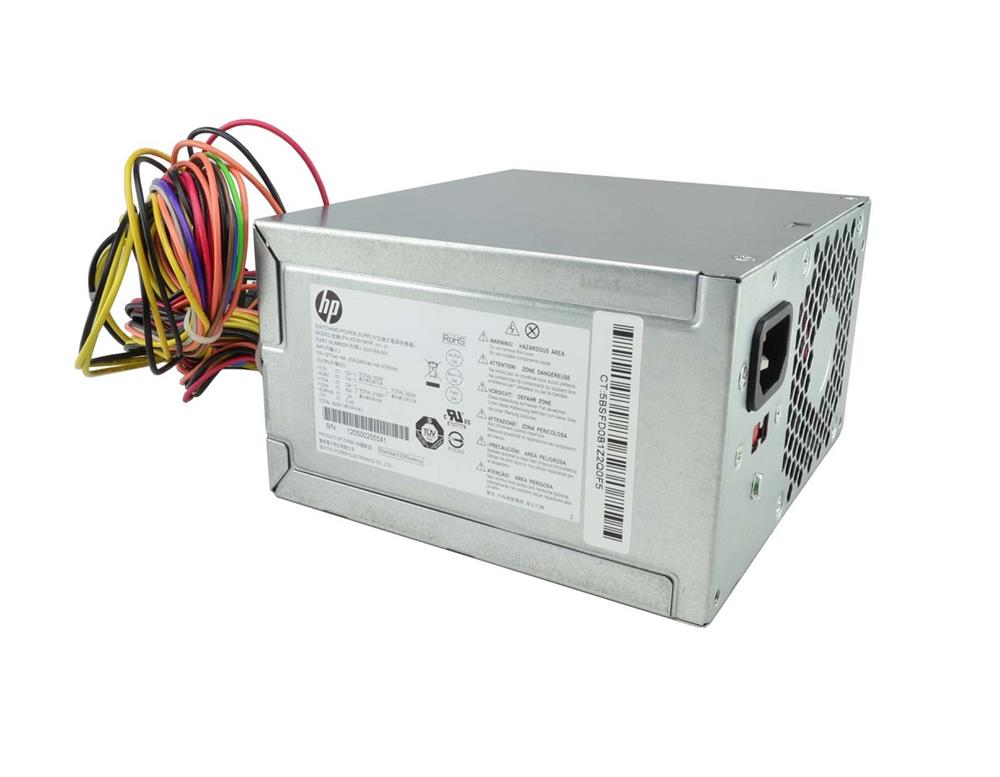
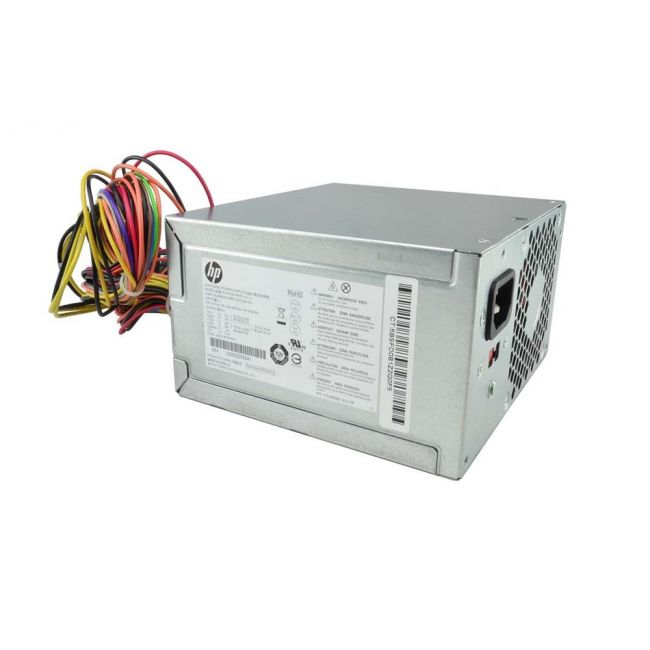
The HP 300-Watts ATX Power Supply for Pavilion H8-1020 Desktop PC provides steady power tailored to the needs of the Pavilion H8-1020 system. It fits the ATX form factor and delivers reliable energy conversion for desktop components. This PSU is a straightforward replacement part designed to maintain the performance and stability of the desktop without complex setup or modifications. |
| General Information | |
|---|---|
| Brand | HP |
| Part Number | 633189-001 |
| Condition | Refurbished |
| Technical Information | |
|---|---|
| Input Voltage | 100-127V AC, 200-240V AC |
| Input Frequency | 50-60 Hz |
| Output | +12V,+5V,+3.3V,-12V,+5VSB |
| Max. Output Power | 300W |
| Hot Swappable | No |
| Redundant Support | No |
| Cooling Type | Active Fan |
| Modularity | Non-Modular |
| rail_design | Single 12V Rail |
| Number of Fans | 1 |
| Compatibility | |
|---|---|
| Form Factor | ATX |
| Compatible For | Pavilion H8-1020 |
| Connectors | |
|---|---|
| Connector Types | 24-pin ATX, 4-pin CPU, 6-pin PCIe, 6+2-pin PCIe, SATA, Molex |
| Physical Characteristics | |
|---|---|
| Weight | 5.00 |
| Certifications and Environmental | |
|---|---|
| Compliance Standards | WEEE, RoHS, CE, FCC, UL, cULus |
| Product Description |
|---|
This 300-watt ATX power supply is designed to deliver reliable and consistent power to the HP Pavilion H8-1020 desktop PC. It converts AC electricity from your wall outlet into the correct DC voltages needed by your desktop's motherboard, processor, storage drives, and other components. Built specifically for HP desktops, this power supply fits seamlessly inside the Pavilion H8-1020’s case and ensures compatibility with its internal hardware. Home users and small office setups often use this PSU to maintain system stability during everyday computing tasks. Key Features
This power supply is typically installed in the HP Pavilion H8-1020 to replace faulty or aging units and keep the desktop running reliably. Its role is essential in providing the consistent power that keeps the computer’s components functioning correctly under regular workloads. |
 Shipping Options
 International Delivery
Requires a UPS, FedEx, or DHL account. Customers may arrange pickup from our US warehouse.
International Delivery
Requires a UPS, FedEx, or DHL account. Customers may arrange pickup from our US warehouse.
 Payment Methods
We accept Visa, Mastercard, AMEX, Discover, and Wire Transfer.
Payment Methods
We accept Visa, Mastercard, AMEX, Discover, and Wire Transfer.
 Purchase Orders
We process purchase orders for government agencies, enterprises, data centers, and SMBs.
Purchase Orders
We process purchase orders for government agencies, enterprises, data centers, and SMBs.