

Subscribe To Our Newsletter!
Subscribe to the newsletter to stay up to date with the latest news and most useful
Newsletter
↑
Back to Top



Product Overview |
|---|
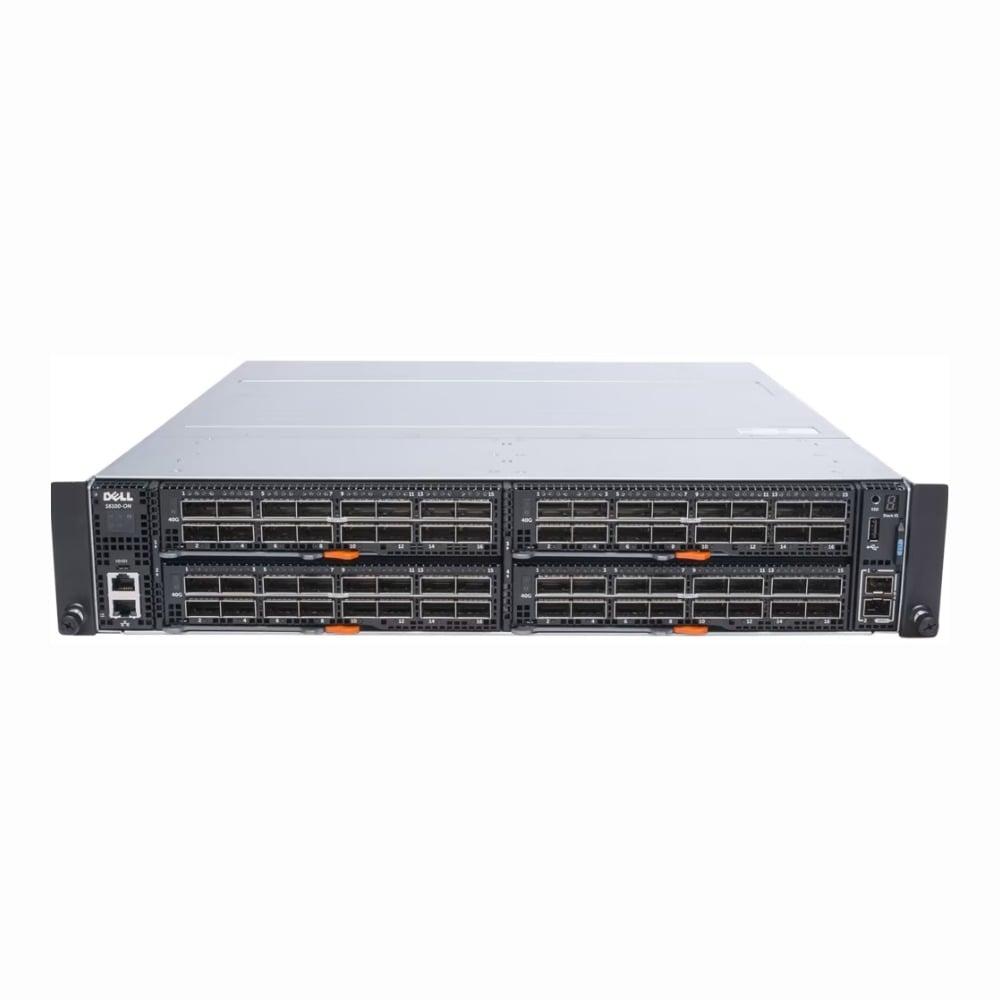
The Dell 5TMC1 Networking S6100-ON switch is a modular, high-performance device designed to support a range of Ethernet speeds from 10 to 100 GbE. It fits well into data center or enterprise networks where flexibility and scalability are essential, providing a reliable backbone for heavy network traffic while allowing customization through its open networking support. |
General Information |
|
|---|---|
| Brand | Dell |
| Part Number | 5TMC1 |
| Condition | Refurbished |
Technical Information |
|
|---|---|
| Port Type | 10G SFP+, 25G SFP28, 40G QSFP+, 100G QSFP28, USB Console, Serial Console (RJ-45) |
| Port Speed | 10/25/40/50/100GbE |
| POE Support | No |
| VLAN Support | Yes |
| Stackable | No |
| Layer Support | Layer 3 |
| Connector Type | QSFP28,SFP+,RJ-45,USB |
Performance |
|
|---|---|
| Jumbo Frame Support | Up To 9216 Bytes |
Management and Configuration |
|
|---|---|
| Remote Protocols | Yes |
| Management Interfaces | Serial Console (RJ-45),USB Console,SSH,SNMP |
| Management Type | CLI |
| Remote Management Protocol | SSH,SNMP |
Physical Characteristics |
|
|---|---|
| Weight | 5.00 |
Product Description |
|---|
The Dell Networking S6100-ON switch is built for environments requiring high-performance and adaptable networking solutions. It offers a modular design that accommodates various port speeds, including 10, 25, 40, 50, and 100 GbE, making it versatile for different deployment needs. Often found in data centers and enterprise core networks, this switch supports demanding workloads and traffic-heavy applications. Network engineers and IT teams benefit from its open networking capabilities, allowing integration with preferred operating systems and tailored network management. Key Features
In practice, the S6100-ON is commonly deployed as a top-of-rack or spine switch, handling traffic between servers and network cores. Its ability to handle diverse speeds and configurations helps organizations adapt as their network demands evolve, keeping data flowing efficiently without major infrastructure changes. |
Use Cases |
|---|
The Dell 5TMC1 Networking S6100-ON switch is predominantly deployed in data center environments where high throughput and low latency are critical. Network architects and IT teams managing scalable enterprise backbones or cloud infrastructure benefit from its modular design and multi-speed Ethernet support, allowing seamless integration into complex network topologies. How It's Used:
This switch enhances operational efficiency by delivering adaptable performance aligned with evolving network demands. Its scalability and open networking capabilities support dynamic environments, maintaining consistent throughput and enabling streamlined network management across enterprise and data center infrastructures. |
 Shipping Options
 International Delivery
Requires a UPS, FedEx, or DHL account. Customers may arrange pickup from our US warehouse.
International Delivery
Requires a UPS, FedEx, or DHL account. Customers may arrange pickup from our US warehouse.
 Payment Methods
We accept Visa, Mastercard, AMEX, Discover, and Wire Transfer.
Payment Methods
We accept Visa, Mastercard, AMEX, Discover, and Wire Transfer.
 Purchase Orders
We process purchase orders for government agencies, enterprises, data centers, and SMBs.
Purchase Orders
We process purchase orders for government agencies, enterprises, data centers, and SMBs.