

Subscribe To Our Newsletter!
Subscribe to the newsletter to stay up to date with the latest news and most useful
Newsletter
↑
Back to Top



Product Overview |
|---|
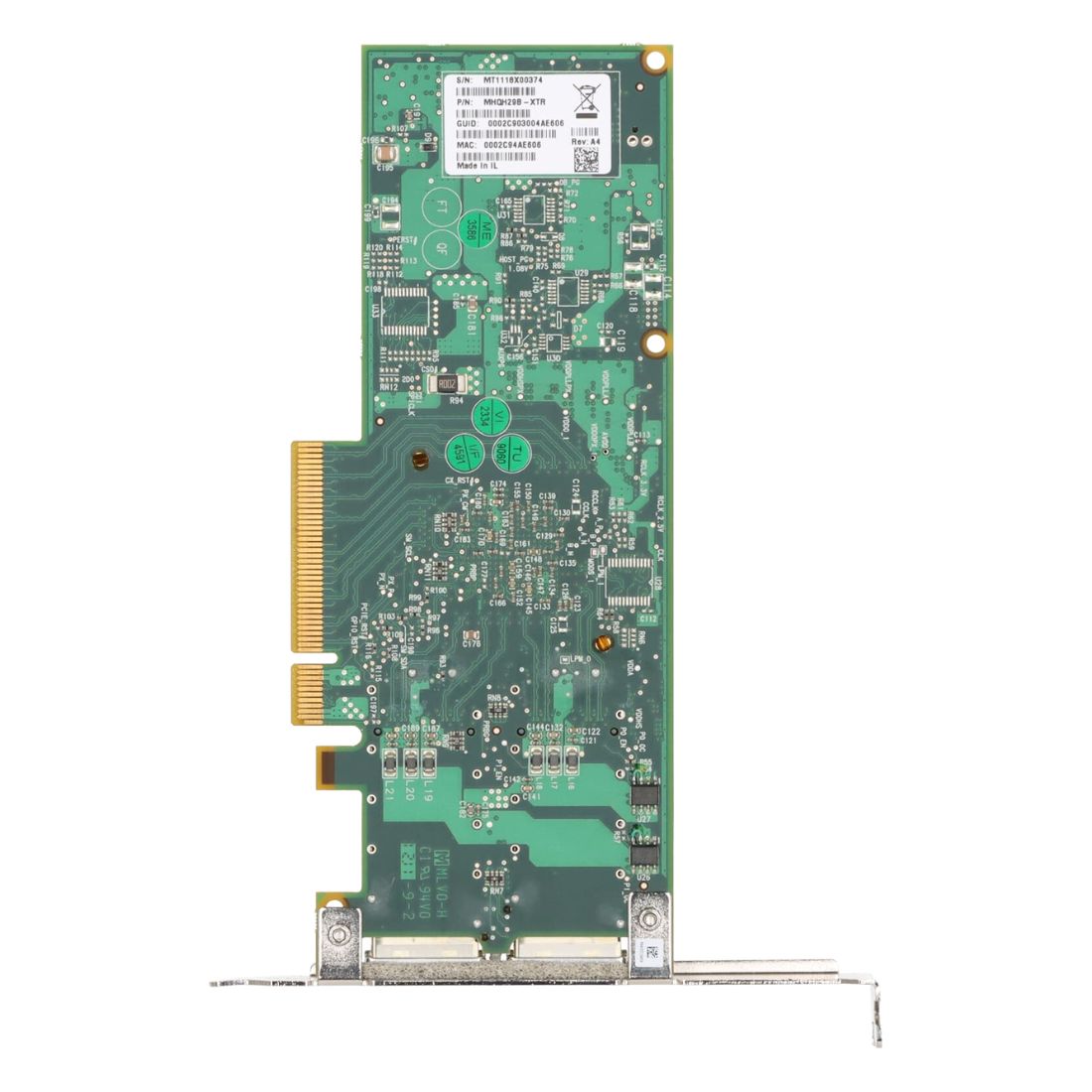
The IBM 40Gb/s 4x QDR InfiniBand Single Port PCI Express x8 Host Channel Adapter facilitates high-speed data transfer for demanding computing setups. It fits into server environments requiring rapid and reliable network communication, bridging nodes effectively with its InfiniBand technology. |
General Information |
|
|---|---|
| Brand | IBM |
| Part Number | 59Y1888 |
| Alternate Part Number | 59Y1888-04-UK |
Technical Information |
|
|---|---|
| Port Count | 1-Port (Single) |
| Bus Interface | PCIe 2.0 x8 |
| Network Topology | Switched Fabric (N-Port) |
Physical Characteristics |
|
|---|---|
| Weight | 3.00 |
| Condition | Refurbished |
Miscellaneous |
|
|---|---|
| Compliance Standards | RoHS, CE, FCC |
Product Description |
|---|
This IBM 40Gb/s 4x QDR InfiniBand Single Port PCI Express x8 Host Channel Adapter is built for accelerating data communication in high-performance computing and data center scenarios. It provides a robust connection that facilitates rapid data transfer and reduced bottlenecks. Often found in enterprise servers and clusters, this adapter is designed to improve the efficiency of workloads that demand fast inter-node communication, such as scientific simulations, financial modeling, and large-scale data analytics. IT professionals and system administrators commonly use it to enhance network throughput and minimize latency. Key Features
This adapter is typically deployed in data centers and research institutions where fast, reliable communication between compute nodes is critical. It plays a vital role in speeding up data transfers and improving the overall efficiency of cluster computing environments. |
Use Cases |
|---|
This adapter is utilized in environments requiring fast, reliable communication between servers and storage or compute nodes. How It's Used:
By employing this host channel adapter, organizations can optimize network throughput and reduce communication delays in advanced computing infrastructures. |
 Shipping Options
 International Delivery
Requires a UPS, FedEx, or DHL account. Customers may arrange pickup from our US warehouse.
International Delivery
Requires a UPS, FedEx, or DHL account. Customers may arrange pickup from our US warehouse.
 Payment Methods
We accept Visa, Mastercard, AMEX, Discover, and Wire Transfer.
Payment Methods
We accept Visa, Mastercard, AMEX, Discover, and Wire Transfer.
 Purchase Orders
We process purchase orders for government agencies, enterprises, data centers, and SMBs.
Purchase Orders
We process purchase orders for government agencies, enterprises, data centers, and SMBs.