

Subscribe To Our Newsletter!
Subscribe to the newsletter to stay up to date with the latest news and most useful
Newsletter
↑
Back to Top



Product Overview |
|---|
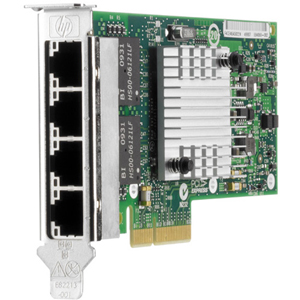
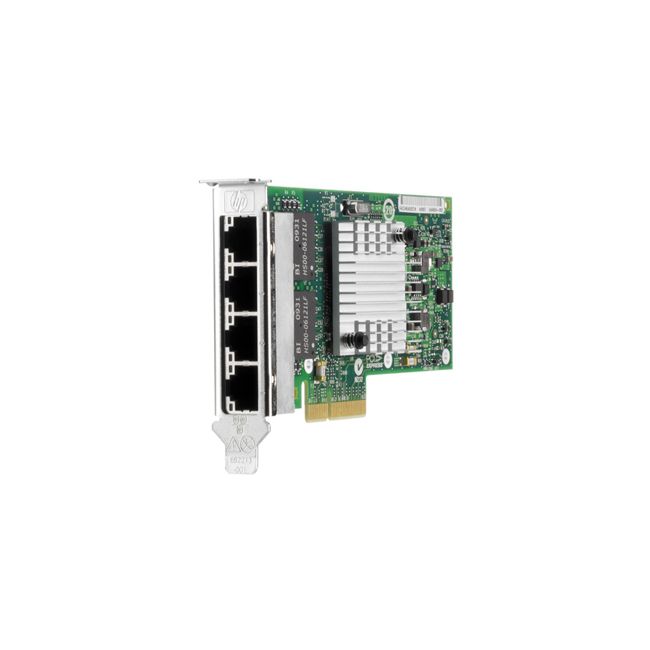
The HP 4 x Ports 1GB/s 100Base-T PCI-Express 2.0 x4 Network Interface Card offers a straightforward solution for adding multiple gigabit Ethernet connections to servers. It fits into the PCIe 2.0 x4 slot and supports standard 100Base-T networks, making it a practical choice for expanding network capacity or improving redundancy in business and data center environments. |
General Information |
|
|---|---|
| Brand | HPE |
| Part Number | 593722-B21 |
Technical Information |
|
|---|---|
| Data Rate (Speed) | 1GbE |
| Data Center Bridging | No |
| Interface (Bus) | PCIe 2.0 x4 |
| Number of Ports | 4-Port (Quad) |
| Offload Support | PXE Boot, Wake-on-LAN (WoL), Jumbo Frames |
Connectivity & Physical |
|
|---|---|
| Form Factor | Standard PCIe Card |
| Port Type | RJ-45 (Copper) |
| Cabling Type | Cat6 |
| Weight | 5.00 |
| Condition | Refurbished |
Miscellaneous |
|
|---|---|
| Assembly Required | Yes |
| Eco Friendly | Yes |
| Compliance Standards | WEEE, RoHS, CE, FCC, UL |
Product Description |
|---|
This HP network interface card provides four gigabit Ethernet ports to enable simultaneous, high-speed network connections. It's often found in server setups where multiple network paths are required for load balancing or redundancy. The card fits into a PCI-Express 2.0 x4 slot, making it suitable for modern server motherboards. Built for IT professionals managing data centers, this card supports efficient network traffic handling and improves overall connectivity in enterprise environments. It's commonly deployed in setups requiring robust network throughput and multiple connections. Key Features
This network card is typically installed in rack or blade servers used in data centers or enterprise networks. Its multiple ports allow system administrators to set up failover links or separate network segments easily. By handling several connections simultaneously, it helps maintain consistent network performance under varying loads. |
Use Cases |
|---|
The HPE 4-Port 1Gbps 100Base-T PCIe 2.0 x4 Network Interface Card is commonly deployed in enterprise server environments requiring multiple Ethernet connections for improved network throughput and redundancy. It is particularly beneficial in data centers and mid-sized business IT infrastructures where scalable network interfaces support virtualization and storage traffic. How It's Used:
By integrating multiple gigabit ports through a PCIe 2.0 x4 interface, this NIC contributes to operational efficiency by optimizing network traffic distribution and enabling scalable connectivity options in complex server setups. |
 Shipping Options
 International Delivery
Requires a UPS, FedEx, or DHL account. Customers may arrange pickup from our US warehouse.
International Delivery
Requires a UPS, FedEx, or DHL account. Customers may arrange pickup from our US warehouse.
 Payment Methods
We accept Visa, Mastercard, AMEX, Discover, and Wire Transfer.
Payment Methods
We accept Visa, Mastercard, AMEX, Discover, and Wire Transfer.
 Purchase Orders
We process purchase orders for government agencies, enterprises, data centers, and SMBs.
Purchase Orders
We process purchase orders for government agencies, enterprises, data centers, and SMBs.