

Subscribe To Our Newsletter!
Subscribe to the newsletter to stay up to date with the latest news and most useful
Newsletter
↑
Back to Top



Product Overview |
|---|
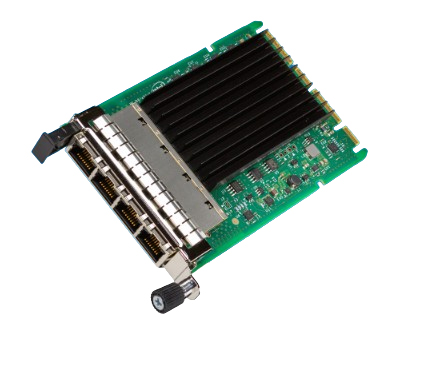
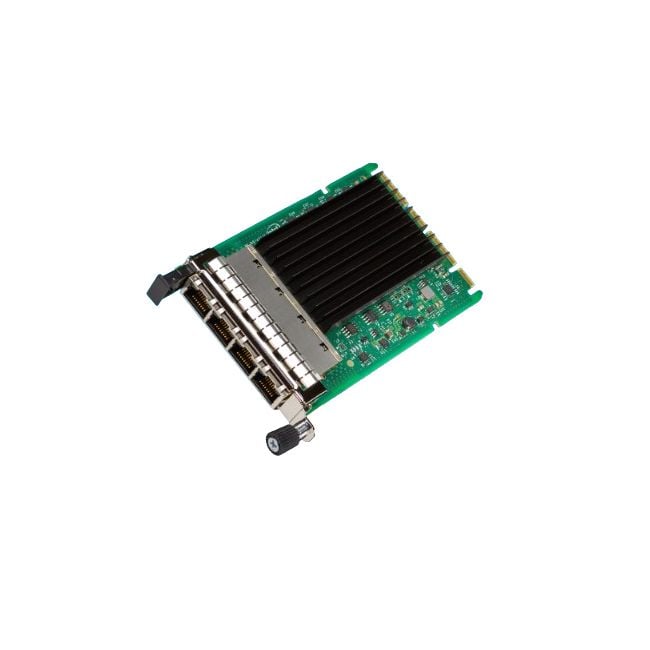
The Dell I350T4OCPV3 is a network adapter that equips servers with four gigabit Ethernet RJ-45 ports, fitting into PCI Express OCP NIC 3.0 slots. It’s designed to provide reliable, multi-port network access in data centers and enterprise server setups where stable connectivity and network flexibility are needed. |
General Information |
|
|---|---|
| Brand | Dell |
| Part Number | 540-BFDD |
Technical Information |
|
|---|---|
| Chipset/Controller | Intel I350 |
| Virtualization Support | SR-IOV, VMDq, NetQueue, vNIC |
| Data Rate (Speed) | 10/100 Mbps |
| Data Center Bridging | No |
| Storage Over Ethernet | iSCSI |
| Interface (Bus) | PCIe 3.0 x8 |
| Number of Ports | 4-Port (Quad) |
| OS Compatibility | Windows Server 2022, RHEL, VMware ESXi |
| Network Management | SNMP, NC-SI |
| Offload Support | iSCSI, PXE Boot, Wake-on-LAN (WoL), TCP Stateless Offload, Jumbo Frames |
Connectivity & Physical |
|
|---|---|
| Form Factor | OCP 3.0 |
| Port Type | RJ-45 (Copper) |
| Cabling Type | Cat6a |
| Weight | 5.00 |
| Condition | Refurbished |
Miscellaneous |
|
|---|---|
| Assembly Required | Yes |
| Eco Friendly | Yes |
| Compliance Standards | WEEE, RoHS, CE, FCC, UL, TUV, cULus |
Product Description |
|---|
This Dell I350T4OCPV3 network adapter provides four gigabit Ethernet ports, enabling servers to connect efficiently to networks using standard RJ-45 cabling. It's commonly found in data centers and enterprise environments where reliable, multi-port connectivity is essential. Built for server and storage applications, this adapter suits IT professionals and system administrators looking to expand network capacity or enhance redundancy. Its PCI Express OCP NIC 3.0 interface ensures smooth integration with compatible server platforms. Key Features
Typically deployed in rack servers and blade servers, the adapter helps maintain consistent network traffic flow and improves fault tolerance with multiple ports. It's a practical choice for expanding network interfaces without adding complexity. |
Use Cases |
|---|
The Dell I350T4OCPV3 network adapter is designed for integration in server environments requiring efficient, multi-port gigabit connectivity. It suits data centers and enterprise IT infrastructures that demand flexible and reliable network configurations to support diverse workloads. How It's Used:
By offering four independent gigabit Ethernet ports via an OCP NIC 3.0 interface, this adapter supports operational scalability and network segmentation. It enables IT teams to optimize network traffic management and maintain consistent performance under varied enterprise workloads. |
 Shipping Options
 International Delivery
Requires a UPS, FedEx, or DHL account. Customers may arrange pickup from our US warehouse.
International Delivery
Requires a UPS, FedEx, or DHL account. Customers may arrange pickup from our US warehouse.
 Payment Methods
We accept Visa, Mastercard, AMEX, Discover, and Wire Transfer.
Payment Methods
We accept Visa, Mastercard, AMEX, Discover, and Wire Transfer.
 Purchase Orders
We process purchase orders for government agencies, enterprises, data centers, and SMBs.
Purchase Orders
We process purchase orders for government agencies, enterprises, data centers, and SMBs.