

Subscribe To Our Newsletter!
Subscribe to the newsletter to stay up to date with the latest news and most useful
Newsletter
↑
Back to Top



Product Overview |
|---|
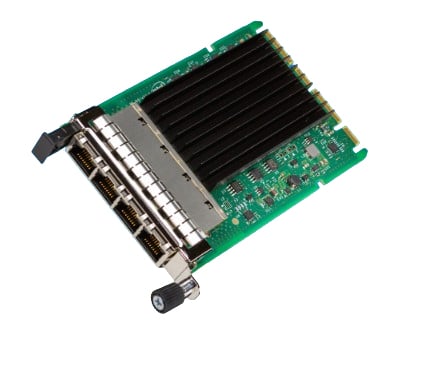
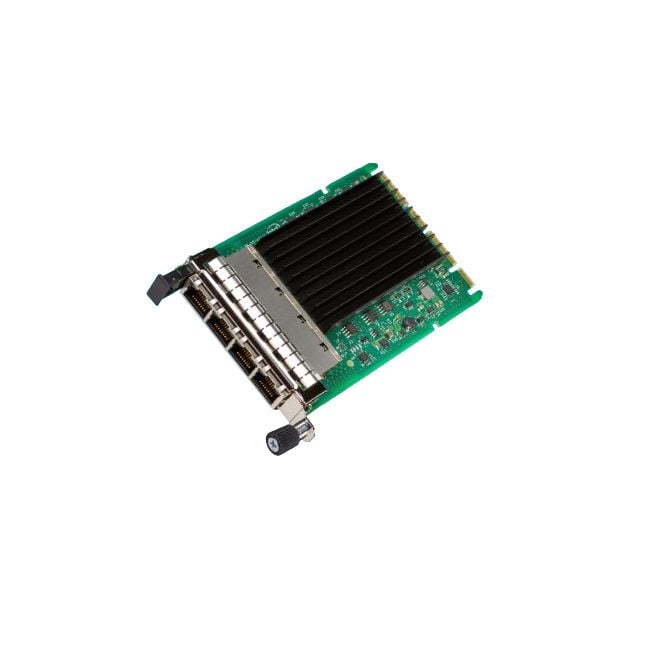
The Dell 540-BFDC Ethernet Network Adapter is a four-port Gigabit Ethernet card designed for the OCP NIC 3.0 standard. It fits into server environments where efficient network connectivity and virtualization support are essential, helping to manage multiple network streams with reduced CPU overhead. |
General Information |
|
|---|---|
| Brand | Dell |
| Part Number | 540-BFDC |
Technical Information |
|
|---|---|
| Chipset/Controller | Intel I350-T4 |
| Virtualization Support | VMDq, NetQueue, vNIC |
| Data Rate (Speed) | 1GbE |
| Data Center Bridging | No |
| Storage Over Ethernet | iSCSI |
| Interface (Bus) | PCIe 3.0 x8 |
| Number of Ports | 4-Port (Quad) |
| OS Compatibility | Windows Server 2022, VMware ESXi 8.0, RHEL, VMware ESXi |
| Network Management | SNMP, RMON, NC-SI |
| Offload Support | iSCSI, PXE Boot, Wake-on-LAN (WoL), TCP Stateless Offload, Jumbo Frames |
Connectivity & Physical |
|
|---|---|
| Form Factor | OCP 3.0 |
| Port Type | RJ-45 (Copper) |
| Cabling Type | Cat6a |
| Weight | 5.00 |
| Condition | Refurbished |
Miscellaneous |
|
|---|---|
| Assembly Required | Yes |
| Eco Friendly | Yes |
| Compliance Standards | WEEE, RoHS, cURus, CE, FCC, UL, TUV, cULus |
Product Description |
|---|
The Dell 540-BFDC Intel I350T4OCPV3 Ethernet Network Adapter provides four Gigabit Ethernet ports in a compact OCP NIC 3.0 card. It is built for servers and data centers requiring high-density, flexible networking solutions. Often found in enterprise server environments, it supports virtualization workloads and improves network throughput while reducing CPU load. This adapter is ideal for IT professionals managing server networking where space and performance are key considerations. Key Features
This adapter is typically deployed in data centers focused on consolidating network functions while maintaining high throughput. It plays a key role in enhancing server network capabilities without demanding excessive system resources. |
Use Cases |
|---|
The Dell 540-BFDC Intel I350-T4 4-Port Gigabit Ethernet Network Adapter is primarily employed in data center and enterprise server environments that require high-density network connections with robust virtualization support. Its compatibility with the OCP NIC 3.0 form factor makes it suitable for modern rack deployments where space optimization and efficient network throughput are critical. How It's Used:
This network adapter helps reduce CPU load through offloading features, enabling more efficient processing of network traffic in dense server environments. Its design supports scalable network architectures, ensuring consistent performance as workloads and virtualized environments grow. |
 Shipping Options
 International Delivery
Requires a UPS, FedEx, or DHL account. Customers may arrange pickup from our US warehouse.
International Delivery
Requires a UPS, FedEx, or DHL account. Customers may arrange pickup from our US warehouse.
 Payment Methods
We accept Visa, Mastercard, AMEX, Discover, and Wire Transfer.
Payment Methods
We accept Visa, Mastercard, AMEX, Discover, and Wire Transfer.
 Purchase Orders
We process purchase orders for government agencies, enterprises, data centers, and SMBs.
Purchase Orders
We process purchase orders for government agencies, enterprises, data centers, and SMBs.