

Subscribe To Our Newsletter!
Subscribe to the newsletter to stay up to date with the latest news and most useful
Newsletter
↑
Back to Top



Product Overview |
|---|
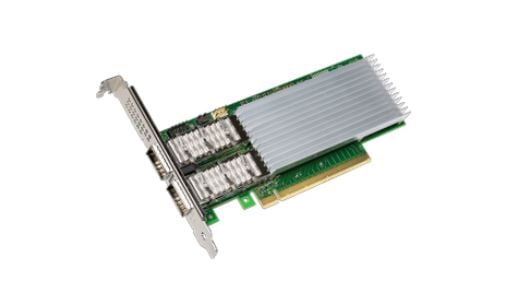
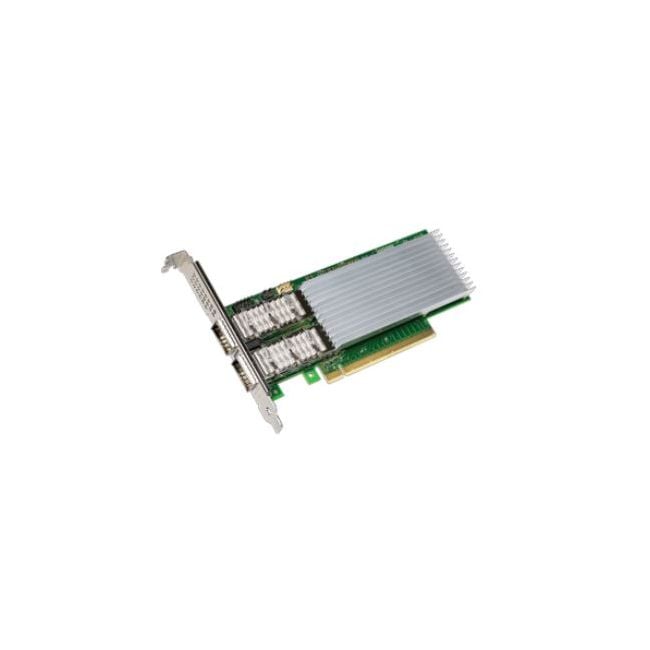
The Dell E810-CQDA2 network adapter offers dual 100GbE ports through QSFP28 connectors and uses PCIe 4.0 x16 to handle high-throughput demands efficiently. Its low-profile design makes it suitable for a variety of server setups, especially in data centers and cloud environments where fast, reliable networking is essential. |
General Information |
|
|---|---|
| Brand | Dell |
| Part Number | 540-BDDS |
Technical Information |
|
|---|---|
| Chipset/Controller | Intel E810-CQDA2 |
| Virtualization Support | SR-IOV, VMDq, VXLAN, NVGRE, Geneve, NetQueue, vNIC |
| Data Rate (Speed) | 100GbE |
| Data Center Bridging | Yes |
| Storage Over Ethernet | iSCSI |
| Interface (Bus) | PCIe 4.0 x16 |
| Number of Ports | 2-Port (Dual) |
| OS Compatibility | Windows Server 2022, VMware ESXi 8.0, RHEL, VMware ESXi |
| Network Management | SNMP, RMON, NC-SI, IPMI |
| Offload Support | RDMA, RoCE v2, iSCSI, PXE Boot, Wake-on-LAN (WoL), iWARP, TCP Stateless Offload, Jumbo Frames |
| Bracket Height | Low Profile (Half Height) |
Connectivity & Physical |
|
|---|---|
| Form Factor | Standard PCIe Card |
| Port Type | QSFP28 |
| Cabling Type | AOC |
| Weight | 5.00 |
| Condition | Refurbished |
Miscellaneous |
|
|---|---|
| Assembly Required | Yes |
| Eco Friendly | Yes |
| Compliance Standards | WEEE, RoHS, cURus, CE, FCC, UL, TUV, cULus, CSA, cUL |
Product Description |
|---|
The Dell E810-CQDA2 is a dual-port network adapter designed to deliver high-speed 100 Gigabit Ethernet connections. It's built for data centers and enterprise servers that demand rapid data exchange and low latency. Often found in high-performance computing environments, cloud infrastructures, and storage networks, this adapter helps maintain smooth, efficient network operations. Network administrators and system integrators benefit from its reliable performance and compatibility. Key Features
This adapter is typically deployed in enterprise servers where high bandwidth is critical, such as in virtualization, storage, and large-scale networking. Its role is to streamline data flow and sustain network performance without adding complexity. |
 Shipping Options
 International Delivery
Requires a UPS, FedEx, or DHL account. Customers may arrange pickup from our US warehouse.
International Delivery
Requires a UPS, FedEx, or DHL account. Customers may arrange pickup from our US warehouse.
 Payment Methods
We accept Visa, Mastercard, AMEX, Discover, and Wire Transfer.
Payment Methods
We accept Visa, Mastercard, AMEX, Discover, and Wire Transfer.
 Purchase Orders
We process purchase orders for government agencies, enterprises, data centers, and SMBs.
Purchase Orders
We process purchase orders for government agencies, enterprises, data centers, and SMBs.